
TECHNIQUES OF DATA COLLECTION
( Sociology Optional)
TECHNIQUES OF DATA COLLECTION
( Sociology Optional)
PYQs: Techniques of Data Collection
- Write short note: Techniques employed in measuring attitudes. (86/20)
- संक्षिप्त टिप्पणी लिखें: दृष्टिकोण को मापने में नियोजित तकनीकें। (86/20)
- Write short note: techniques of data Collection. (87/20)
- संक्षिप्त टिप्पणी लिखें: डेटा संग्रह की तकनीकें। (87/20)
- Elaborate, with suitable examples, the limitations associated with the tools of measurement in Social Science Research. (03/30)
- सामाजिक विज्ञान अनुसंधान में माप के उपकरणों से जुड़ी सीमाएं उपयुक्त उदाहरणों के साथ विस्तार से समझाईये । (03/30)
- What is subjective method in social research? Examine Focus Group Discussion (FGD) as a technique for data collection, with suitable examples. (11/30)
- सामाजिक अनुसंधान में व्यक्तिपरक विधि क्या है? उपयुक्त उदाहरणों के साथ डेटा संग्रह के लिए एक तकनीक के रूप में फ़ोकस समूह चर्चा (FGD) की जाँच करें. (11/30)
- Which research technique would be most suitable for the study of consumer behaviour and its social correlates? Explain. (14/20)
- कौन सी शोध तकनीक उपभोक्ता व्यवहार और इसके सामाजिक सहसंबंधों के अध्ययन के लिए सबसे उपयुक्त होगी? व्याख्या कीजिए । (14/20)
- Discuss the challenges involved in collecting data through census method. (2021/10 marks)
- जनगणना विधि के माध्यम से डेटा एकत्र करने में शामिल चुनौतियों पर चर्चा करें। (2021/10 अंक)
- The difference between information and data in social science is subtle. Comment. (2022/10)
- सामाजिक विज्ञान में सूचना तथा आंकड़ों के बीच अंतर सूक्ष्म है |टिप्पणी कीजिए| (2022/10)
- Suggest measures to minimize the influence of the researcher in the process of collecting data through focus group discussion. (2022/10)
- फोकस ग्रुप परिचर्चा के माध्यम से आंकड़े एकत्र करने की प्रक्रिया में शोधकर्ता के प्रभाव को कम करने के उपाय सुझाइये। (2022/10)
- What are the ethical issues that a researcher faces in making use of participant observation as a method of collecting data? Explain. UPSC 2023. 10 Marks
- आँकड़े संग्रहण करने की एक विधि के रूप में सहभागी अवलोकन का उपयोग करते समय एक शोधकर्ता को किन नैतिक मुद्दों का सामना करना पड़ता है? व्याख्या कीजिए। USPC 2023, 10 Marks
Different Techniques विभिन्न तकनीकें
- Write short note: Interview as a method of social research. (85/20)
- संक्षिप्त टिप्पणी लिखें: सामाजिक अनुसंधान की एक विधि के रूप में साक्षात्कार। (85/20)
- Write short note: Experimental design. (88/20)
- संक्षिप्त टिप्पणी लिखें: प्रयोगात्मक डिजाइन। (88/20)
- Write short note: Measurement of Attitudes. (89/20)
- संक्षिप्त टिप्पणी लिखें: दृष्टिकोण का मापन। (89/20)
- Write short note Participant observation. (90/20)
- संक्षिप्त टिप्पणी लिखें: प्रतिभागी अवलोकन. (90/20)
- Write short note: Comparative method in sociology. (94/20)
- संक्षिप्त टिप्पणी लिखें: समाजशास्त्र में तुलनात्मक विधि। (94/20)
- Short note: Limitations of questionnaire as a technique of data collection. (99/20)
- संक्षिप्त टिप्पणी: डेटा संग्रह की तकनीक के रूप में प्रश्नावली की सीमाएं। (99/20)
- What are the uses of Bogardus' social distance scale and of Likert scale? Discuss (02/60)
- बोगार्डस के सामाजिक दूरी पैमाने और लिकर्ट पैमाने के क्या उपयोग हैं? चर्चा कीजिए | (02/60)
- Write short note on Serendipity. (10/15)
- सेरेंदिपिटी पर संक्षिप्त टिप्पणी लिखें।
- Write short note on Nomothetic and Idiographic Methods. (10/15)
- नोमोथेटिक और इडियोग्राफिक विधियों पर संक्षिप्त टिप्पणी लिखें। (10/15)
- Write short note on Content Analysis. (10/15)
- सामग्री विश्लेषण पर संक्षिप्त टिप्पणी लिखें। (10/15)
- Write short note: Comparative Method. (12/12)
- संक्षिप्त टिप्पणी लिखें: तुलनात्मक विधि। (12/12)
- In what way biographies could be used to study social life? (14/10)
- सामाजिक जीवन का अध्ययन करने के लिए जीवनी का उपयोग किस तरह से किया जा सकता है? (14/10)
- Discuss the relevance of historical method in the study of society? (15/10)
- समाज के अध्ययन में ऐतिहासिक पद्धति की प्रासंगिकता पर चर्चा करें? (15/10)
- Participant observation is the most effective tool for collecting facts." Comment. (16/20)
- प्रतिभागी अवलोकन तथ्यों को इकट्ठा करने के लिए सबसे प्रभावी उपकरण है। टिप्पणी कीजिए । (16/20)
- Analyse the strengths and weaknesses of social survey method in social research. (2020/10)
- सामाजिक अनुसंधान में सामाजिक सर्वेक्षण विधि की शक्तियों और कमजोरियों का विश्लेषण करें। (2020/10)
Introduction
What is data?
- Data are individual facts, statistics, or items of information.
- In a more technical sense, data are a set of values of qualitative or quantitative variables about one or more persons or objects.
- In social sciences like Anthropology and Sociology, data are used in scientific research, businesses management, finance, governance, and in virtually every other form of human organizational activity.
What are the tools of data collection?
- For acquisition of the required data, many procedures are developed to construct different types of tools.
- Depending upon the nature of the required data the researcher has to decide which tool will be appropriate under which circumstances.
- Some tools help in getting descriptive qualitative data and some in getting quantitative data.
- Examples of important tools of data collection: observation, interview, schedules, questionnaire, case study, genealogy, life-history, oral history, secondary sources of information, participatory methods.
- These are explained in detail in the next topics.
Thinker’s views
- According to ORI, data collectionis the process of gathering and measuring information on variables of interest, in an established systematic manner, that enables one to answer stated research questions, test hypotheses, and evaluate outcomes.
- According to Paul Dholakia and Dr. Vicki Morwitz, the data collection by asking simple factual questions from the customers can help an organization to assess its performance, and to make an effective customer retention strategy.
Importance of data collection in Sociology
- It is the basis and essence for a research work, because it enables the researcher to take decisions related to the information available and to understand the utility of the information.
- The analysis of the data helps the researcher to establish a factual basis for building verdict.
- More pointers are covered in the next some topics.
Limitations of data collection
- Issues with research samples and selection.
- Insufficient sample size for statistical measurements.
- Lack of previous research studies on the topic.
- Methods, instruments, techniques used to collect the data.
- Limited access to data.
- Time constraints.
- Lots of big data is unstructured.
1. OBSERVATION
Introduction
- Observation is viewing a particular incident or phenomena or even interactions and interpersonal relationship between two or more people.
- However, this viewing to be a part of a scientific investigation needs to be systematic and contextual.
- For example, if you go to a community and observe a tree in the village, just to describe the tree, its location within the village is not enough. One needs to relate this tree to the activities of the community, how the people relate themselves to the tree, the significance of the tree in the lives of the community, if that is observed, recorded, and reported, the tree becomes a part of the scientific observation.
Thinkers’ perspective
- In John Dollard's words, "the primary research instrument is observing human intelligence, trying to make sense out of human experience".
- According to Mahatma Gandhi, "to help the poor, one must think and observe the life like the poor".
- Mao stated that, " to observe and understand the social problems, first direct your eyes downwards, do not hold your head high and gaze at the sky."
Types
Depends on the purpose of the study, the various types of observation put in practice by the sociologists are:
1. Controlled / Uncontrolled Observation
- Controlled observation is a method in which sociologists create an atmosphere artificially for observation.
- This is under their control. This procedure is useful for an experimental case study.
- Controlled observations are descriptive in nature.
- They involve minimum participation of the observer.
- This procedure involves an analysis of everyday events and generalization based on that analysis.
2. Structured / Unstructured Observation
- The structured observation is characterized by a careful definition of the units to be observed, information to be recorded, and the selection of pertinent data for observation and standardization of conditions of observation.
3. Participant / Non-Participant Observation
- Participant observation owes its subsistence to Malinowski whose study among the Trobriand Islanders of Papua New Guinea set the benchmark for fieldwork.
- In a participant observation, a sociologist studies a particular society or culture by directly participating in the social and cultural activities of the society.
- Participant observation has a reference to the observer, sharing to a greater or lesser degree, the life of the group he is observing.
- In the Non-Participant Observation, a sociologist studies a particular society or culture but not participating as a member of that society.
- Here the researcher is detached and does not experience the lives of the people under study.
- The researcher here records observations and data as an outsider; viewing the activities in an objective manner.
Merits of observation
- The members of the community are unaware of the researcher's purpose. Their behavior is least likely to be affected. Thus, the researcher can record the natural behavior of the group.
- The researcher has access to a body of information, giving him a great depth of experience, which could not easily be obtained in other methods.
- The researcher can record the context which gives meaning to expressions of opinion. He can also check the truth of statements made by the members of the group.
- Some rare occurrences like sexual behavior, family crisis and underworld activities are not amenable to direct observation by an outsider.
Limitations of observation
- Participant by becoming a member of a particular group narrows his range of experience. It can drastically limit the field worker's contacts to just one segment of the population.
- If the participant assumes an important role, he becomes instrumental in effecting changes in the group behavior.
- Emotional involvement of the observer in some incidents like anger, death, and love are detrimental to the objectivity.
- The only option open to the fieldworker is to be what he really is a friendly and curious outsider. Otherwise, he will be considered an unwelcome intruder.
- There is the problem of legitimacy.
- The researcher should be prepared enough to survive the difficulties and reverses which come in his field.
- The researcher must have the gift of He should be able to put himself in the position of individuals from diverse backgrounds and see the world as they see it.
- In intensive field work the scholar has not only to collect accurate information on a variety of items but also be able to think and feel like the people whom he is studying.
Significance of Observation in Sociological Fieldwork
- Observation is one of the classic ways to carry out research.
- In order to connect with the people, one needs to live the lives of those people.
- Intensive observation-based field work has been considered for nearly seven decades to be the major method of sociology.
- It is particularly helpful in the study of small-scale societies and the primitive societies.
Conclusion
- A single project may be productive of answers to more than one set of questions.
- However, the field worker has to follow the grain of field. Involvement may be essential for going ahead with the research itself. Participation may become source of data and insight. The field worker should keep aside his personal biases at a best counsel of perfection.
2. INTERVIEW
Introduction
- The personal interview is an effective, informal verbal or conversation, initiated for specific purposes and focused on certain planned content areas.
- An interview schedule can either be structured or unstructured.
- A structured interview schedule has a fixed format of questions. The researcher uses these questions while conducting an interview, which is mainly used for conducting surveys, or for gathering quantitative data.
- In most cases such quantitative data needs to be compiled, tabulated and analyzed.
- Unstructured interview is used for taking interviews where a strict format is not followed. It is mainly used for qualitative data.
- Census data is normally collected using fixed structured interview schedules.
- There are generally three types of interviewees:
- The man in a position of authority may give an interview on a specific issue;
- One with special knowledge, the experts may express themself; and
- In the street, i.e., the masses.
Thinkers’ perspective
- According to Young, it is "an intentional process". It involves ‘complexity of feelings, tones, variable reactions, reflective thinking processes, symbolic silences, assumed roles, and levels of influence, which enter into interviewing relationship’ are to be assumed by the interviewer.
- According to Gopal, "Interview is a conversation with a purpose and, therefore, is more than a mere oral exchange of information".
Objectives of Interview
- One can secure full account of a person's experiences, attitudes, and values during his entire life cycle.
- It can secure "a portrait of human personality" which is broad enough to encompass the social background that governs the present scheme of life, and deep enough to reveal inner strivings, tensions, wishes and changes in behavioral relations.
Techniques of Interviewing
- The techniques of interview are very complicated. It is a great psychological effort.
- In the fitness of the interview, the interviewer and the one being interviewed should be well introduced. The effort should be to bring about an informal atmosphere as quickly as possible.
- The convention of the group, and the convenience of the interviewed should be given due importance.
- In a group interview, the leader should be first interviewed.
- The interviewer must listen patiently and act very tactfully in guiding the interview.
- The interviewer should not ask interrupting question and should avoid raising questions that might be confusing.
- The questions with 'yes' or 'no' answers should be avoided.
- Once the interviewee gets emotional, the interview may be suspended for the next session.
Advantage of the Interview as Research Tool
- Interview is always direct. It is a trustworthy and a reliable tool of research.
- It permits a maximum variation in directing the inquiry.
- For an interview to be administered, the key informant has no need to be literate.
- The interview helps to supplement personal information and check on experience and ideas. Also, the interviewer has greater opportunity to appraise the accuracy and validity of replies.
- Contradictory statements can be followed up and possible reasons for contradiction learned.
- It enables the interviewer to differentiate on the spot between fact and fiction in the information supplied.
- If the interviewer can control the interview tactfully, lots of information and attitude can be drawn out.
- The interviewer can change the direction of inquiry.
Limitations
- Conducting interview studies can be very costly as well as very time-consuming.
- An interview can cause biases. For example, the respondent’s answers can be affected by his reaction to the interviewer’s race, class, age, or physical appearance.
- The interviewer must be emotionally intelligent, so that he can read the emotions tactfully.
- Interview studies provide less anonymity, which is a big concern for many respondents.
- There is a lack of accessibility to respondents since the respondents can be in around any corner of the world or country.
Significance of Interview in Sociological Fieldwork
- They help you explain, better understand, and explore research subjects' opinions, behavior, experiences, phenomenon, etc.
- Interview questions are usually open-ended questions so that in-depth information will be collected.
- Sociologists like to dive deeper and discover more about their subjects.
- Interviews and voice recordings are a big part of recording and analyzing this kind of data, so a tool like this is a sociologist's secret weapon.
3. SCHEDULES
Introduction
- A schedule is a structure of a set of questions on a given topic that are asked by the interviewer or investigator personally.
- The order of questions, the language of the questions and the arrangement of parts of the schedule are not changed.
- However, the investigator can explain the questions if the respondent faces any difficulty.
- It contains direct questions as well as questions in tabular form.
- Schedules include open-ended questions and close-ended questions. Open-ended questions allow the respondent considerable freedom in answering.
- Both the questionnaire and schedules use mainly structured questions, and these questions are so phased and interlocked that they have a built in mechanism for testing the reliability and validity of the response.
- Questionnaire is discussed in the next topic in details. The comparison between questionnaire and schedules is also discussed.
Thinkers’ perspective
- Webster defines a schedule as "a formal list, a catalogue or inventory," and it may be added that it is a counting device, used in formal and standardized inquiries, the sole purpose of which is aiding in the collection of quantitative cross-sectional data.
- Williams (1997) is of the opinion that researcher should conduct some fieldwork with the target group in the form of schedule or observation work
- Numen (1997) has opined: “The crucial issue is not which form is best. Rather it is under which conditions a form is most appropriate”.
Types
1. Observational Schedules
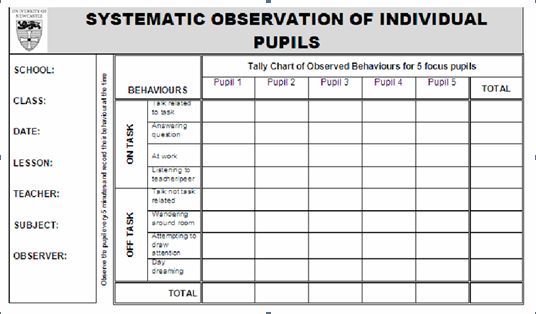
Fig. Observation Schedule
- An observation schedule is a form prepared prior to data collection that delineates the behavior and situational features to be observed and recorded during observation.
- Observation schedules vary on a quantitative–qualitative continuum.
- An observation schedule usually serves several purposes simultaneously.
- It is a specific "Memory Tickler".
- It is an objective recording device that makes possible accurate accumulation of large quantities of data.
- It is a standardizing device.
- It aids to delimit the scope of the study and to concentrate on the circumscribed elements essential to the analysis.
2. Document Schedules
- These are the forms which are used for recording data obtained from documents, case histories, and other materials.
- The items included are limited to those which can be secured from case histories or other records.
- It is generally necessary, however, to inspect a large number of records before the items that will yield measurable factors.
- The document schedule should not be considered a tally sheet. A separate schedule should be used to list the pertinent points from each case record. Then Tabulations are made either by hand tally or by machine tabulation.
3. Institutional Survey Forms or Evaluation Schedules
- Schedules of this type are used to visualize the problems faced by or inherent in a given type of institution.
- All information calls for replies to be recorded by written entries such as "Yes" or "No".
- The questions to be asked of informants and the instructions to be followed by the enumerators are precise, and the definitions are expertly given.
Advantages
- The response rate in the schedule method of data collection is high.
- In the schedule method, the identity of the respondent is known.
- In Schedule, method responses are filled by the enumerators themselves.
- Answers in the schedule method of data collection are filled by research workers/enumerators.
- The type of technique used in the schedule method is
- Carefully constructed schedules and questionnaires have some advantages over the interview. The former provides privacy and leisurely pace, so respondent can reflect on the questions raised and weigh his responses to them.
Limitations
- It is a very expensive process.
- This method that takes a lot of time.
- Even in the presence of the researcher, the respondent may not respond to some personal questions.
- Reliability depends on data collection, honesty and dedication.
Significance of Questionnaires and Schedules in Sociological Fieldwork
- Questionnaires and Schedules are popular research methods because they offer a fast, efficient and inexpensive means of gathering large amounts of information from sizeable sample volumes.
- These tools are particularly effective for measuring subject behavior, preferences, intentions, attitudes, and opinions.
- When the researcher is not physically present, these can be sent.
- These can be used in the virtual space too, for example, a survey can be posted online on asocial networking sites that allows a respondent to fill up the same online without having to take a print out.
4. QUESTIONNAIRES
Introduction
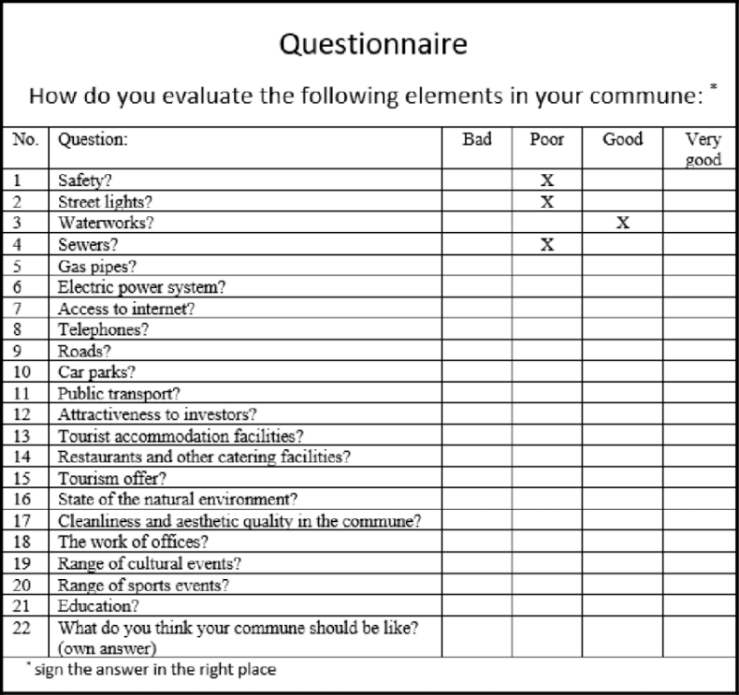
- A questionnaire is a research instrument that consists of a set of questions for the purpose of gathering information from respondents through survey or statistical study.
- A research questionnaire is typically a mix of close-ended questions and open-ended questions.
- For a questionnaire to be administered, the key informant has to be literate enough to fill up the form.
- This drawback is not there while administering an interview.
- The sequence of questions is very important for a questionnaire.
- One begins with simple questions that can be easily answered. It is followed by more difficult and reflective questions. Often one can give multiple-choice questions where one has to choose from several options.
- To assess the reliability of answers to vital questions, one may have to frame multiple questions to get at the same information.
Thinkers’ perspective
- According to Krishan Kumar (1992) “a questionnaire is a written document listing a series of questions pertaining to the problem under study, to which the investigator requires the answers”.
- Schvaneveltd (1985) defined questionnaire “a data-gathering device that elicits from a respondent the answers or reactions to printed (pre-arranged) questions presented in a specific order.”
- Busha and Harter (1980) opined that questionnaires are often used in surveys as the primary data collection instruments.
Types
There are mainly two types of questionnaires:
1. Structured questionnaires
- These are those which pose definite, concrete and preordained
- Additional questions may be used only when need arises to clarify vague or inadequate replies by informants, or when more details are needed than those supplied by them.
- The form of the particular questions may be either closed or open.
- Closed Form questionnaires are used when categorized data are required.
- The Open-End responses are free and spontaneous expressions on the part of the informant who is not limited in his replies to a particular question.
- Since open-end question is non restrictive, a wide range of answers is usually given, some articulate and some meaningless. Hence, it is employed where the primary information to be developed is qualitative in nature.
- Structured questionnaires are used in a wide range of projects, both to initiate a formal inquiry and also to supplement and check data previously accumulated.
- g. These may pertain to studies of economic or social problems, measurement of opinion on public issues or events, studies of administrative policies and changes, studies on the cost of living, consumer expenditures, child welfare, public health, and numerous other issues.
2. Unstructured Questionnaires
- These are frequently referred to as interview guides.
- They also aim at precision and contain definite subject matter areas.
- Flexibility is the chief advantage of the unstructured questionnaire.
- It is designed to obtain viewpoints, opinions, attitudes, and to show relationships and interconnections between data that might escape notice under more mechanical types of interrogation.
- The objective is to give the respondent maximum opportunity to revel how he had arrived at or developed his world of experience.
- This form of questioning assumes insight, articulate and possession of facts by the respondents. It is used for intensive studies.
- The chief advantage of unstructured questionnaires stems from the danger that non additive and non-comparable data will be accumulated when structuring is imposed.
Important considerations
The following important points are to be considered for a good questionnaire.
1. Language
- The language should be concise and directed toward producing uniformity of understanding among the respondents.
- Phrases and expressions known only in certain sections of the country should be avoided. Professional "jargon" and technical words should be used only if the inquiry is directed to a selected group.
- Subjective ratings should be avoided. Subjective words such as “bad”, “Good”, “fair” and the like do not lend themselves to quantitative analysis.
- The length of the questions should be given as per the respondent's comprehension level.
2. Frame of Reference
- The respondent's frame of reference will influence his answers.
- Questions on controversial issues should be broken down into components, so that the tester can determine the respondent's feelings about many aspects of the problem.
- When questions seek to uncover degree of intensity of feeling or conviction, it is often necessary to find out to what extent the respondent's attitudes have been crystallized toward the subject.
- The required answers should be within the informational scope of the respondent.
3. Arrangement of Questions
- The arrangement of the questions should receive special attention and be presented with care.
- Placing a question early in the questionnaire that can affect answers to later questions on the form should be prevented wherever possible.
- The questions placed first on the questionnaire should be those easiest to answer. Factual questions, such as name, relationship and age, often serve successfully as starters. Sometimes "interest catching" questions are used at the beginning.
4. Length of Questionnaire
- The length should be short enough for comprehension.
- When a complex study calls for a lengthy interview, it should be divided onto steps.
Limitations and disadvantages of schedules and questionnaires
The disadvantage of schedules and questionnaires stems from:
- It is difficult to make the generalizations from the data obtained.
- Vague phraseology or questions not readily understood by the masses in all walks of life.
- Uniform questions do not always "fit" the varied groups, varied cultural patterns, and levels of education of the large number of people participating in the study.
- It is often difficult to learn the meaning of the data supplied. Ambiguity, is one of the greatest sources of error in surveys.
- Complex questions that require the respondent to go through several steps of reasoning before answering are undesirable. These often resulted in misleading information.
- The units of enumeration need to be precisely defined. Everyday language of practical affairs has proved to be the most useful.
Similarities between questionnaire and schedules
- Both use mainly structured questions, and these questions are so phased and interlocked that they have a built in mechanism for testing the reliability and validity of the response.
- In both, the same set of questions is administered to all the respondents and comparable results are obtained.
- Both these instruments have to be used with the same general principles of designs. Both these take into account the same problems and basic difficulties.
- In both, certain types of questions have to be eliminated. Eg. vague and ambiguous questions, emotionally changed questions, loaded and leading questions, questions eliciting no response and questions having structured response to the queries, violence to the existing facts.
- In both, pilot studies and pre-tests are necessary for formulating the instrument and for bringing them to the final form.
- Both questionnaire and schedule have been used for the collection of personal preferences, social attitudes, belief, opinions, behavior patterns, group practices and habits and much other data.
- The increasing use of schedules and questionnaires is probably due to increased emphasis by social scientists on quantitative measurement of uniformly accumulated data.
- Schedules and questionnaires are beneficial as supplementary and extending devices in observation, in interviews, and in evaluating personal behavior and social situations.
Difference between questionnaire and schedules
- An interview schedule is generally administered by the interviewer himself in the field, who fills up the information in the sheet. However, for a questionnaire, the researcher is directly not present with the informant when she or he fills up the answers.
- For a questionnaire to be administered, the key informant has to be literate enough to fill up the form. This drawback is not there while administering a schedule.
- The questionnaire is designed to collect data from large, diverse and widely scattered groups of people. The schedule, on the other hand, is generally filled out by the researcher, hence the scope of data collection is limited.
Significance of Questionnaires and Schedules in Sociological Fieldwork
- Questionnaires and Schedules are popular research methods because they offer a fast, efficient and inexpensive means of gathering large amounts of information from sizeable sample volumes.
- These tools are particularly effective for measuring subject behavior, preferences, intentions, attitudes, and opinions.
- When the researcher is not physically present, these can be sent.
- These can be used in the virtual space too, for example, a survey can be posted online on asocial networking sites that allows a respondent to fill up the same online without having to take a print out.
Conclusion
- The wide use of schedules and questionnaires as independent research tools is a controversial issue.
- If used as a subsidiary research tool, these forms can often be of advantage in a great variety of studies.
5. CASE STUDY
Introduction
- A case study involves in-depth research of a particular event, incident or phenomena where a community or a group of people are directly involved or affected.
- A case study is a holistic method that enables us to get an all-round perspective on a single incidence or event.
- Social scientists, in their study of human behavior, strive to obtain a fundamentally real and enlightened record of personal experiences.
- These would reveal in concrete detail a man's inner strivings, motivations that drive him to action, the forces that direct him to adopt a certain pattern of behaviors, and to live according to a certain scheme and philosophy of life.
- A comprehensive study of a social unit is called a case study.
- Case study method is a form of qualitative analysis wherein careful and complete observations are made. There are efforts to study each aspect of the concerning unit in minute details. Finally, from the generated case data, generalizations and inferences are drawn.
Thinker’s views
- Burgees termed the case study method "The Social Microscope", because of its aid in studying behavior in specific precise detail.
- As per Charles Horton Cooley, "case study deepens our perception and gives us a clearer insight into life, it gets at behavior directly and not by an indirect and abstract approach".
- According to Read Bain, the data collected through case studies are not significantly scientific as they did not provide "impersonal, universal, non-ethical, non-practical, repetitive aspects of phenomenon".
Evolution of the Case Study Method
- Frederic Le Play is reputed to have introduced the case study method into social science.
- Herbert Spencer was the first to use case materials in his ethnographic studies.
- William Healy, a psychiatrist, was among the first to adopt the case study method in his work with juvenile delinquents.
- Sociologists and ethnologists have utilized the case study method for their detailed descriptions of primitive and modern cultures.
- Some notable works in this context include Cora Du Bois' The People of Alore; Robert Redfield's Teportlan: A Mexican Village and Oscar Lewis' Life in a Mexican Village: Teportlan Restudied.
- The actual adoption and widespread use of the case study method as systematic sociological field research is attributed to the work of Thomas and Znaniecki, The Polish Peasant.
- Some sociologists, like Max Gluckman and Van Velson, had also devised the extended case method.
- This was often used for analysis of conflicts and legal disputes and cases.
- It basically consisted of an event over a long period of time, so that one could get an insight not only into structures and norms, but also into processes of social life.
Characteristics of Case Study
- The researcher can take one single social unit or more of such units or even a situation for the study.
- The selected unit is studied comprehensively in minute details.
- The method implies a complete study of the social unit covering all the facts. One tries to understand the complex of factors that are operative within a social unit as an integrated entity.
- Case study is more qualitative than quantitative.
- In the context of case study, an effort is made to know the mutual inter-relationship of causal factors.
- Behavior patterns of the unit are directly studied, rather through an indirect and abstract approach.
- Case study method is based on the assumption of uniformity in the basic human nature in spite of the fact that human behavior may vary according to situations.
Advantages of Case Study
- Being an exhaustive study of a social unit, the case study method enables us to understand fully the behavior pattern the concerned unit.
- Through case study, a researcher can obtain a real and enlightened record of personal experiences.
- This method enables the researcher to trace out the natural history of the social unit and its relationship with the social factors and other forces involved in its surrounding environment.
- It helps in formulating relevant hypotheses along with the data. Case studies, thus, enable the generalized knowledge to get richer.
- The method facilitates intensive study of social units. Case study is a strategic tool for any social research.
- Information collected under the case study method helps the researcher in the task of designing appropriate questionnaires and schedules.
- This method is a means to well understand the past of a social unit because of its emphasis on historical analysis. it is also a technique to suggest measures for improvement in the context of the present environment of the concerned social units.
- Case studies constitute the perfect type of research tools as they represent real records of personal experiences which.
- Case study method enhances the experience of the researcher which in turn increases his analyzing ability and skill.
- Case study enables the study of social change.
- Case study reveals new research problems and leads to further research. They are both the gateways and final destinations for social research.
Limitations of Case Study
- Case studies are seldom comparable. One cannot always employ logical analysis or scientific classification to the cases.
- The danger of false generalizations is always present as no set rules are followed.
- Case study consumes more time and requires huge expenditure.
- The assumptions of case study are always not realistic.
- The usefulness of case data may be subject to doubt.
- Correct sampling for case study is not always possible in a large society.
Conclusion
- Despite these limitations, case studies are popular amongst social scientists, as a tool of social scientific research, in view of its several advantages.
- Most of the limitations can be removed if the researchers are conscious of them and are well trained in the modern method of collecting case data.
- The limitations of case study method can be reduced when statistical analyses and case data complement each other.
6. GENEALOGICAL METHOD
Introduction
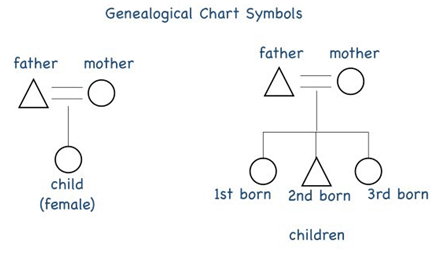
- Genealogy helps in tracing the line of descent. It forms an integral part of anthropological fieldwork as it connects the past to the present.
- British ethnographer William Halse Rivers introduced this method in his book ‘Kinship and Social Organisation’ in 1911, in order to identify important links of kinship determined by marriage and descent.
- Genealogical studies have unveiled the myths and beliefs associated with ancestors and ancestor worship.
- For example, during a genealogical study in a Karbi village, it was seen that many people in the family shared the same name.
Thinker’s views
- H. R. Rivers (1900) delineated the procedure of drawing up genealogical data on the early realization of the importance of genealogical method in social research.
- As per William Halse Rivers, genealogical method is important to understand the sociology of kinship, family, household, marriage and descent etc. (Kinship and Social Organisation, 1911)
- Malinowski (1922) defined genealogy as a “synoptic chart of a number of connected relations of kinship”.
- According to Srivastava (2004), in societies where writing technology has made in roads, kinship charts that hitherto existed as part of the oral tradition are now being written down in form of genealogy.
Technique of the Genealogical Method
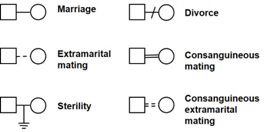
- In recording genealogical tables, mostly the names of males are written in capital letters, and those of the females in ordinary writing.
- The names of the social divisions, village, etc., are written in red ink. In recording a marriage, the name of the husband may he put to the left of that of the wife.
- Whenever a large mass of genealogical material has been collected, it is most convenient to write on one sheet, descendants in one line only, and to give cross references to descendants in the other line.
- The line chosen will depend on whether the people stress patrilineal or matrilineal descent.
- Thus, with patrilineal descent and a family of sons and daughters, the children of the sons will be given on one sheet, while the children of the daughters will appear in the genealogies of their husbands.
- When a person has died unmarried, it may be well to indicate whether death has taken place in infancy or in adult life, by the abbreviations y. (Died Young), and d.unm. (Died Unmarried).
- In collecting genealogies, accurate information can be obtained with a minimum knowledge of the language.
- First of all, a genealogical record of an elementary family is obtained, with the terms for father, mother, child and sibling. Using the native terms, the investigator is in a position to continue the genealogy and to record other persons related by kinship and affinity and their terms of address.
- It is also asked that "did so and so have wives other than so and so Did these two (by name) have children?" Did your mother have another husband? Did these two have children?" Thus, the half sibling relationship is made clear.
- In the same way, genealogical data for many generations can be recorded. This gives one genealogy as far as it can be traced.
Advantages
- Genealogical data has a functional value. It is used in the regulations of marriage, inheritance of property, succession to chieftainship, etc.
- In a small community, it is often possible to take the genealogies of all the inhabitants. This census can form the basis of sociological work and for investigation on population and migrations.
- The data in the genealogies provides the investigator the names and relationship to one another of all those whom he will meet in daily work. This will help him to carry the different type of research, like participant observation, interview, schedule etc.
- The study of kinship can only be adequately undertaken by means of the genealogical method.
- It provides early awareness of generations in society.
- It is useful to collect vital statistics among a non-literate population.
- It gives a sense of identity.
Limitations
- Familiarity with the native language is a necessary requirement.
- Careful in the understanding of kinship system and terms denoting familial relationships like uncle, auntie, dada, baba, and other single words signifying multiple meanings.
- It is necessary to note down the name of siblings of respondents.
- Information impact of Socio-cultural change in one group.
Significance of Genealogical Method in Sociological Fieldwork
- Genealogical method is used to learn about many societies which preserve their local culture and traditions.
- It is important for the researcher to interpret these keeping local perspective in mind.
- Not only do fieldworkers prepare genealogies but also the people whose charts they prepare may also keep an account of their kin and affinal relatives.
- The kinship chart therefore is an analytical tool as well as an ensemble of rules according to which the actors are expected to behave.
- Some societies have specialized groups of genealogists who derive their livelihood by charging their clients for keeping their kinship and marriage records.
7. LIFE HISTORIES
Introduction
- It is the method of data collection by the study of biographical and autobiographical accounts, or even an interpretive understanding of events and incidents from individuals' lives.
- It is a qualitative research method. It is an alternative to empirical methods for identifying and documenting the social patterns of individuals and groups.
- Life history is an interviewing method used to record autobiographical history from a person's perspective, often gathered from traditionally marginalized groups.
- The most famous has been made by Clifford Geertz in his anthropological and historical studies.
- It allows the researcher to explore a person's microhistorical (individual) experiences within a macrohistorical (history of the time)
The technique
- In this method, the interviewer allows the subject or a person to tell their life story on their own terms, as opposed to those of the researcher. (Boatema Boateng, 2011)
- Generally, the interview begins with the subject's early childhood and to proceed chronologically to the present.
- Another approach is to ask participants to write their own life stories. Eg. “The Polish Peasant in Europe and America” is based a Polish immigrant’s own life story in his own writings.
- The availability of a series of biographical accounts, diaries, letters, photographs, folklore etc., are referred extensively as a source material for developing a life history.
Thinker’s views and Historical perspective
- This technique was begun by anthropologists studying Native American groups around the 1900s, and was taken up by sociologists and other scholars.
- The landmark of the life history method was developed in the 1920s in “The Polish Peasant in Europe and America” by W. I. Thomas and Florian Znaniecki. It describes a Polish immigrant’s own life story in his own writings. According to Martin Bulmer, it was "the first systematically collected sociological life history".
- The approach lost momentum, as quantitative methods became more prevalent in American sociology.
- This method was revived in the 1970s, mainly through the efforts of French sociologist Daniel Bertaux and Paul Thompson. Their life history research focused on bakers and fishermen.
- In Germany, the life history method is closely associated with the development of biographical research. It borrowed concepts from phenomenology (Alfred Schutz), symbolic interactionism (GH Mead), ethnomethodology (Harold Garfinkel), and sociology of knowledge (Karl Mannheim).
- Anthropologist Franz Boas, on the basis of his famed studies of primitive men, concluded that ‘the human mind, modes of thought and action is practically identical’ among all the races of men. Hence, the life histories have vast universal applications.
Criteria for Life History
- John Dollard's discussion of the criteria for the life history still remains the most penetrating on the subject.
- The subject must be viewed in a cultural series.
- Behavior of individuals must be viewed as socially relevant.
- The family of the subject of study must be viewed in its role of submitting the culture and way of life of the group through its individual members.
- The continuous related character of experience from childhood through adulthood should be stressed.
- The "social situation" must be studied in order to learn kind and degree of social pressures, social forces, social participation or abstention, exercised by the subject.
- The life history material must be organized and conceptualized.
- Writing up a case history should be looked upon as having as much importance as writing up a laboratory experiment.
- Uniform methods of recording and carefully selected case data may provide a basis for comparison and classification of significant common as well as peculiar differences in given situations.
Advantages of Life History
- Life history can systematically explore the experience of social change.
- Life history helps understand more about individual lives from the perspectives individuals themselves — something quantitative interviews may be missing.
- Life history interviews can provide information about biographical resources, aspirations, opportunities, constraints and turning points.
- Life history enables the researcher to make "thick description" of the context.
- The method can capture data pertaining to the effects of age, different periods
- A number of methods can be used to collect data in reconstructing life histories.
- Life history addresses life as a whole and locates life in historical times.
Limitations
- Life history can be interpreted in different ways.
- Life history can be misunderstood,
- Life history will always have gaps.
- An individual recalling a false memory.
- An individual omits essential information for one reason or another.
Significance of Life Histories in Sociological Fieldwork
- The life history approach to social research and theory subsumes several methodological techniques and types of data.
- These include case studies, interviews and use of documents, including letters, diaries, archival records, oral histories and various kinds of narratives.
- The assumption of this approach is that personal and collective narratives are inherently connected and thus a personal story has a collective dimension.
- The latter forms of texts are constructed by fieldworkers based on often firsthand information collected in field research by interviews, asking people to write down about themselves or collecting life histories.
8. ORAL HISTORY
Introduction
- Oral history can be defined as the recording, preservation and interpretation of historical information, based on the personal experiences and opinions of the speaker.
- Historians, folklorists, anthropologists, sociologists, journalists, linguists, and many others employ some form of interviewing in their research.
- These interviews are conducted with those who participated in or observed past events. Their memories and perceptions are preserved as an aural record for future generations.
- Oral historians have promoted common sense, ethics and standards of practice, most importantly the attaining of the "informed consent" during the interviews.
- Oral historians prefer to ask open-ended questions and avoid leading questions.
- Oral history strives to obtain information from different perspectives. Mostly, these cannot be found in written sources.
- Knowledge presented by Oral History is unique in that it shares the tacit perspective, thoughts, opinions and understanding of the interviewee in its primary form.

Thinker’s views and Historical perspective
- Primitive societies have long relied on oral tradition to preserve a record of the past in the absence of written histories.
- In Western society, the use of oral material goes back to the early Greek historians Herodotus and Thucydides. They made extensive use of oral reports from witnesses.
- The modern concept of oral history was developed in the 1940s by Allan Nevins.
- In his book ‘Doing Oral History’, Donald Ritchie wrote that “Oral history has room for both the academic and the layperson. With reasonable training, anyone can conduct a useable oral history.”
- Alessandro Portelli compared the workers' experiences through oral history in Italy.
- In his book "Listening to History", Trevor Lummis said “One precise advantage of oral history is it is interactive, and one is not left alone”.
- The 1947 Partition Archive was founded in 2010 by Guneeta Singe Bhalla. She conducted interviews “to collect and preserve the stories of those who lived through this tumultuous time, to make sure this great human tragedy isn't forgotten”.
- In 2014, Brajesh Samarth in his ‘The Sikh Diaspora Project’ recoded oral histories of the Sikh diaspora, including those who migrated after the 1984 massacre of Sikhs.
Advantages
- In oral history questioning with individuals, the "closed door" of the written record gives way to "open door" of the interview. oral histories can identify psychological realities that justify individual and group behaviors.
- Oral histories can reveal those facts which do not get into public records or are ignored by mainstream historians and mainstream media. Eg. the incidents of Kashmiri Pandits, Gujarat riots, Sikh massacre etc. are recorded by oral histories.
- Oral history is the only way to collect data in those societies or situations where there are no written records.
- Oral history involves recording life histories among all socioeconomic levels of the population.
- Oral history testimonies are often useful in interpreting other public documents.
- Oral history helps us understand how individuals and communities experienced the forces of history.
- Oral history teaches us what has changed and what has stayed the same over time.
- Feminists especially insisted on using oral histories of women to recast histories.
- Subaltern school historians have used this method in reconstructing histories of peasant movements and protests.
Limitations
- Usually, oral history is achieved through a deed of gift. However, it has the ethical issues of copyright ownership.
- Sources may not be reliable and may represent misleading facts about the events.
- Not all past events can be studied because of the lack of evidence and source materials.
- It gets more challenging to have research if the events are from a more distant past.
- Some limitations that this method suffers from include repetitive data, idiosyncratic information and ethnocentrism.
- Oral historical understanding, if not properly interpreted, may distort the past.
Significance of Oral History in Sociological Fieldwork
- Oral histories are less focused on whole life and more focused on a topic or a part of a life.
- Besides contributing significantly to historical data previously collected, this method can be used to give voice to minority groups.
- It permits inclusion of usually silenced groups in a population like Dalits, women, tribals, the disabled etc.
- Historians today are making use of oral histories to supplement historical understandings.
- Sociologists have long adopted this method of elicitation especially in societies where no written records existed.
9. SECONDARY SOURCES OF INFORMATION
Introduction
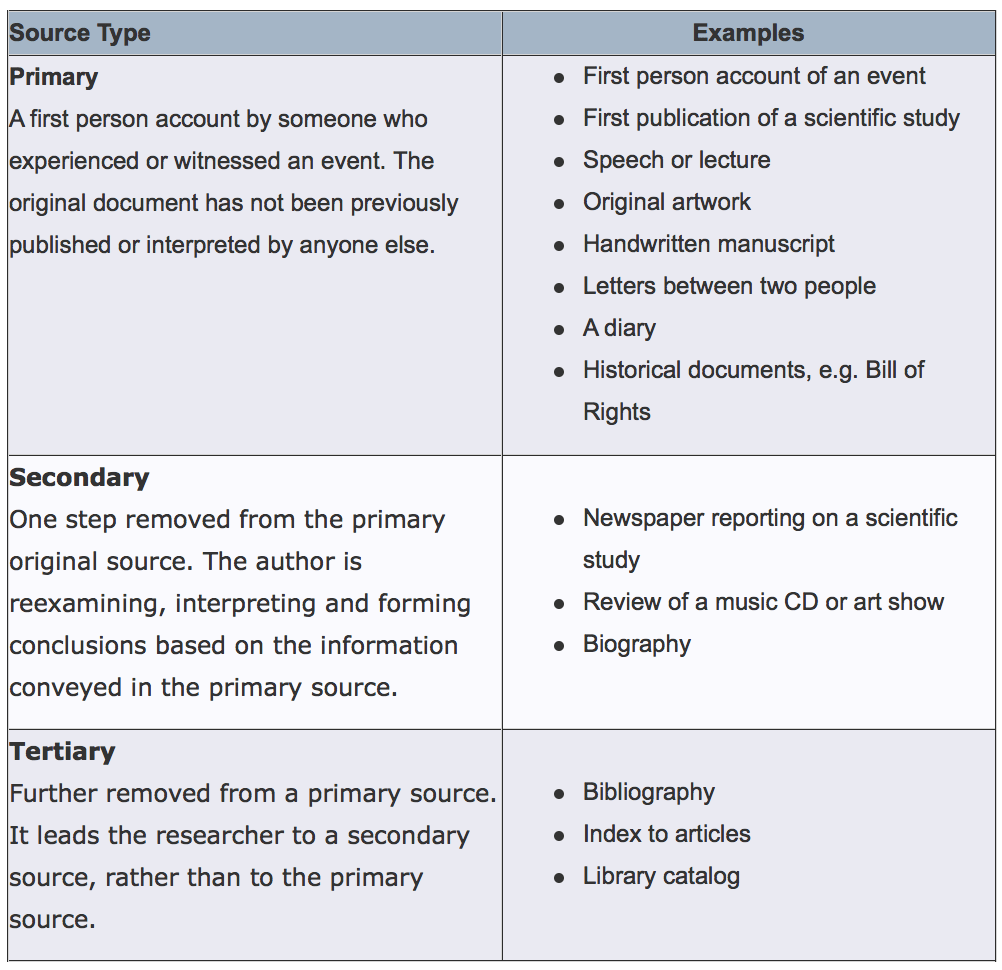
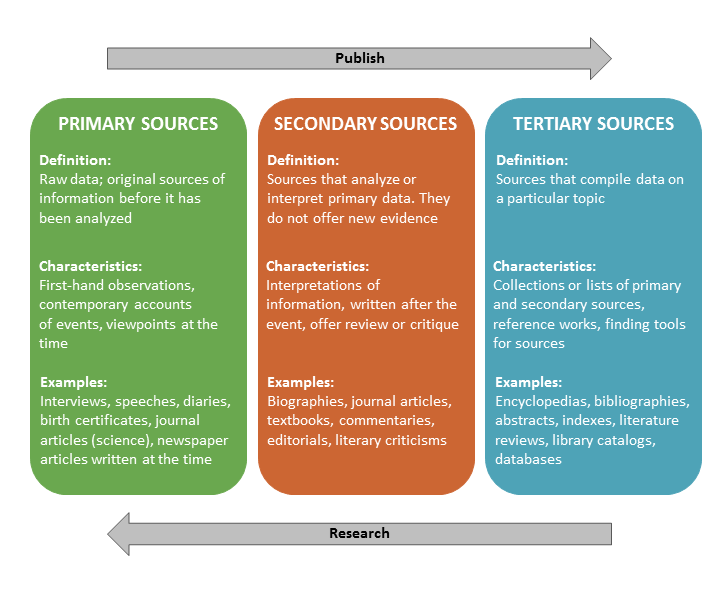
- Secondary sources of information refer to the data which have already been collected and analyzed by someone else. Secondary data my either be published data or unpublished data.
- A secondary source of information is a document or recording that relates or discusses information originally presented elsewhere.
- A secondary source contrasts with a primary source, which is an original source of the information.
- Therefore, secondary information interprets and evaluates primary information.
- Some examples are:
-
- Analysis & interpretations of original research (reported in magazines)
- Biographies
- Newspapers
- Books
- Commentaries
- Dissertations
- Indexes, Abstracts, Bibliographies (used to locate primary & secondary sources)
- Journal Articles.
- They may be found in diaries, letters, unpublished biographies and also may be available with scholars and research workers and other public and private individuals or organizations.
- Dr. A. L. Bowley observes that it is never safe to take published statistics at their face value without knowing their meaning and limitations.
Thinker’s views
- Helge Kragh (1989), in ‘An Introduction to the Historiography of Science’ views that ‘The distinction between primary and secondary sources is subjective and contextual, so that precise definitions are difficult to make.’
- As per the German thinkers, a Sekundärquelle (secondary source) is a source which can tell about a lost Primarquelle (primary source), such as a letter quoting from minutes which are no longer known to exist, and so cannot be consulted by the historian.
- A secondary source may include a literature review in a research paper. It may be a description of a concept in a chapter in a reference book. – Judith Garrard (2010)
Data management
- A researcher must be extremely careful while using secondary data. He must make a minute scrutiny because it is possible for the data may be unsuitable or inadequate in the context of the research problem.
- The data must be reliable, suitable and adequate.
Reliability of Data
The reliability can be tested by finding out such things about the data:
- Who collected the data?
- What were the sources of data?
- Were they collected by using proper methods?
- At what time were they collected?
- Was there any bias of the compiler?
- What levels of accuracy were desired and were they achieved?
Suitability of Data
- The data that are suitable for one enquiry may not be necessarily found suitable in another.
- The researcher must very carefully scrutinize the definition of various terms and units of collection used at the time of collecting the data from the primary source originally.
- The object, scope and nature of the original enquiry must also be studied.
Adequacy of Data
- If the level of accuracy achieved in data is found inadequate for the purpose of the present enquiry, they will be considered inadequate and should not be used the researcher.
- If this is not done, the results of the investigation may not be fully correct.
Advantages
- It is much more economical to use secondary data.
- Secondary data, if available, can be obtained more quickly compared to primary data.
- Secondary data facilitates the work of individual investigator or research organisation when they find it impossible to collect primary data with regard to several subjects. Census data, national income data, etc., cannot be collected by an individual but they can be easily obtained from government publications.
- The worldwide data concerning diverse phenomena like world trade, industry, population, health, etc., are usually obtainable through secondary sources published by international agencies like United Nations Organisation, World Bank, International Monetary Fund. etc.
- At time, there may be lots of usable information in the already available data which can well be utilised by the investigator and he can even have new insights concerning the problems he is studying.
- Most statistical analysis in practice rest upon secondary data since they are readily available in many cases in diverse fields.
Limitations
- Secondary data is very risky and is to be used only when their reliability, suitability and adequacy have been ensured.
- Some sources may be classified as primary or secondary, depending on their usages. A third level, the tertiary source, such as an encyclopedia or dictionary, resembles a secondary source in that it contains analysis, but attempts to provide a broad introductory overview of a topic.
- It is difficult to find secondary data which exactly fit the needs of your investigation.
- There is also the problem of finding secondary data which is sufficiently accurate.
- Due to bias, inadequate size of mmple, errors of ldefinition, etc., the secondary data may be erroneous.
- Many times, secondary data are not available and in such situations we have to compulsorily collect primary data.
Significance of Secondary sources in Sociological Fieldwork
- Sociologists today regard the virtual world as a space for both primary and secondary source of data collection. Google search is coming up in a big way as a source of secondary data however, as a researcher one has to be cautious while using internet sources.
- One needs to validate the authenticity of such data before reporting it.
- We are living in the big data age. For the sociologist the sources of secondary data are a key way to gather information about their subjects in order to better understand and serve them.
10. PARTICIPATORY APPRAISAL
Introduction
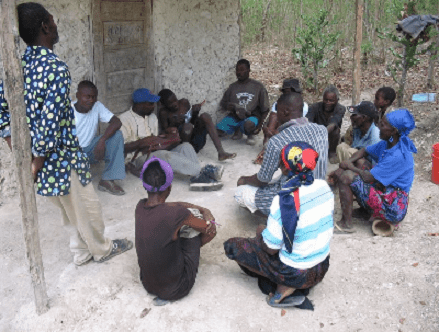
- Participatory research is a qualitative research methodology that involves researchers and participants collaborating to understand social issues.
- These methods involve the detection of problem, collection of data, preparation of collective plan, and finally action.
- The approach aims to incorporate the knowledge and opinions of rural people in the planning and management of development projects and programmes.
- In this view, an actively involved and empowered local population is essential to successful rural community development.
- It is mainly used in rural areas and is known as Participatory rural appraisal (PRA).
Thinker’s views and Historical perspective
- The philosophical roots of participatory rural appraisal techniques can be traced to activist adult education methods such as those of Paulo Freire and the study clubs of the Antigonish Movement.
- PRA has evolved and spread from beginnings in Ethiopia, India, Kenya and elsewhere and in early 1994 has known to be quite widely practiced in many other countries.
- Robert Chambers, in ‘Whose reality counts?’, argued that this approach owes much to “the Freirian theme, that poor and exploited people can and should be enabled to analyze their own reality.”
- To ensure that people are not excluded from participation, these techniques avoid writing wherever possible. These rely on the tools of oral communication and visual communication such as pictures, symbols and group memory. – Robinson and Pant (1995) in "PRA: a new literacy?"
The techniques
The basic techniques used include:
- Understanding group dynamics,g. through learning contracts, role reversals, feedback sessions.
- Surveying and sampling,g. transect walks, wealth ranking, social mapping.
- Interviewing,g. focus group discussions, semi-structured interviews, triangulation.
- Community mapping,g. Venn diagrams, matrix scoring, ecograms, timelines
Techniques
- A reversal of learning, to learn from local people, directly on the site, and face to face, gaining insight from local physical, technical and social knowledge.
- Learning rapidly and progressively, with conscious exploration, flexible use of methods.
- Offsetting biases, by being relaxed and not rushing, listening and lecturing, probing instead of passing on to next topic.
- Optimizing tradeoffs: relating the costs of learning to the usefulness of information, with tradeoffs between quantity, relevance, accuracy and timeliness.
- It includes the principles of optimal ignorance - knowing what is not worth knowing, and then not trying to find it out.
- Principles of appropriate imprecision - not measuring what need not be measured, or more accurately then needed.
- Triangulating, meaning cross checking and progressive learning and approximation through plural investigation.
- Seeking diversity, meaning looking for and learning from expectations, oddities, dissenters and outliers in any distribution.
- The principles are mainly epistemological, to do with obtaining information and gaining knowledge.
Advantages
- Participatory research is a method that is ethical in its approach since it avoids taking advantage of communities. It takes into consideration the issues facing the communities.
- It is used in natural resource management programs for women and the poor, agriculture, health and food security.
- Target group’s real priorities are identified.
- Delegation of responsibilities.
- Use of indigenous knowledge.
- Participation by the proper elements presents the ‘Hijacking’ of programme benefit selection of the community.
Limitations and dangers
- The field has been criticized for lacking a systematic evidence-based methodology.
- It is vulnerable to discrediting by over rapid promotion and adoption, followed by misuse, and by sticking on labels without substance.
- It has been used to legitimise rash and biased rural development.
- Hurried rural visits, in sensitivity to social context, and lack of commitment compound errors. It mean that the poorest are, once again, neither seen, listened to, nor learnt from.
- There is a need to standardise and codify, often in the name of quality. However, the manuals are not properly prepared.
- Routinization: Repetition leads practitioners into regular habits. The practitioners have shown signs of slipping into unvarying standard practices.
Significance in Sociological Fieldwork
- These techniques essentially complement more formal methods. More often than not these techniques are preliminary exercises.
- Participatory assessment and activities are methods for creating a dialogue and for collecting information.
- They are characterized by ingenuity and flexibility, and the methods to be applied depend on the specific context.
- They generally serve the purpose of dialogue with the people, information generation, analysis in some cases and mobilization of people around certain issues like land rights, water, public distribution system, etc.
- Since the NGOs involve multidisciplinary teams, the PRA exercises take a multidisciplinary perspective.
- These techniques have proved to be of much use in diagnosing specific problems and highlighting possible solutions.
- To offset the limitations, these must be implemented with a great care, patience and planning with a plenty of time.