Population Distribution
( Sociology Optional)
Population Distribution
( Sociology Optional)
Introduction
Population distribution means “the pattern of where people live.”
- World population distribution is uneven.
- Places which are sparselypopulated contain few people.
- Places which are denselypopulated contain many people.
Population density is a measurement of the number of people in an area.
- It is an average number.
- Population density is calculated by dividing the number of people by area.
Pattern of population distribution
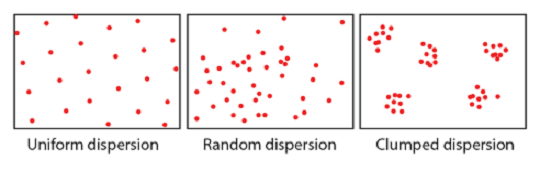
The organisms in a population may be distributed in a uniform, random, or clumped pattern. Uniform means that the population is evenly spaced, random indicates random spacing, and clumped means that the population is distributed in clusters.
Factors Affecting Population Distribution and Density
Physical Factors
- Relief (shape and height of land): People prefer living on flat plains and gentle slopes. This is because such areas are favourable for the production of crops and to build roads and industries.
- Resources: Availability of water, Fertile soils are important for living, agricultural and allied activities.
- Climate: An extreme climate such as very hot or cold deserts are uncomfortable for human habitation. Areas with a comfortable climate, where there is not much seasonal variation attract more people.
Human Factors
- Political: Countries with stable governments tend to have a high population density e.g. Singapore
- Social: Groups of people want to live close to each other for security e.g. USA
- Economic: Availability of Good job opportunities encourage high population densities, particularly in large cities, educational and medical facilities, better means of transport and communication.
Pattern of population distribution around the world
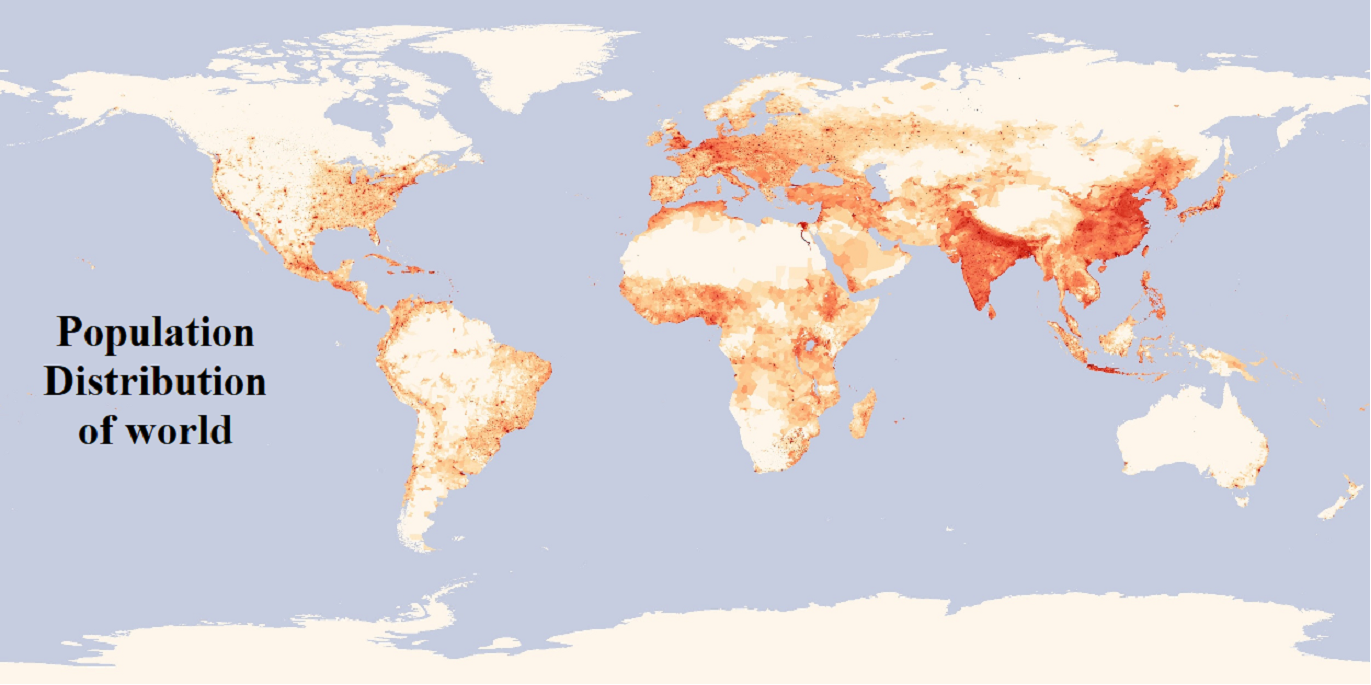
- Broadly, 90 per cent of the world population lives in about 10 per cent of its land area.
- The 10 most populous countries of the world contribute about 60 per cent of the world’s population. Of these 10 countries, 6 are located in Asia. Identify these six countries of Asia.
Pattern of population distribution in India
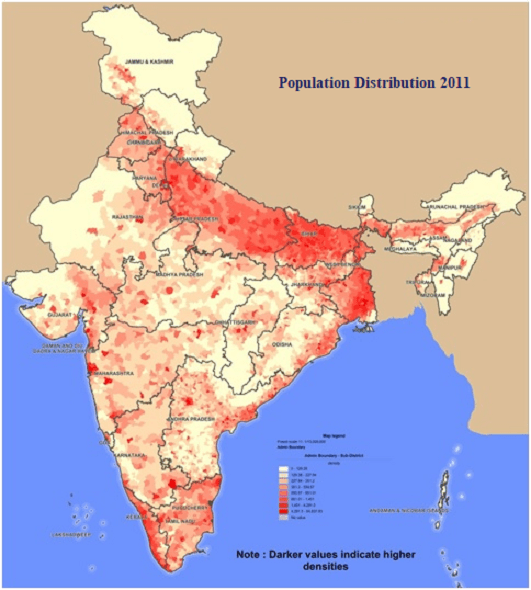
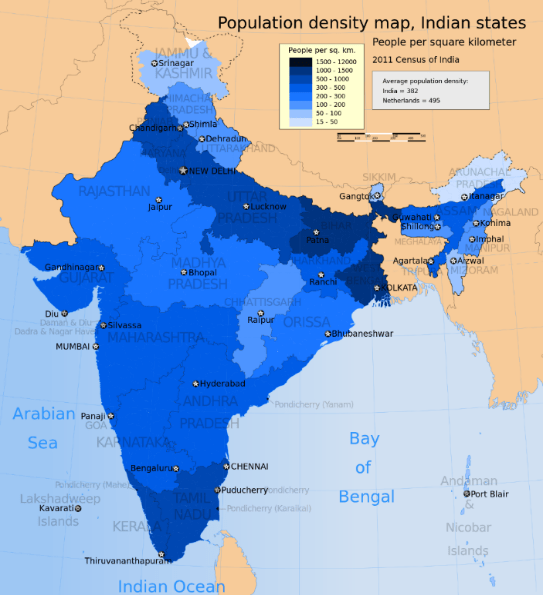
- Throughout the country, India has a highly uneven pattern of the population distribution.
- Uttar Pradesh has the highest population followed by Maharashtra, Bihar, and West Bengal.
- Terrain, climate, and availability of water largely determine the pattern of the population distribution. However, socio-economic and historical factors also affect the pattern of population distribution.
- As per the 2011 census, urban population of India was 31.16%