
ANALYSIS, INTERPRETATION AND PRESENTATION OF DATA
( Sociology Optional)
ANALYSIS, INTERPRETATION AND PRESENTATION OF DATA
( Sociology Optional)
After the field work and use of tools of data collection, the data compilation includes three major steps:
- Analysis
- Interpretation
- Presentation
3.11.1 ANALYSIS OF DATA
- Analysis of Data is the process of systematically applying statistical, mathematical and logical techniques to describe and illustrate, condense and recap, and evaluate data.
- Data analysis is defined as ‘a process of cleaning, transforming, and modeling data to discover useful information for social research.’
- Primarily, it is a stage in the entire process of research where the researcher already has the data, and he now has the task to arrange and analyse
- At the other level, analysis of data represents an intellectual exercise that begins from the very moment we think of doing research on a particular area or topic.
- A social analyst assumes that carefully thought out, well-marshalled data and facts have significant general meaning, from which valid generalizations can be drawn.
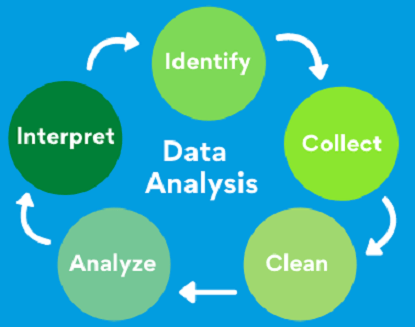
Phases
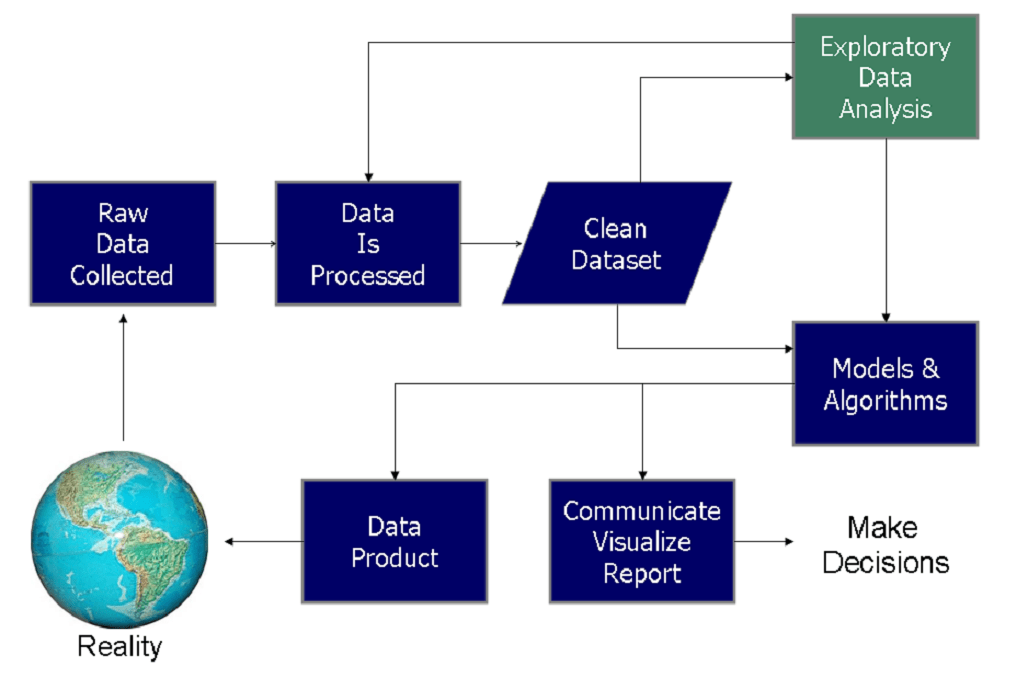
Fig. The CRISP framework
- There are several phases that can be distinguished.
- The phases are iterative, in that feedback from later phases may result in additional work in earlier phases.
- The CRISP framework has the following steps as shown in the figure.
Thinker’s views
- Statistician John Tukey, defined data analysis in 1961, as “Procedures for analyzing data, ways of planning the gathering of data to make its analysis easier, more precise or more accurate, and all the machinery and results of mathematical statistics which apply to analyzing data.”
- As per Wright Mills, data analysis is “to put ideas, facts, ideas, figures in its place in a systematic way, and continually readjusting the framework.”
- According to B. Giles, "in the process of analysis, relationships or differences supporting or conflicting with original or new hypotheses should be subjected to statistical tests to determine the validity of data".
- Data analysis is a process for obtaining raw data, and subsequently converting it into information useful for decision-making by users. Data, is collected and analyzed to answer questions, test hypotheses, or disprove theories. – Charles Judd and McCleland (1989) in ‘Data Analysis’
Systematic Analysis
- It is a special process used at the time whole body of the gathered data — facts and ideas, figures, and ideas — is at hand.
- The function of systematic analysis is to build an intellectual edifice in which properly sorted and sifted facts and figures are placed in their appropriate settings and consistent relationships.
- Content analysis is a research technique for the systematic, objective, and quantitative description of the content of research data procured through interviews, questionnaires, schedules, and other linguistic expressions, written or oral.
- The aim imposes a number of demands upon the analyst. He must remember that facts and figures, in and by themselves, do not often make scientific sense facts and figures do not speak for themselves.
Precautions in analyzing the data
- Facts are never simple. They involve subjective and objective elements in varying degrees and combinations.
- For example, Two people of the same race, nationality and cultural background, cannot be analyzed on the same level of understanding their personalities, since their experiences and attitudes may differ.
- Social analysis also demands a thorough knowledge of one's data.
- Without penetrating, insightful knowledge, analysis is likely to be aimless, if not altogether worthless, and time consuming, however interesting, and comprehensive the data might be in other respects.
- The researcher needs to cultivate the habit of asking himself many questions.
- He should even consider the questions, which may appear foolish to him at the time.
- This stirs his imagination and induces new ways of looking at his problems and his data.
- Multiple readings and examinations of the gathered data is required to eliminate the noise from the useful data.
- Assessing the validity of established categories, codes, and classes to which the data have already been subjected in preliminary form.
- This kind of analysis implies the importance of precision, accuracy and painstaking care in the scrutiny of the data at hand.
- However, the exercise of these practices should not suggest rigidity and inflexibility it is necessary to doubt and to experiment with open mind and considerable flexibility.
Processing of the data
- Before the actual analysis of data, it must be subjected to processing.
- Processing implies editing, coding, classification, and tabulation of collected data so that they are amenable for analysis.
Editing
- Editing of data is a process of examining the collected raw data to detect errors and omissions and to correct these when possible.
- It involves a scrutiny of the completed questionnaires and schedules.
Coding
- Coding refers to the process of assigning numerals or other symbols to answers so that responses can be put into a limited number of categories or classes.
- They must also possess the characteristic of exhaustiveness and that of mutual exclusivity.
- Coding is necessary for efficient analysis and through it several replies may be reduced to a small number of classes which contain the critical information required for analysis.
Classification
- Most research studies result in a large volume of raw data which must be reduced into homogeneous groups of we are to get meaningful relationships.
- This fact necessitates classification of data which happens to be the process of arranging data in groups or classes on the basis of common characteristics.
- Classification can either based on attributes or class intervals.
Tabulation
- When a mass of data has been assembled, it becomes necessary for the researcher to arrange the same in concise and logical order. This procedure is referred to as
- Tabulation is essential because
- It conserves space and reduces explanatory and descriptive statements to a minimum.
- It facilitates the process of comparison.
- It facilitates the summation of items and the detection of errors and omissions.
- It provides a basis for various statistical computations.
Types of Analysis
- Analysis, particularly in case of survey or experimental data, involves estimating the values of unknown parameters of the population and testing of hypotheses for drawing inferences.
- Analysis may, therefore, be categorized as descriptive analysis and inferential analysis.
- Descriptive Analysis
- Descriptive analysis is largely the study of distributions of one variable.
- This study provides us with profiles of companies, work groups, persons, and other subjects on any of a multitude of characteristics such as size, composition, efficiency, preferences etc.
- This sort of analysis may be in respect of one variable (unidimensional analysis), or two variables (bivariate analysis) more than two variables (multivariate analysis).
- Correlation analysis
- It studies the joint variation of two or more variables for determining the amount of correlation between two or more variables.
- Causal analysis is concerned with the study of how one or more variables affect changes in another variable.
- It is thus a study of functional relationships existing between two or more variables.
- Inferential Analysis
- Inferential analysis is concerned with the various tests of significance for testing hypotheses in order to determine with what validity data can be said to indicate some conclusions.
- It is mainly based on inferential analysis that the task of interpretation, is performed.
3.11.2 INTERPRETATION OF DATA
Introduction
- Interpretation refers to the task of drawing inferences from the collected facts after an analytical and/or experimental study.
- In fact, it is a search for broader meaning of research findings.
- The task of interpretation establishes continuity in research through linking the results of a given study with those of another.
Thinker’s views
- According to William Emory, "Interpretation is concerned with relationships within the collected data. Interpretation also extends beyond the data of the study to include the results of other research, theory, and hypotheses".
- Wright Mills points out that the craft of “doing sociology” is multi-dimensional. Without undermining collection of data as per methodological orientation, it is important to also focus on its analysis and presentation.
- According to Pauline Young, "Ideally in the course of a research study, there should be constant interaction between initial hypothesis, empirical observation and theoretical conceptions to interpret the best results".
Techniques of Interpretation
Interpretation is an art that one learns through experience and practice. The techniques of interpretation often involve the following steps.
- Researcher must give reasonable explanations of the relations which he has found.
- He must interpret the lines of relationship in terms of the underlying processes and must try to find out the thread of uniformity to achieve a generalization.
- Extraneous information must be considered while interpreting the results of research study.
- Researcher should consult with specialist in the similar domain for identifying any omissions and errors in logical argumentation.
- Research must accomplish the task of interpretation only after considering all relevant factors to avoid false generalizations.
Functions of Interpretation
- It is through interpretation that the researcher can well understand the abstract principle that works beneath his findings.
- Through this he can link up his findings with those of other studies and thereby can predict about the concrete world of events.
- Interpretation leads to the establishment of explanatory concepts that can serve as a guide for future research studies; it opens new avenues of intellectual adventure and stimulates the quest for more knowledge.
- Researcher can better appreciate only through interpretation why his findings are what they are and can make others to understand the real significance of his research findings.
- The interpretation of the findings of exploratory research study often results into hypotheses for experimental research and as such interpretation is involved in the transition from exploratory to experimental research.
Need of interpretation
- It is only through interpretation that the researcher can expose relations and processes that underlie his findings.
- In case of hypotheses testing studies, if hypotheses are tested and upheld several times, the researcher may arrive at generalizations.
- But in case the researcher had no hypotheses to start with, he would try to explain and interpret his findings based on some theory.
- Interpretive analysis rests on understanding the meaning of cultural data like various myths, folklores, tales, interviews, etc.
- This interpretation must be considering the larger cultural patterns.
Precautions in Interpretation
- Even if the data are properly collected and analyzed, wrong interpretation would lead to inaccurate conclusions.
- The researcher must invariably satisfy himself that
- The data are appropriate, trustworthy, and adequate for drawing inferences
- The data reflect good homogeneity
- Proper analysis has been done through statistical methods.
- The researcher must remain cautious about the errors.
- Errors can arise due to false generalizations or due to wrong interpretation of statistical measures. E.g., the application of findings beyond the range of observations.
- He must always keep in view that the task of interpretation is very much intertwines with analysis and cannot be distinctly separated.
- The researcher must never lose sight of the fact that his task is only to make sensitive observations of relevant occurrences, but also to identify and disengage the factors that are initially hidden to the eye.
- Broad generalization should be avoided, as most research is not amenable to it.
3.11.3 PRESENTATION OF DATA
Introduction
- A research presentation or report is the culmination of all the stages of research which began with the choosing of a focused research problem.
- Presentation of data refers to putting up data in an attractive and useful manner such that it can be easily interpreted.
- The purpose of research is not well served unless the findings are presented to others.
- Writing of the report of presentation of the research findings is the last step in a research study and requires a set of skills somewhat different from those called for in respect of the earlier stages of research.
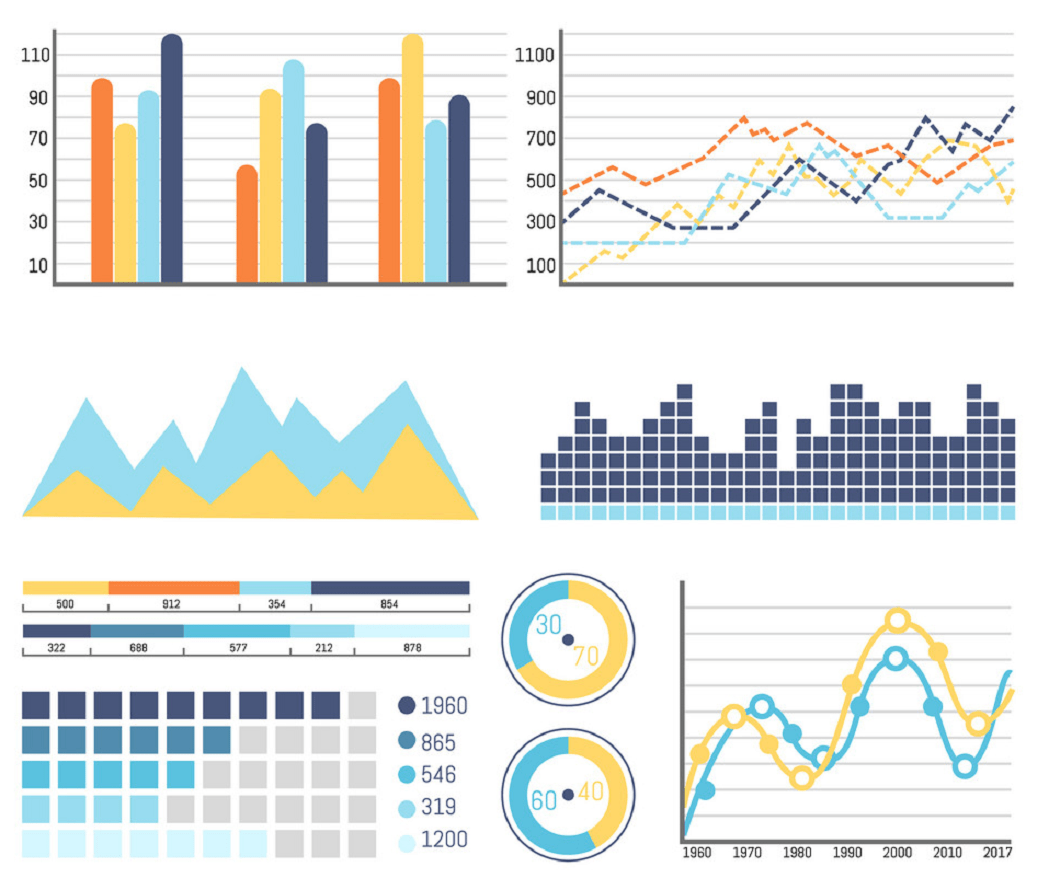
- There are generally four forms of presentation of data:
- Textual or Descriptive presentation.
- Tabular presentation.
- Graphical presentation.
- Diagrammatic presentation.
- It can be done using pi chart, graphs, percentage analysis etc.
Thinker’s views
- Wright Mills points out that the craft of “doing sociology” is multi-dimensional. Without undermining collection of data as per methodological orientation, it is important to also focus on its analysis and presentation.
- Mills (1959) pointed out that ‘as a social scientist, you have to present what you experienced and captured’.
- According to Tuttle, ‘a data presentation is a scheme for breaking a category into a set of parts, called classes, according to some precisely defined differing characteristics.’
Steps in Writing a Presentation
The usual steps involved in writing a report are.
- Logical analysis of the subject-matter
- Preparation of the final outline
- Preparation of the rough draft
- Rewriting and polishing
- Preparation of the final bibliography
- Writing the final draft
Types of Presentations
- Reports can be classified into two types — Technical reports and Popular reports.
1. Technical Presentations
- In technical presentations, the main emphasis is on the methods employed, assumptions made during study and the detailed presentation of the findings including their limitations and supporting data.
- A general outline of a technical report can be.
- Summary of results
- Nature of the study
- Methods employed
- Data
- Analysis of data and presentation of findings
- Conclusions
- Bibliography
- Technical appendices
- Index
2. Popular Presentations
- This type of presentations gives emphasis on simplicity and attractiveness.
- The simplification should he sought through clear writing, minimization of technical, particularly mathematical details and liberal use of charts and diagrams.
- A general outline of a popular report can be:
- The findings and their implications
- Recommendations for action
- Objective of study
- Methods employed
- Results
- Technical appendices
Precautions in Presentation
Research presentation is a channel of communicating the research findings to the world. It must be prepared with the following precautions in view:
- The length of the presentation should be long enough to cover the subject, but short enough to maintain interest.
- A research report should aim at sustaining the readers' interest in all aspect.
- Abstract terminology and technical jargon should be avoided in a research report. The report should be able to convey the matter as simply as possible.
- Charts, graphs and statistical tables may be used for the various results in the main presentation report.
- The layout of the presentation should be well thought out and must be appropriate.
- The presentations must be prepared strictly in compliance to the techniques of report-writing. Eg. the use of quotations, footnotes, documentation, proper punctuations, use of abbreviations, footnotes etc.
- The report must present the logical analysis of the subject matter.
- A research report should show originality and should necessarily be an attempt to solve some intellectual problem.
- The presentation must contribute to the solution of a problem, and not the a solution to the non-existing problem.
- Towards the end, the report must state the policy implications relating to the problem under consideration.
Advantages
- The research presentation communicates a body of specific data and ideas.
- It also contributes to the general body of knowledge on that topic of research.
- It opens scope for further research in that research area or allied areas.
- The research task remains incomplete till the report is presented. Hence, a presentation is considered a major component of the research study.