Problem of Displacement
( Sociology Optional)
Problem of Displacement
( Sociology Optional)
Introduction
- Development projects often involve the introduction of direct control by a developer over land previously occupied by another group.
- Often it constitutes forced and involuntary migration.
- One common consequence of such projects is the upheaval and displacement of communities.
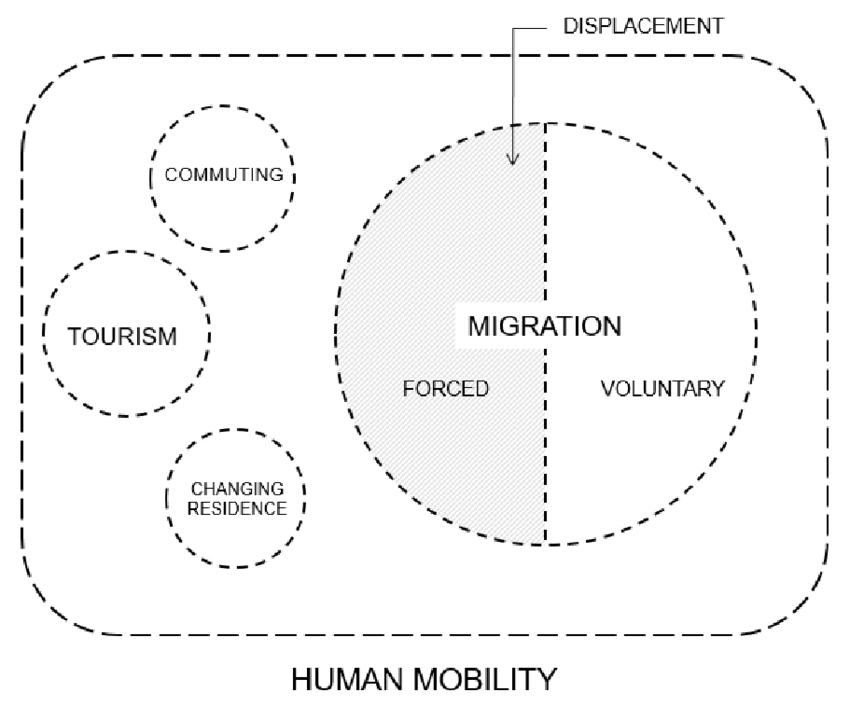
Development-induced displacement
- Development-induced displacement and resettlement (DIDR) occurs when people are forced to leave their homes in a development-driven form of forced migration.
- Development-induced displacement is a social problem affecting multiple levels of human organization, from tribal and village communities to well-developed urban areas.
- Development is widely viewed as an inevitable step towards modernization and economic growth in developing countries; however, for those who are displaced, the end result is most often loss of livelihood and impoverishment.
Causes
- Historically, it has been associated with the construction of dams for hydroelectric power and irrigation.
- It also results from various development projects such as mining, agriculture, the creation of military installations, airports, industrial plants, weapon testing grounds, railways, road developments, urbanization, conservation projects, and forestry.
- Natural resources extraction, urban renewal or development programs, industrial parks, and infrastructure projects all require land, often in large quantity.
- Conservation programs such as wildlife re-introduction schemes and the creation of biodiversity zones, also often oust communities.
- Other types of policies can also induce migration.
Thinker’s and organizational views
- The International Organization for Migration defines a displaced person or forced migrant as any person migrating to "escape persecution, conflict, repression, natural and human-made disasters, ecological degradation, or other situations that endanger their lives, freedom or livelihood".
- According to UNESCO, displacement is "the movement of people from their locality or environment and occupational activities," with its leading cause being armed conflict.
- According to Alden Speare, "displacement is considered to be involuntary, when a person is physically transported, and has no opportunity to escape from the conditions which are responsible to displace him."
Types of displacement
Primary or direct displacement
- It occurs when people move from their traditional lands to make way for a development project, or when people move towards a project to meet a new labor demand.
- Primary displacement is usually predictable and can therefore be mitigated through planning.
Secondary or indirect displacement
- It is a result of environmental, geographical and socio-political consequences of the development project that take place over time and distance from the initial project.
- This type of displacement is less predictable and difficult to control.
- One example of secondary displacement is if a community is forced to move because of pollution of their water supply by a mining project.
Forced displacement or forced migration
- It is an involuntary or coerced movement of people away from their homeland.
- The UNHCR defines 'forced displacement' as follows: displaced "as a result of persecution, conflict, generalized violence or human rights violations".
- Forced displacement has gained attention in international discussions and policy making since the European migrant crisis.
- An estimated 100 million people around the world were forcibly displaced in 2022, with the majority coming from the Global South.
Case studies of development-induced displacement
- Three Gorges Dam in China: A hydroelectric dam on China's Yangtze River constructed between 1994 and 2006, which displaced over 1.4 million people through primary and secondary displacement.
- Sardar Sarovar Dam in India: The largest dam in the Narmada Valley Project, which displaced over 40,000 people. The dam was the subject of protest by environment groups and tribal groups during the 1980s and 1990s.
- Ahafo Mine in Ghana: An open-pit mine which displaced approximately 10,000 people in 2005 and 2006. Most of the displaced were subsistence farmers, but the mining company, Newmont, denied them compensation for loss of land.
- Kuno Wildlife Sanctuary in India: Between 1999 and 2003, 24 villages were displaced to reintroduce the Asiatic Lion to the area. Resettlement and enforcement of forest boundaries disrupted social and economic ties between the displaced and the host community.
- Pacific Park/Atlantic Yards in the US: A mixed-use development in New York City that began construction on 2010, involving eminent domain, the destruction of 12 buildings, and several lawsuits.
Impact of Displacement
- It is estimated that 15 million people each year are forced to leave their homes as a result of public and private development projects.
- Chris De Wet (2006), in his Development-Induced Displacement: Problems, Policies and People, views that Compensation and rehabilitation policies designed to mitigate effects of displacement are often unsuccessful.
- This is largely due to corruption of street level bureaucrats, underestimation of the value of resources, failure of planners to recognize the intricacies of the existing social and economic systems of the displaced and lack of involvement of displaced persons in the planning process.
- Communities and individuals are most often only compensated monetarily. There are no proper mechanisms for addressing their grievances or political support to improve their livelihoods.
- When land is used as compensation, it is often inadequate in terms of size, location and natural resources. – Irge and Narae (2015).
- In the studies for land use deprivation in Ghana, Kidido and Ayitey (2015) viewed that ‘Land tenure laws prevent resettlement policy from being effective.’
- Poor and indigenous people are mostly affected by displacement as they have few political and monetary resources.
- Refugees and internally displaced persons typically need international protection and assistance because of fleeing violence and persecution.
- Development-induced displaced persons require the restoration of their capacity to generate income and protection from the state.
- As per UNHCR, while development induced displaced people have similar experiences to refugees, in terms of economic and social loss, they are not protected by international law.
Economic Impacts
- Landlessness and Change in Land-holding Pattern
- Joblessness and Occupational Shifts
- Homelessness
- Loss of Access to Common Property Resources (CPRs)
- Loss of Livelihood and Impoverishment
- Food Insecurity
Social and cultural consequences
Social Disorganisation:
- The traditional social control mechanisms may be weakened and even lost. Consequently, social tensions may increase.
- Also, social support networks tend to disintegrate and that has far reaching consequences for the community.
Loss of Self-esteem and Identity:
- Tribals, who have strong community leadership ties and have yet to get into the mainstream market economy, feel threatened by the government power hierarchy.
- After relocation, they are further fragmented, weakened and inherently unable to organise themselves.
- The disappearing community ties caused by geographical dispersal and the threat of commercial forces squeeze their spirits further.
Loss of Culture and Religion:
- There is a gradual collapse of the religious ethos that is closely linked to their environment and socio-agrarian systems.
- The community festivals, which held tremendous importance in the lives of the people, lose their meaning.
Loss of Political Institutions:
- The displaced people are incorporated into the state and have to conform to and become integrated with the socalled mainstream political system.
Psychological Impact
- It leads to a feeling of alienation, helplessness and powerlessness.
- Social cohesion is weakened and increased psychological stress diminishes the initiative and capacity for collective action.
- Displacement may lead to social anomie such as alcoholism, crime, suicides, prostitution, delinquency and despair and emotional disorders.
- Displacement caused by developmental reasons gives rise to numerous problems in the spheres of environment and health as well.
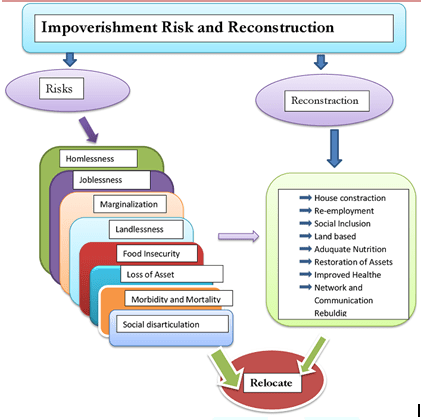
Impoverishment and reconstruction model (IRR)
Michael Cernea (1999) in The Economics of Involuntary Resettlement, proposed this model. He sets forth eight potential risks of displacement:
- Landlessness
- Joblessness
- Homelessness
- Marginalization
- Food insecurity
- Increased morbidity and mortality
- Loss of access to common property
- Social Disarticulation
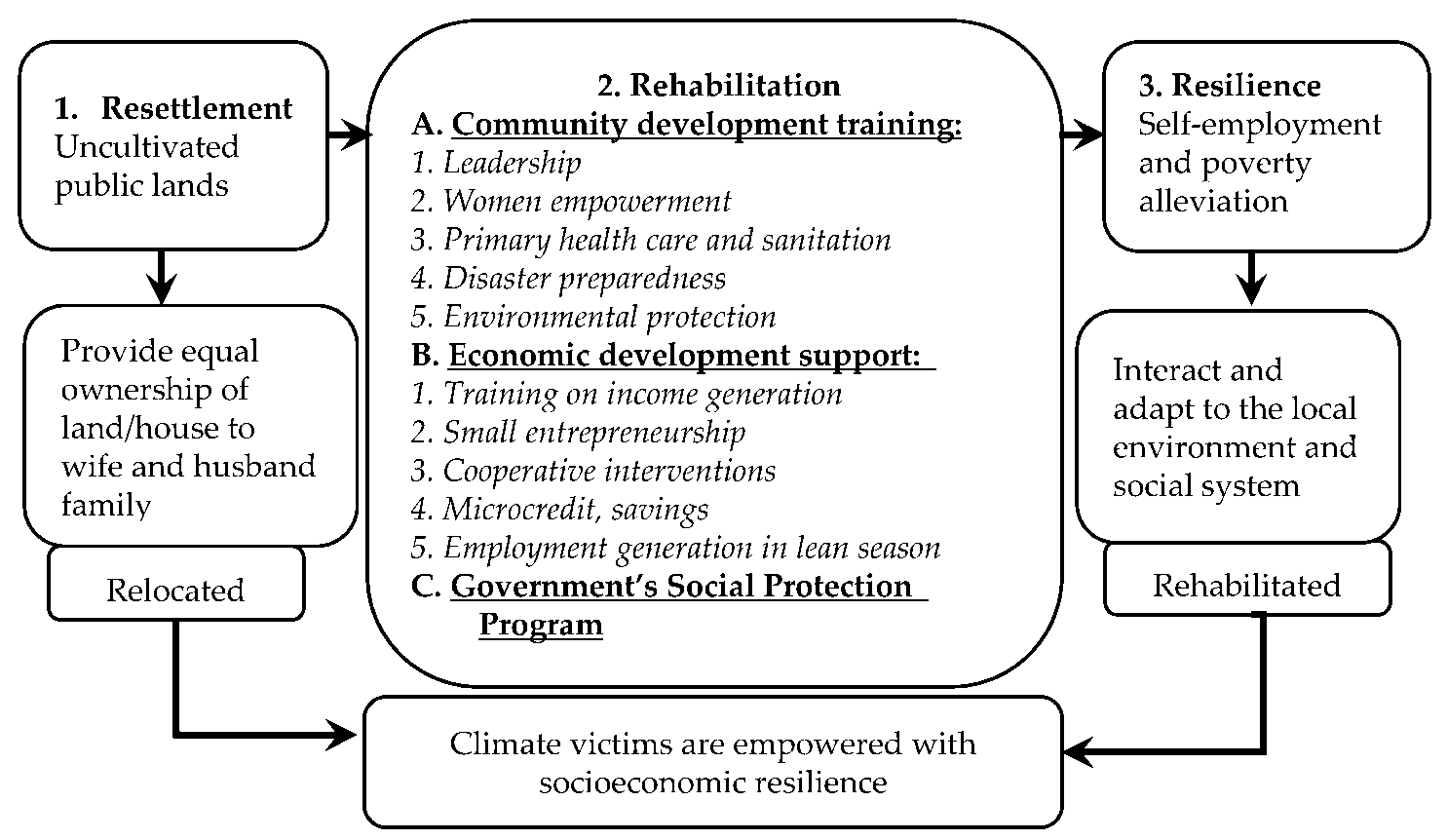
Solutions