
Child and Infant Mortality Rate
( Sociology Optional)
Child and Infant Mortality Rate
( Sociology Optional)
Introduction
- Infant mortality is the death of young children under the age of 1. This death toll is measured by the infant mortality rate (IMR), which is the probability of deaths of children under one year of age per 1000 live births.
- The under-five mortality rate, which is referred to as the child mortality rate, is also an important statistic, considering the infant mortality rate focuses only on children under one year of age
- The third National Family Health Survey (NFHS-3) coordinated by the International Institute for Population Sciences (IIPS) under the aegis of the Government of India, was conducted in 2005-06. As per this - estimate the infant mortality rate in India is steadily declining.
- under-5 (per 1,000 live births) in India was reported at 32.6 % in 2020, according to the World Bank collection of development indicators, compiled from officially recognized sources.
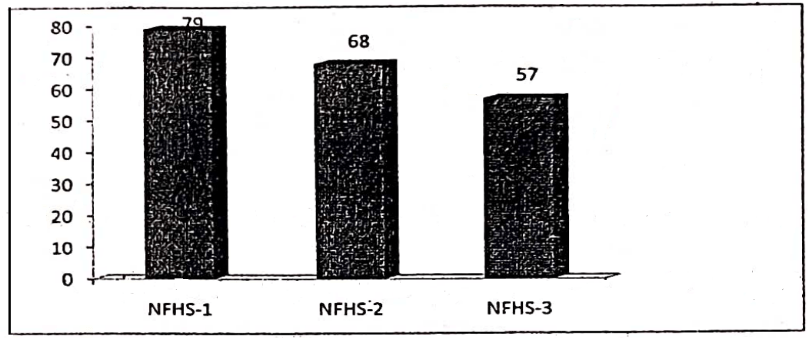
The NFHS-3 estimate of infant mortality is 57, deaths per 1,000 live births.
Thinker’s views
- Proponents of gender stratification theory argue that the enhancement of women's status, especially through education and other means, will greatly increase women's ability to access the socioeconomic resources and knowledge required for proper infant nutrition and care, resulting in reduced infant deaths (Wang 2014).
- Educated mothers are not only more likely to delay and space births but they are more likely to have fewer children, which reduces infant mortality (York and Ergas 2011).
- Industrialization is an important component of the modernization process and it is central to the modernization perspective (see, e.g., Rostow 1990). Modernization theorists contend that industrialization and the attendant economic development reduce infant mortality through improvements in health care, education, nutrition, and the like.
- Proponents of dependency/world-systems theory contend that dependent relations be-tween core and peripheral countries foster resource and surplus extraction, resulting in limited resources for investment in public health, family planning, nutrition, education, pre-natal and post-natal care programs, and other factors that reduce infant and child mortality (Shandra 2011).
- Developmental state theorists contend that strong states can act in ways that promote human well-being and reduce infant mortality (Evans 1995).
Trends
- Between 2019 and 2021, 35 children below the age of one died for every 1,000 children born, 15 per cent fewer than the 41 infant deaths per 1,000 live births in 2015-16, shows the latest health data from India’s national survey.
- India’s average neonatal mortality rate (NMR) — deaths in the first 28 days of life for every 1,000 births — fell from nearly 30 deaths in 2015-16 to 25 deaths in 2019-21. The greatest improvement (based on the percentage change) was in Sikkim, while the highest increase was in Tripura.
Causes of child mortality
- Socio-economic causes
- Poor health care infrastructure
- Cultural beliefs
- Poverty and lack of hygiene practices
- Lack of education
Determinants of child mortality in India
These included
- Proximate factors (such as nonmedical factors and medical care during the antenatal period, care at birth, and preventive and curative care in the postnatal period);
- Maternal factors (age, parity, and birth intervals): and
- Household - and community-level factors (water, sanitation and housing).
Income as a determinant of child mortality
- The infant mortality rate often serves as a key development indicator, reflecting the combined effects of economic development, technological change, including health interventions, and the sociocultural environment.
- A recent World Bank report supported the previously documented inverse relationship between per capita income and infant mortality rate in India. However, even though increases in income have reduced the infant mortality rate, the income effect is stronger on total fertility rates; and non-income factors play an even more significant role than income in lowering the infant mortality rate.
- For example, the effect of technological progress on the decline in infant mortality rate was estimated at 20% over the period 1975 - 90, the greatest effect occurring in 1985-90. However, public health expenditures did not significantly lower the rate.
- The World Bank report noted that although the poorest states in India performed worst in terms of both infant mortality and total fertility rates, the richest states did not perform best.
Child health programmes and child mortality reduction
- The data indicate a positive relationship between reduced infant mortality rates and key child health interventions, such as oral rehydration therapy, care seeking for acute respiratory infections, and immunization rates.
Determinants of perinatal and neonatal mortality
- Although concerted global and national efforts have been made to improve child mortality, less attention has been given to determinants of peri natal and neonatal mortality.
- Neonatal mortality has gradually increased as a percentage of total child mortality, because of a faster decline in the post neonatal mortality rate.
- Effective interventions to address risk factors are available (such as essential new born care) and their implementation could result in a rapid reduction in perinatal and neonatal mortality rates
Maternal determinants
- The high perinatal mortality rates in India reflect the poor status of women, including poor nutritional status (malnutrition and anaemia), low rates of literacy, lack of autonomy and early marriage and childbirth.
- Low rates of antenatal care, low utilization of obstetric and other health services and large numbers of deliveries by untrained personnel result in poor maternal health and poor birth outcomes, such as low birth weight and prematurity.
- Furthermore, the effects of maternal characteristics are not limited to the perinatal period. Improving female education and nutrition and increasing the use of health services during pregnancy and delivery, are all important for reducing childhood mortality rates.
Gender differentials
- Gender disparities in health and education are higher in South Asia, including India, than anywhere else in the world, and have been the subject of marry studies.
- One reason for gender differences in child mortality is a preference for sons, and after the first month of life other factors come into play. including environmental and behavioural factors, such as care-seeking practices.
- Girls are often brought to health facilities in more advanced stages of illness than boys, are taken to less qualified doctors when they are ill, and less money is spent on medicines for them than for boys.
- A recent analysis confirmed that girls are less likely to receive treatment than boys; and a study conducted in Punjab showed that during the first two years of life.
Nutritional determinants
- Malnutrition is a factor in an estimated 54% of all childhood deaths globally. More than half of all under-4-year-olds in India are still moderately or severely malnourished.
- 30% of new-borns are significantly underweight, and 60% of Indian women are anaemic.
- Also, despite differences in sociocultural, practices and lifestyles between states, nutritional deficiencies underlie child and infant mortality throughout India.
- Furthermore, in most urban and rural locations the proportion of malnourished children among scheduled castes and tribes is consistently higher than the average.
- Micronutrient deficiencies influence, child survival and-the health and development of surviving children, including cognitive development. Although potentially cost effective-and affordable interventions are available, existing food supplementation and micronutrient programmes in India have not achieved significant reductions in nutritional deficiencies.
- The problems that beset micronutrient programmes include shortages in supplies, logistical difficulties and the lack of community motivation and education.
- Low birth weight is a key predictor of malnutrition and an important determinant of child mortality. In a study of fifteen centres across India, the National Neonatology Forum found a prevalence of low birth weight of 33%, of which 32% were premature births.
Implications of declining infant mortality rate
- This rate is an important key indicator for a country’s health and standard of living; a low infant mortality rate indicates a high standard of healthcare. Causes of infant mortality include premature birth, sepsis or meningitis, sudden infant death syndrome, and pneumonia.
- Globally, the infant mortality rate has shrunk from 63 infant deaths per 1,000 live births to 27 since 1990 and is forecast to drop to 8 infant deaths per 1,000 live births by the year 2100.
India’s rural problem
- With 32 infant deaths per 1,000 live births, India is neither among the countries with the highest nor among those with the lowest infant mortality rate.
- Its decrease indicates an increase in medical care and hygiene, as well as a decrease in female infanticide.
- Increasing life expectancy at birth is another indicator that shows that the living conditions of the Indian population are improving.
- Still, India’s inhabitants predominantly live in rural areas, where standards of living as well as access to medical care and hygiene are traditionally lower and more complicated than in cities.
- Public health programs are thus put in place by the government to ensure further improvement.
Measures
- The study concluded that a substantial decline in infant mortality rate is possible without significant improvement in economic development, even though the relative importance of various determinants could not be assessed.
- It made a case for increased access to a minimum package of essential services that would significantly reduce high infant mortality rates: reproductive health services: perinatal care; improved breastfeeding practices; immunization; home-based treatment of diarrhoea; and timely introduction of supplementary foods.
Government initiatives
Future child health policies should build on past lessons from child health programmes in India, sustain the achievements that have already been made, enhance quality and efficiency and address specific gaps in neonatal care. These goals can be accomplished as discussed below.
- A new strategic framework for childhood illness, health and development is needed. The government of India needs to reassess the country’s current child mortality reduction goals and proceed with integrated approaches for child health and nutrition.
- A better understanding of the main determinants of the health and nutrition cycle-for mothers and children : the life cycle - is central to developing more effective strategies for child survival, health and development. Socioeconomic, environmental, behavioural, health and nutritional determinants influence this cycle; the challenges over the next 10 years will be to jointly address’s the most important determinants and gaps in the cycle with affordable, cost-effective and culturally appropriate interventions.
- Because of state differences in infant and child mortality levels and performance in India stratified child health policies are needed that take into account state-specific epidemiological and demographic patterns and key determinants.