
Labour Migration
( Sociology Optional)
Labour Migration
( Sociology Optional)
Introduction
- Migrant Labour as casual and unskilled workers who move about systematically from one region to another offering their services on a temporary, usually seasonal basis.
- Human migration is the movement of people from one place to another with the intentions of settling, permanently or temporarily at a new location.
What is migration
- Human migration is the movement of people from one place to another with intentions of settling, permanently or temporarily, at a new location.
- The movement often occurs over long distances and from one country to another, but internal migration (within a single country) is also possible; indeed, this is the dominant form of human migration globally.
- Migration is often associated with better human capital at both individual and household level, and with better access to migration networks, facilitating a possible second move.
- Age is also important for both work and non-work migration. People may migrate as individuals, in family units or in large groups.
- There are four major forms of migration: invasion, conquest, colonization and emigration/immigration.
- As such, migrants are traditionally described as persons who change the country of their residence for general reasons and purposes. These purposes may include the search for better job opportunities or healthcare needs.
Thinker’s and Organisations view
- Labour migration is defined as the movement of persons from their home State to another State for the purpose of employment.
- Today, an estimated 86 million persons are working in a country other than their country of birth.
- Despite the efforts made to ensure the protection of migrant workers, many migrants continue to experience numerous problems particularly more vulnerable groups, such as female domestic workers, entertainers and lower skilled workers- as per ILO
- According to International Organization for Migration, Labour migrants” are defined as those who move for the purpose of employment.
Indian Labour Migrants
- These are people who have migrated from the territories that are currently within the borders of the India.
- It constitutes NRIs (Non-resident Indians) and PIOs (Persons of Indian origins).
- The Indian Diaspora is estimated to be over 30 million.
Waves of Migrants to India from:
- Central Asia
- West Asia
- South East Asia
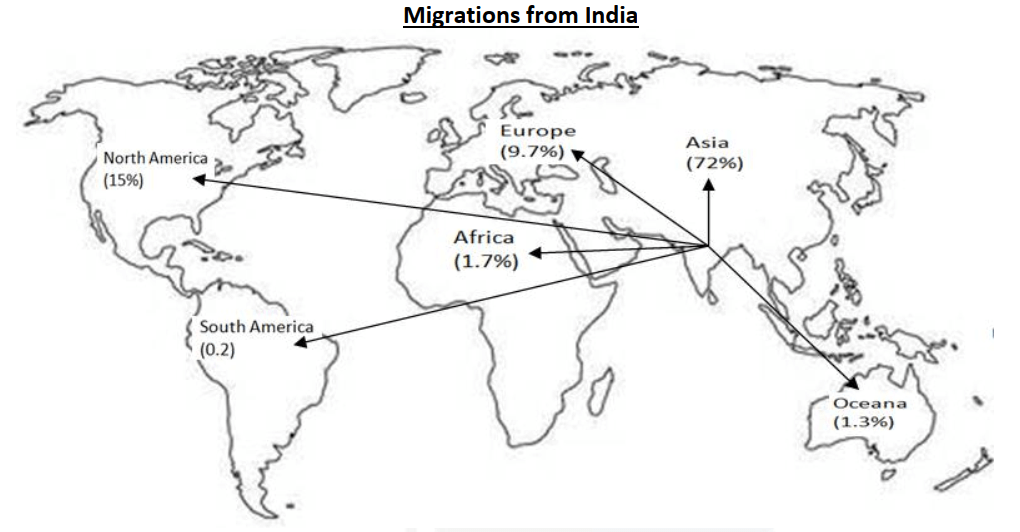
Indian People Migrating to:
- Middle East,
- Western Europe,
- America,
- Australia and
- East and South East Asia.
1st Wave of Migration -British Period:
- The indentured laborers were sent as Plantation Workers to Mauritius, Caribbean islands Fiji and South Africa, Reunion Island, Guadeloupe, Martinique etc.
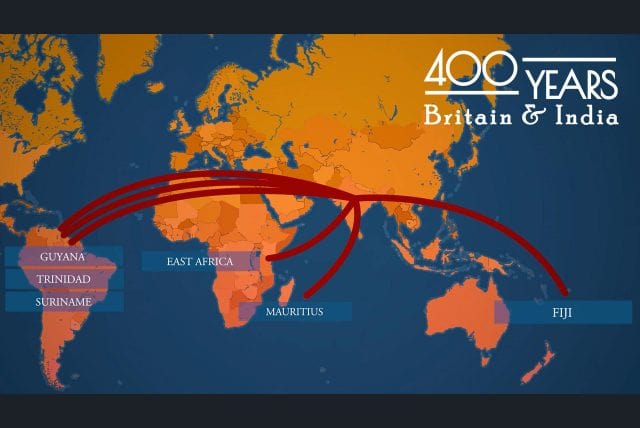
- All such migrations were covered under the time-bound contract known as Girmit Act (Indian Emigration Act).

2nd Wave of Migration: -
- As professionals, artisans, traders and factory workers, in search of economic opportunities.
- To Thailand, Malaysia, Singapore, Indonesia, Brunei and African countries, etc.
3rd Wave of Migration:
- Professionals like doctors, engineers (1960s onwards), software engineers, management consultants, financial experts, media persons to countries such as USA, Canada, UK, Australia, New Zealand and Germany, etc.
- Post liberalisation, in the 1990s education and knowledge–based Indian emigration has made Indian Diaspora one of the most powerful diasporas in the world.
Streams of Labour Migration
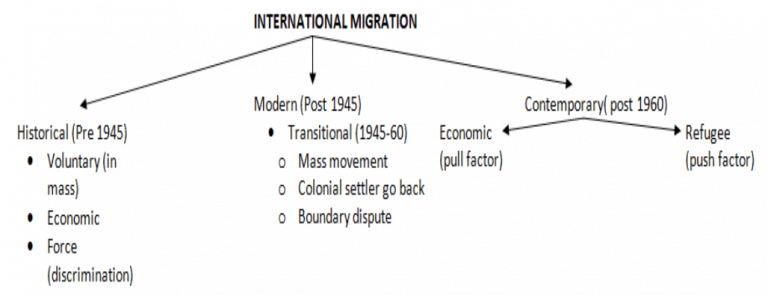
- Internal Migration – Within Country.
- International Migration – Out of Country and into Country from other Countries.
Internal Migration
4 Streams are identified:
- Rural to rural (R-R) (47%)
- Rural to urban (R-U) (32%)
- Urban to urban(U-U) (15%)
- Urban to rural (U-U) (6%)
- According to Economic survey Internal Migration is India’s biggest intangible asset.

International Migration
- Emigration: People coming from neighboring countries.
- 96 per cent came from the neighboring countries: Bangladesh (3.0 million) followed by Pakistan (0.9 million) and Nepal (0.5 million).
- Refugees from Tibet, Sri Lanka, Bangladesh, Pakistan, Afghanistan, Iran, and Myanmar.
- Immigration: People going to other countries.
- According to Global Migration Report 2020 released by IOM (International Org for Migration).
- India continues to be the largest country of origin of international migrants.
- Followed by Mexico and China.
- UAE is the country with the highest proportion of international migrants.
Causes of Migration
Push Factor- These factors cause people to leave their place of residence. Eg.
- Poverty, high population pressure, lack of basic infrastructural facilities like health care, education, etc.
- Natural disasters such as, flood, drought, cyclonic storms, earthquake
Pull factor- These factors attract the people from different places. Eg.
- Better opportunities, availability of regular work and relatively higher wages.
- Better opportunities for education, better health facilities and sources of entertainment,his leads to Urban migration.
The main reasons for migration for males and females: Work vs Marriage.
Work and Employment:
- Migration of ‘women’ either for education or employment enhances their autonomy and role in the economy.
- 38% males migrate due to work, while only 3% females migrate for work.
Marriage:
- Migration of ‘women’ due to marriage increase their vulnerability.
- 65% females migrate due to marriage, while only 2% males migrate for marriage. Meghalaya is an exception.
Consequences of Migration
Migration is a response to the uneven distribution of opportunities over space.
Economic Consequences
- Remittances from international migrants is one of the major sources of Foreign Exchange. The top remittance recipients were India with $79 billion, China ($67 billion), and Mexico ($36 billion).
- Urbanisation : As per the census, the level of urbanization in India has increased from 27.81% in 2001 to 31.16% in 2011.
- Overcrowding of Cities : Development of slums in Industrially developed Cities. Ex Mumbai, Delhi, Chennai.
- Migrants are often engaged in the construction, textile, mines and hotel etc. performing semi-skilled and low skilled tasks giving boost to these sectors.
Demographic Consequences
- It leads to the redistribution of the population within a country.
- Rural urban migration leads to Population growth of Cities.
- Age and skill selective out migration from the rural area have adverse effect on the rural demographic structure.
- Serious imbalances in age and sex composition in the states of Uttarakhand, Rajasthan, Madhya Pradesh and Eastern Maharashtra.
Social Consequences
- Social Cohesion: Migrants are provided with a chance to escape caste discrimination and restrictive social customs.
- Urban Diversity: leads to intermixing of people from diverse cultures.
- Brain Gain: Migrants come back numreous skills, knowledge set and information known as ‘social remittances’.
- Seclusion: Negative consequences such as anonymity, which creates social vacuum and sense of dejection among individuals. People fall in the trap of anti-social activities like crime and drug abuse.
- Since many developing countries are also large recipients of international migrants, they face challenges of integration of immigrants, job competition between migrant and native workers, and fiscal costs associated with provision of social services to the migrants.
- When male migrants leave their wives in rural areas, this puts extra physical and mental pressure on women. Migration of women for education and employment gives them more freedom, on the other hands it also adds to their vulnerability.
- Overcrowding due to unregulated migration.
- This feeling ultimately results in anti-social activities such as crime, drug abuse, theft, etc.
- Overcrowding is also related to over-exploitation of natural resources and cities are facing serious problems of water shortage, air and water pollution, problem of sewage disposal, and management of solid wastes.
- Development of unhygienic slums in industrially developed states like Maharashtra, Gujarat, Karnataka, Tamil Nadu, and Delhi. Age and skill selective out-migration created an imbalance in the demographic structure of rural areas.
Political Consequences
- Weak governance: Migrants are treated as second class citizens as administrative procedures exclude them from access to legal rights, social sector schemes, public services and social protection programmes.
- Incoherent Laws: The Inter-State Migrant Workmen Act is weak and many important provisions like minimum wages, displacement allowance etc remain unenforced.
Environmental Consequences
- Overcrowding of people due to rural-urban migration put pressure on the existing social and physical infrastructure
- Due to over-exploitation of natural resources, cities are facing problem of depletion of ground water
- Air pollution, disposal of sewage and management of solid wastes.
Statistics of labor migration in India
- There are an estimated 139 million migrants in the country, according to the World Economic Forum.
- The International Labour Organization (ILO) predicted that due to the pandemic and the lockdown, about 400 million workers would be poverty-stricken.
- Most migrants in the country originate from Uttar Pradesh and Bihar, followed by Rajasthan and Madhya Pradesh.
- The cities of Mumbai and Delhi attract the highest number of migrants in India. While most men migrate for work, women migrate due to marriage
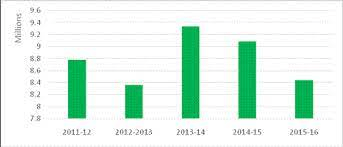
- Official data shows 520,938 workers migrated for work legally after completing Emigration Check Require procedures in 2016, compared to the 784,152 workers who left in 2015.
- The number for 2017 was 391,024 emigration clearance obtained via recruitment agents, project employers and direct recruitment.
- As per the MEA’s Annual Report 2016–17, this drop is explained by the decline in crude oil prices and the resulting economic slowdown in the GCC countries.
Impact of lockdown on labour migration
- Indian migrant workers during the COVID-19 pandemic have faced multiple hardships.
- With factories and workplaces shut down due to the lockdown imposed in the country, millions of migrant workers had to deal with the loss of income, food shortages and uncertainty about their future. Following this, many of them and their families went hungry.
- Thousands of them then began walking back home, with no means of transport due to the lockdown.
- In response, the Central and State Governments took various measures to help them,and later arranged transport for them.
- 198 migrant workers died due to the lockdown, with reasons of road accidents.
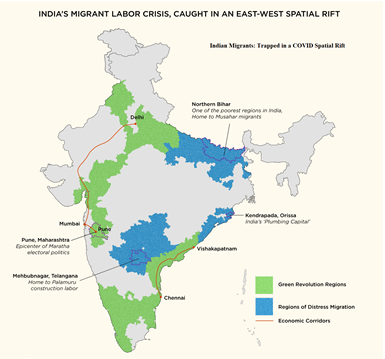
Problems faced by migrants
- Their job contractsare immature and illegal many times. People remain disadvantaged even after these contracts.
- Paymentis often delayed and there is no scope for minimum wage standards. Due to their condition these laborers are forced to accept what an employer is giving.
- They have no access to BPL cards and shelter. As they migrated from other area they have no local ration cardto avail the benefits of public distribution systems.
- Lack of identity, education and health facilities suppress them more.
- They are more prone to epidemics and health hazards. Even there is no data available to the authorities so that they can take steps regarding it.