
Status of Protista
( Zoology Optional)
Introduction
The Protista kingdom, first proposed by Ernst Haeckel in 1866, encompasses a diverse group of mostly unicellular organisms. These eukaryotic entities, as defined by Lynn Margulis, play crucial roles in ecological systems, acting as primary producers and decomposers. Despite their diversity, the classification of Protista remains contentious, with ongoing debates about their phylogenetic relationships, highlighting the complexity and evolutionary significance of this group.

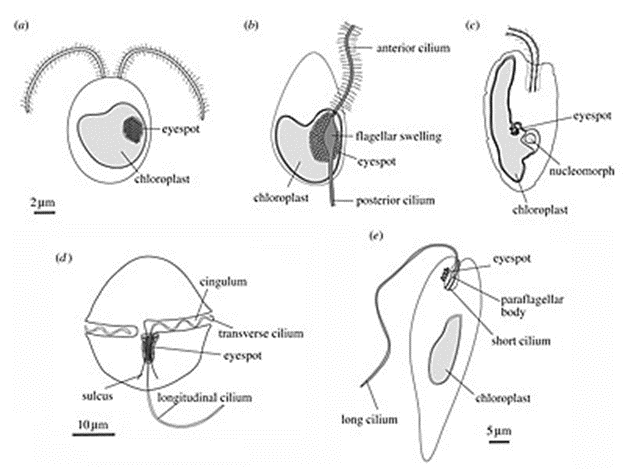
Introduction to Protista:
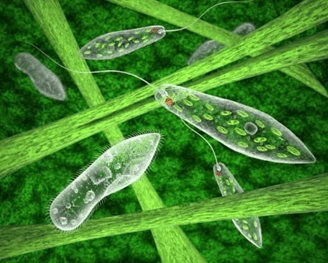
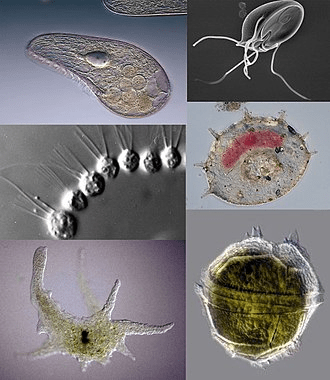
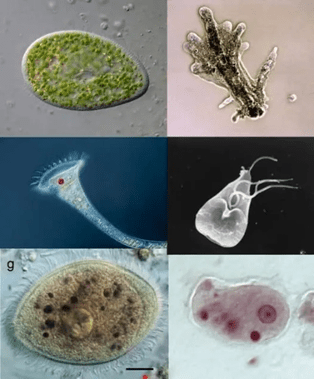
Protista is a kingdom in the classification of living organisms, which includes a diverse group of eukaryotic microorganisms. They are characterized by their unicellular or colonial nature and their ability to perform photosynthesis or heterotrophic nutrition.
Perspectives:
- Thomas Cavalier-Smith: Cavalier-Smith proposed a classification system for protists based on their cellular organization and evolutionary relationships. He emphasized the importance of molecular data in understanding the diversity and relationships within the group.
- Michael J. Sleigh: Sleigh has studied the locomotion and feeding mechanisms of protists, particularly ciliates. His research has contributed to our understanding of the diversity and functional adaptations within this group.
- John O. Corliss: Corliss has made significant contributions to the taxonomy and systematics of protists. He has proposed new classification schemes and described numerous new species, particularly within the group of amoeboid protists.
Examples:
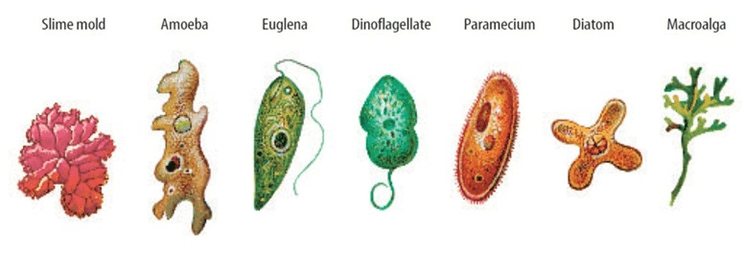
- Euglena: A photosynthetic protist that possesses a flagellum for locomotion and can switch between autotrophic and heterotrophic modes of nutrition.
- Paramecium: A ciliate protist that is commonly found in freshwater habitats and exhibits complex cellular structures, including cilia for movement and a contractile vacuole for osmoregulation.
- Plasmodium: A parasitic protist that causes malaria in humans and is transmitted through the bite of infected mosquitoes.
- Amoeba: A type of amoeboid protist that moves and feeds by extending pseudopodia, and can be found in various aquatic and terrestrial environments.
- Diatoms: Photosynthetic protists that have a unique cell wall made of silica, and are important primary producers in marine and freshwater ecosystems.
- Trypanosoma: A parasitic protist that causes diseases such as African sleeping sickness and Chagas disease in humans and animals.
- Dinoflagellates: Photosynthetic protists that are known for their ability to produce bioluminescence and can form harmful algal blooms, leading to the production of toxins that can impact marine ecosystems and human health.
Characteristics of Protista:
- Unicellular: Protists are mostly unicellular organisms, although some can be multicellular.
- Eukaryotic: Protists have a true nucleus and other membrane-bound organelles.
- Heterotrophic or Autotrophic: Protists can be either heterotrophic, obtaining nutrients from other organisms, or autotrophic, capable of photosynthesis.
- Motile: Many protists have flagella, cilia, or pseudopodia that allow them to move.
- Reproduction: Protists can reproduce asexually through binary fission or sexually through conjugation or syngamy.
- Adaptability: Protists can adapt to various environments, including freshwater, marine, and terrestrial habitats.
Diversity of Protista:
- Algae: Photosynthetic protists that can be unicellular or multicellular, such as diatoms, dinoflagellates, and green algae.
- Protozoa: Heterotrophic protists that can be classified into various groups based on their locomotion, such as amoebas, ciliates, and flagellates.
- Slime Molds: Protists that exhibit characteristics of both fungi and animals, forming multicellular structures during certain stages of their life cycle.
- Water Molds: Fungus-like protists that thrive in water environments and can cause diseases in plants and animals.
- Parasites: Some protists are parasitic, causing diseases in humans and animals, such as malaria (caused by Plasmodium) and giardiasis (caused by Giardia).
- Extremophiles: Certain protists can survive in extreme environments, such as hot springs or deep-sea hydrothermal vents.
Importance of Protista:
- Primary Producers: Photosynthetic protists, such as algae, are essential primary producers in aquatic ecosystems, contributing to the production of oxygen and serving as the base of the food chain.
- Nutrient Cycling: Protists play a vital role in nutrient cycling by decomposing organic matter and recycling nutrients back into the ecosystem.
- Carbon Sequestration: Marine protists, such as diatoms, are responsible for a significant portion of carbon sequestration in the oceans, helping to mitigate climate change.
- Food Source: Many protists serve as a food source for other organisms, including zooplankton, which are consumed by larger marine animals.
- Pharmaceutical Potential: Some protists produce bioactive compounds that have potential applications in medicine, such as antimalarial drugs derived from certain species of protists.
- Indicator Species: The presence or absence of certain protists can indicate the health and quality of an ecosystem, making them important bioindicators.
- Bioremediation: Certain protists have the ability to remove pollutants from the environment, contributing to the cleanup of contaminated sites.
Threats and Conservation of Protista:
- Habitat loss: The destruction and degradation of habitats, such as wetlands and coral reefs, pose a threat to many protist species that rely on these ecosystems.
- Pollution: Pollution from human activities, including chemical runoff and oil spills, can have detrimental effects on protist populations and their habitats.
- Climate change: Alterations in temperature, ocean acidification, and changes in precipitation patterns can disrupt protist communities and their interactions with other organisms.
- Invasive species: The introduction of non-native species can disrupt protist communities, leading to changes in ecosystem dynamics and potential extinctions.
- Overexploitation: Some protist species are harvested for commercial purposes, such as the collection of diatoms for use in industrial processes, which can lead to population declines.
- Disease outbreaks: Protists that cause diseases in humans, animals, and plants can have significant impacts on both wild and domestic populations, affecting biodiversity and ecosystem functioning.
Conclusion
The Protista kingdom, a diverse group of eukaryotic organisms, remains a subject of debate among scientists. Despite advancements in molecular biology, the classification of Protista is still evolving. Thomas Cavalier-Smith proposed reclassifying them into multiple kingdoms, highlighting their complexity. As research progresses, understanding Protista's ecological roles and evolutionary relationships is crucial. Continued exploration and technological advancements will refine their classification, offering insights into the tree of life and enhancing our comprehension of biodiversity.