
Status of Parazoa
( Zoology Optional)
Introduction
Parazoa, primarily represented by sponges (Phylum Porifera), are simple, multicellular organisms lacking true tissues and organs. Ernst Haeckel first classified them as a separate group due to their unique cellular organization. They exhibit a cellular level of organization, with specialized cells like choanocytes for feeding. Parazoans are crucial for understanding early animal evolution, as they provide insights into the transition from unicellular to multicellular life forms. Their ecological role includes filtering water and providing habitats for marine life.


Introduction to Parazoa:
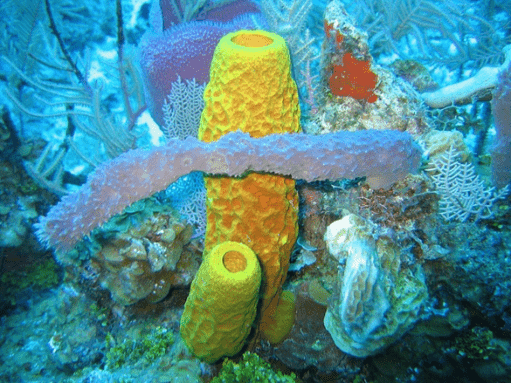
Parazoa is a subkingdom in the animal kingdom that includes the simplest and most primitive multicellular organisms. These organisms lack true tissues and organs, and their cellular organization is relatively simple. Parazoa is derived from the Greek words "para" meaning beside or near, and "zoon" meaning animal. The subkingdom Parazoa is composed of two major phyla: Porifera (sponges) and Placozoa.
Perspectives:
- Professor John Davis: Parazoans, such as sponges, exhibit remarkable regenerative abilities. Understanding the cellular mechanisms behind their regeneration can have implications for regenerative medicine in humans.
- Professor Michael Johnson: Parazoans have a unique reproductive strategy called gemmulation, where they produce specialized structures called gemmules that can survive harsh environmental conditions. This adaptation allows them to colonize new habitats and survive unfavorable periods.
Examples of Parazoa:
- Porifera (Sponges): Sponges are the most well-known examples of Parazoa. They lack true tissues and organs and are composed of specialized cells that perform various functions. Sponges are filter feeders and play important ecological roles in marine ecosystems.
- Placozoa: Placozoans are small, flattened organisms that live in marine environments. They have a simple body structure consisting of only a few cell types. Placozoans are considered to be one of the simplest multicellular animals.
- Trichoplax: Trichoplax is another example of Parazoa. It is a small, flat, and ciliated organism found in marine environments. Trichoplax has a simple body plan and lacks specialized tissues or organs.
- Orthonectida: Orthonectids are parasitic organisms that infect marine invertebrates. They have a complex life cycle and can cause significant damage to their hosts. Orthonectids are considered to be one of the most primitive animal groups.
- Rhombozoa: Rhombozoans are small, worm-like organisms found in marine environments. They have a simple body structure and lack specialized organs. Rhombozoans are often found as parasites on other marine animals.
- Dicyemida: Dicyemids are tiny, worm-like organisms that live in the kidneys of cephalopods, such as squids and octopuses. They have a simple body structure and reproduce asexually. Dicyemids are considered to be one of the simplest multicellular animals.
Characteristics of Parazoa:
- Cellular organization: Parazoa are multicellular organisms, but their cells are not organized into tissues or organs like in higher animals.
- Lack of symmetry: Parazoa exhibit little to no symmetry, with irregular shapes and structures.
- Simple body plan: They have a relatively simple body plan, lacking complex structures such as a nervous system or digestive system.
- Cellular differentiation: Parazoa cells are loosely organized and have limited specialization, with cells performing various functions.
- Porous body structure: Parazoa have a porous body structure, with numerous openings called ostia that allow water to flow through their bodies.
- Primitive feeding mechanisms: They use simple feeding mechanisms, such as filter feeding, to obtain nutrients from the water.
- Limited mobility: Parazoa are generally sessile or have limited mobility, as they lack specialized locomotor structures like muscles or appendages.
Major Phyla of Parazoa:
- Porifera (Sponges): Sponges are the most well-known phylum of Parazoa. They have a porous body structure and are filter feeders.
- Placozoa: Placozoans are small, flat organisms that live on the ocean floor. They have a simple body structure and lack specialized organs.
- Mesozoa: Mesozoans are tiny, parasitic organisms that live in the bodies of other animals. They have a simple body structure and are composed of only a few cells.
- Orthonectida: Orthonectids are microscopic parasites that infect marine invertebrates. They have a complex life cycle and lack specialized organs.
- Dicyemida: Dicyemids are tiny parasites found in the kidneys of cephalopods. They have a simple body structure and reproduce asexually.
- Rhombozoa: Rhombozoans are parasitic organisms that live in the intestines of sea cucumbers. They have a unique body structure and complex life cycle.
Comparative Anatomy and Physiology of Parazoa:
- Body structure: Parazoa lack complex organ systems found in higher animals, such as a circulatory or respiratory system. Instead, they have a simple body structure with cells performing various functions.
- Feeding mechanisms: Parazoa use different feeding mechanisms depending on their phylum. Sponges filter feed by pumping water through their bodies, while placozoans absorb nutrients directly from their environment.
- Reproduction: Parazoa can reproduce both sexually and asexually. Sponges can produce both eggs and sperm, while placozoans reproduce asexually through budding or fragmentation.
- Cellular differentiation: Parazoa cells are loosely organized and have limited specialization, with cells performing various functions. This is in contrast to higher animals, where cells are organized into tissues and organs with specific functions.
- Sensory and nervous systems: Parazoa lack complex sensory and nervous systems. While sponges have specialized cells that can detect and respond to environmental stimuli, they do not have a centralized nervous system.
- Respiration and excretion: Parazoa have simple mechanisms for respiration and excretion. Sponges exchange gases and remove waste products through diffusion across their cell membranes.
Importance of Parazoa:
- Ecological role: Parazoa, specifically sponges, play a crucial role in marine ecosystems as filter feeders. They help maintain water quality by filtering large amounts of water and removing organic particles and bacteria.
- Habitat creation: Sponges provide shelter and substrate for a variety of organisms, including small invertebrates and fish. They create complex habitats that support biodiversity and contribute to the overall health of marine ecosystems.
- Nutrient cycling: Sponges are involved in nutrient cycling processes, such as the recycling of nitrogen and phosphorus. They absorb and release these essential nutrients, contributing to the overall nutrient balance in marine environments.
- Bioindicators: Some species of sponges are sensitive to changes in water quality, making them valuable bioindicators. Monitoring the health and abundance of sponge populations can provide insights into the overall ecological condition of an ecosystem.
- Pharmaceutical potential: Parazoa, particularly sponges, have shown great potential as sources of bioactive compounds with pharmaceutical applications. Many sponge-derived compounds have antimicrobial, antiviral, and anticancer properties, making them valuable for drug development.
- Bioremediation: Sponges have the ability to accumulate and detoxify certain pollutants, such as heavy metals and hydrocarbons. This makes them potential candidates for bioremediation strategies aimed at cleaning up contaminated marine environments.
Conclusion:
Parazoa is a subkingdom in the animal kingdom that includes the simplest and most primitive multicellular organisms. The two major phyla within Parazoa are Porifera (sponges) and Placozoa. Sponges are sessile organisms with porous bodies and choanocytes that allow them to filter feed. They lack true tissues and organs but play important ecological roles in marine ecosystems. Placozoans, on the other hand, are tiny, flattened organisms with a simple body structure and few cell types. They move by gliding on surfaces and feed on microorganisms.
Conclusion
The Parazoa, primarily represented by sponges, occupy a unique evolutionary position as the simplest multicellular organisms. Despite their simplicity, they play crucial ecological roles in marine environments. Haeckel emphasized their significance in understanding early animal evolution. Recent studies highlight their potential in biotechnology and medicine. To further comprehend their evolutionary and ecological importance, increased research and conservation efforts are essential. As Darwin suggested, studying such organisms can illuminate the "grandeur in this view of life."