
Non-Chordata and Chordata
( Zoology Optional)
1.1 Non-Chordata vs Chordata
| Characteristic | Non-Chordata | Chordata |
|---|---|---|
| Examples | Jellyfish, sponges, worms, insects, mollusks, annelids, etc. | Fish, amphibians, reptiles, birds, mammals, etc. |
| Notochord | Absent | Present, at least during some stage of life |
| Symmetry | Radial or bilateral | Bilateral |
| Segmentation | May or may not be segmented | Segmented (in some groups) |
| Body Cavity | May lack a true body cavity | True body cavity present |
| Coelom | May be acoelomate, pseudocoelomate, or coelomate | Coelomate (true coelom) |
| Reproduction | Asexual or sexual | Mostly sexual, often with internal fertilization |
| Digestive System | Incomplete or complete digestive system | Complete digestive system |
| Respiratory System | Varied, gills, tracheae, or skin diffusion | Gills or lungs (in vertebrates) |
| Exoskeleton | Present in some (e.g., arthropods) | Absent or internal (endoskeleton) in vertebrates |
| Circulatory System | Open or closed system (if present) | Closed circulatory system (in vertebrates) |
| Nervous System | Simple or complex nerve net | Dorsal tubular nerve cord (in vertebrates) |
1.2 Non-Chordata
Introduction:
Non-Chordata refers to a diverse group of animals that do not possess a notochord, a defining characteristic of chordates. They make up the majority of animal species on Earth and play crucial roles in various ecosystems.
Definition by Zoological Scientists:
1. Porifera (Sponges):
- Porifera are multicellular organisms that lack true tissues and organs.
- They have a porous body structure with numerous tiny pores called ostia.
- Examples include bath sponges and freshwater sponges.
2. Coelenterata (Cnidarians):
- Coelenterata are characterized by the presence of specialized cells called cnidocytes, which contain stinging structures called nematocysts.
- They exhibit radial symmetry and have a central gastrovascular cavity.
- Examples include jellyfish, sea anemones, and corals.
3. Platyhelminthes (Flatworms):
- Platyhelminthes are bilaterally symmetrical animals with a flattened body shape.
- They lack a body cavity and have a simple digestive system.
- Examples include planarians, tapeworms, and flukes.
4. Nematoda (Roundworms):
- Nematoda are unsegmented worms with a cylindrical body shape.
- They have a complete digestive system and a pseudocoelom.
- Examples include hookworms, pinworms, and roundworms.
5. Annelida (Segmented Worms):
- Annelida are characterized by their segmented body structure.
- They have a true coelom and a well-developed circulatory system.
- Examples include earthworms, leeches, and marine polychaetes.
6. Arthropoda (Arthropods):
- Arthropoda is the largest phylum in the animal kingdom, including insects, spiders, crustaceans, and more.
- They have jointed appendages, a segmented body, and an exoskeleton made of chitin.
- Examples include ants, butterflies, crabs, and spiders.
7. Mollusca (Mollusks):
- Mollusca are soft-bodied animals often protected by a hard shell.
- They have a muscular foot, a visceral mass, and a mantle.
- Examples include snails, clams, squids, and octopuses.
8. Echinodermata (Echinoderms):
- Echinodermata are characterized by their spiny skin and radial symmetry.
- They have a water vascular system and tube feet for locomotion.
- Examples include starfish, sea urchins, and sea cucumbers.
9. Protozoa (Protists):
- Protozoa are single-celled organisms that exhibit animal-like characteristics.
- They have diverse forms and can be free-living or parasitic.
- Examples include amoebas, paramecia, and trypanosomes.
Examples of Non-Chordata Animals:
- Arthropods: Examples include insects (e.g., butterflies, ants), arachnids (e.g., spiders, scorpions), crustaceans (e.g., crabs, lobsters), and myriapods (e.g., centipedes, millipedes).
- Mollusks: Examples include snails, clams, squids, and octopuses.
- Annelids: Examples include earthworms, leeches, and marine polychaetes.
- Porifera: Examples include sponges.
- Cnidarians: Examples include jellyfish, corals, and sea anemones.
- Platyhelminthes: Examples include flatworms, such as tapeworms and planarians.
- Nematodes: Examples include roundworms, such as hookworms and pinworms.
- Echinoderms: Examples include starfish, sea urchins, and sea cucumbers.


Characteristics:
- Absence of Notochord: Non-Chordata animals lack a notochord, which is a flexible rod-like structure found in chordates.
- Bilateral Symmetry: Most non-chordates exhibit bilateral symmetry, meaning their bodies can be divided into two equal halves.
- Exoskeleton or Hydrostatic Skeleton: Many non-chordates have an exoskeleton (e.g., insects) or a hydrostatic skeleton (e.g., worms) for support and movement.
- Presence of Coelom: Non-chordates possess a body cavity called a coelom, which houses their internal organs.
- Diverse Body Plans: Non-chordates exhibit a wide range of body plans, including segmented, unsegmented, and radial symmetry.
- Various Feeding Mechanisms: Non-chordates employ different feeding mechanisms such as filter feeding, predation, parasitism, and herbivory.
- Reproductive Strategies: They employ diverse reproductive strategies, including sexual and asexual reproduction, with various modes of fertilization.
- Sensory Organs: Non-chordates possess sensory organs like eyes, antennae, and chemoreceptors to detect and respond to their environment.
Classification:
- Porifera (sponges)
- Cnidaria (jellyfish, corals)
- Platyhelminthes (flatworms)
- Nematoda (roundworms)
- Annelida (segmented worms)
- Mollusca (snails, clams, octopuses)
- Arthropoda (insects, spiders, crustaceans)
- Echinodermata (starfish, sea urchins)
Reproduction in Non-Chordates:
1. Asexual Reproduction:
- Asexual reproduction is the process by which non-chordates produce offspring without the involvement of gametes.
- Examples of asexual reproduction in non-chordates include budding, fission, and regeneration.
- Budding: In this process, a small outgrowth or bud develops on the parent organism and eventually detaches to form a new individual. For example, Hydra reproduces through budding.
- Fission: Some non-chordates, such as flatworms, reproduce by dividing their body into two or more parts, each of which develops into a new individual.
- Regeneration: Many non-chordates have the ability to regenerate lost body parts. For instance, starfish can regenerate their arms if they are damaged or lost.
2. Sexual Reproduction:
- Sexual reproduction involves the fusion of gametes (reproductive cells) from two different individuals to produce offspring.
- Examples of sexual reproduction in non-chordates include external fertilization and internal fertilization.
- External Fertilization: In this process, the male and female release their gametes into the surrounding water, where fertilization takes place. This method is common in aquatic non-chordates like fish and amphibians.
- Internal Fertilization: Some non-chordates, such as insects and reptiles, have evolved internal fertilization. In this process, the male transfers sperm directly into the female's reproductive tract, increasing the chances of successful fertilization.
3. Parthenogenesis:
- Parthenogenesis is a form of asexual reproduction in which an unfertilized egg develops into a new individual.
- This process is observed in some non-chordates, such as certain species of insects, crustaceans, and reptiles.
- Parthenogenesis allows females to reproduce without the need for males, and offspring produced through this process are genetically identical to the mother.
4. Hermaphroditism:
- Hermaphroditism is the condition in which an individual possesses both male and female reproductive organs.
- Many non-chordates, such as earthworms and snails, exhibit hermaphroditism.
- Hermaphroditic organisms can self-fertilize or exchange gametes with another individual of the same species, increasing their reproductive success.
Life Cycle
1. Simple Life Cycles:
- Some non-chordates, like sponges, have a simple life cycle with direct development from a fertilized egg to an adult.
2. Complex Life Cycles:
- Many non-chordates, such as insects and amphibians, undergo metamorphosis during their life cycle.
- This involves distinct stages, such as larval and pupal stages, before reaching adulthood.
3. Alternation of Generations:
- Some non-chordates, like jellyfish, exhibit an alternation of generations life cycle.
- This involves alternating between asexual and sexual reproduction, resulting in different forms (polyp and medusa) in different stages.
4. Parasitic Life Cycles:
- Certain non-chordates, such as tapeworms, have complex life cycles involving multiple hosts.
- They may have different larval stages in different hosts before reaching maturity.
5. Reproductive Strategies:
- Non-chordates employ various reproductive strategies, including high fecundity (producing a large number of offspring) and specialized reproductive structures or behaviors.
6. Developmental Modes:
- Non-chordates exhibit diverse developmental modes, such as oviparity (laying eggs), viviparity (live birth), and ovoviviparity (eggs hatch inside the body).
7. Life Cycle Adaptations:
- Non-chordates have evolved specific adaptations in their life cycles to survive in different environments, such as the ability to withstand desiccation in certain insects or the ability to regenerate lost body parts in starfish.
Ecological and Economic Importance
- Food source: Many non-chordates, such as crustaceans and mollusks, serve as a significant food source for humans and other animals.
- Ecological balance: Non-chordates play a crucial role in maintaining ecological balance by serving as decomposers, filter feeders, and predators in various ecosystems.
- Pollination: Insects, a type of non-chordate, are essential pollinators for many flowering plants, contributing to the reproduction and diversity of plant species.
- Nutrient recycling: Non-chordates, like earthworms, play a vital role in nutrient recycling by breaking down organic matter and enriching the soil with their castings.
- Bioindicators: Some non-chordates, such as certain species of aquatic invertebrates, are used as bioindicators to assess the health of ecosystems and water quality.
- Pharmaceutical potential: Non-chordates, including sponges and marine invertebrates, have been a source of bioactive compounds used in the development of drugs and medicines.
- Aquaculture: Non-chordates, particularly crustaceans and mollusks, are commercially important in aquaculture, providing a significant source of income and employment.
- Tourism and recreation: Non-chordates, such as corals and marine invertebrates, attract tourists for activities like snorkeling and scuba diving, contributing to local economies.
Evolutionary Significance of Non-Chordates
- Early animal evolution: Non-chordates represent the vast majority of animal species and provide insights into the early stages of animal evolution and the development of complex body plans.
- Diversification of body plans: Non-chordates exhibit a wide range of body plans, from simple organisms like sponges to complex forms like arthropods, showcasing the evolutionary diversity and adaptations within the animal kingdom.
- Origin of key features: Non-chordates played a crucial role in the evolution of key features seen in chordates, such as segmentation, appendages, and exoskeletons.
- Transitional forms: Some non-chordates, like lancelets and tunicates, are considered transitional forms that bridge the evolutionary gap between invertebrates and vertebrates.
- Evolutionary innovations: Non-chordates have evolved various adaptations and innovations, such as the development of complex eyes in arthropods and the evolution of bioluminescence in certain marine invertebrates.
- Fossil record: Non-chordates have left behind a rich fossil record, providing valuable evidence for understanding the evolutionary history and relationships between different animal groups.
- Coevolution: Non-chordates have coevolved with other organisms, such as plants and parasites, influencing each other's evolutionary trajectories and adaptations.
Importance in ecosystems
- Ecological Roles: Non-chordates play vital roles in ecosystems as decomposers, pollinators, prey, and predators, contributing to nutrient cycling and maintaining ecological balance.
- Food Web Dynamics: They form an essential part of food webs, serving as a food source for higher trophic levels and influencing population dynamics of other organisms.
- Ecosystem Engineers: Some non-chordates, like earthworms, play a crucial role in soil formation and nutrient cycling, enhancing soil fertility and ecosystem productivity.
- Bioindicators: Certain non-chordates, such as freshwater macroinvertebrates, are used as bioindicators to assess water quality and ecosystem health.
- Nutrient Recycling: Non-chordates, like detritivores and decomposers, break down organic matter, releasing nutrients back into the ecosystem for reuse by other organisms.
- Pollination: Insects, a significant group of non-chordates, are important pollinators, facilitating the reproduction of flowering plants and maintaining plant diversity.
- Pest Control: Many non-chordates, including spiders and insects, act as natural predators, controlling populations of pests and maintaining ecosystem balance.
- Biodiversity: Non-chordates contribute to overall biodiversity, representing a vast array of species with unique adaptations and ecological roles.
Conclusion
Non-Chordata represents a vast and diverse group of animals that lack a notochord. This group includes a wide range of phyla, each with its own unique characteristics and adaptations. From the simplest multicellular organisms to complex invertebrates, Non-Chordata showcases the incredible diversity of the animal kingdom.
1.3 Chordata
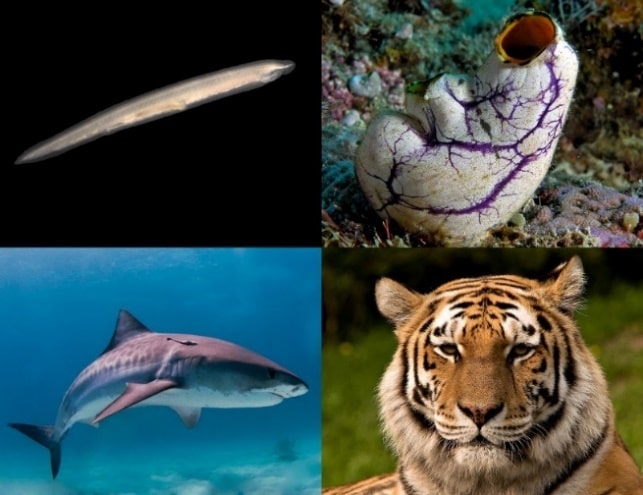
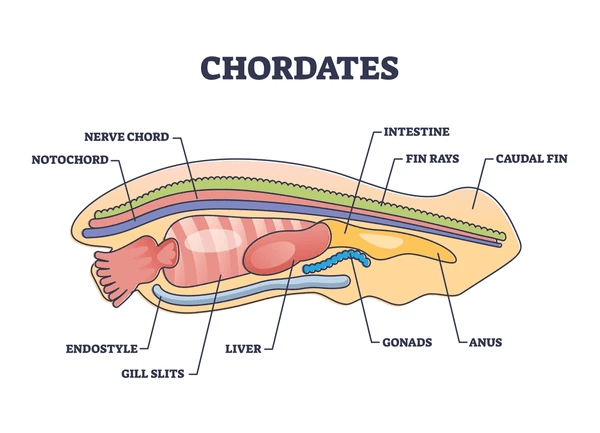
Chordata is a phylum in the animal kingdom that includes organisms with a notochord, a dorsal nerve cord, pharyngeal slits, and a post-anal tail at some point in their life cycle. This phylum is incredibly diverse and includes familiar animals such as mammals, birds, reptiles, amphibians, and fish.


Introduction:
- Chordata is a phylum in the animal kingdom that includes animals with a notochord, a dorsal nerve cord, pharyngeal slits, and a post-anal tail. It is one of the most diverse and successful phyla, with over 65,000 known species. Chordates are found in various habitats, including marine, freshwater, and terrestrial environments.
Definition by Zoological Scientists:
- Carl Linnaeus: A Swedish botanist, physician, and zoologist who is known for his work in taxonomy and the development of the binomial nomenclature system. He classified animals into different phyla, including Chordata.
- Thomas Henry Huxley: An English biologist and comparative anatomist who played a crucial role in the development of evolutionary theory. He extensively studied the anatomy of chordates and proposed the theory of their common ancestry.
- Ernst Haeckel: A German biologist, philosopher, and artist who coined the term "phylogeny" and proposed the concept of recapitulation theory, suggesting that the development of an organism recapitulates its evolutionary history. He studied and classified various chordate species.
- Alfred Romer: An American paleontologist and vertebrate anatomist who made significant contributions to the understanding of vertebrate evolution. He studied the fossil record of early chordates and vertebrates, providing insights into their evolutionary history.
- Stephen Jay Gould: An American paleontologist, evolutionary biologist, and historian of science who popularized the concept of punctuated equilibrium, challenging the traditional view of gradual evolution. He studied the evolution of chordates and their significance in the context of evolutionary biology.
Examples of Chordates:
- Mammals: Humans, dogs, cats, elephants, whales.
- Birds: Eagles, penguins, owls, sparrows.
- Reptiles: Snakes, turtles, crocodiles, lizards.
- Amphibians: Frogs, toads, salamanders, newts.
- Fish: Sharks, salmon, clownfish, seahorses.
- Lancelets: Small, fish-like marine animals.
- Tunicates: Sea squirts, filter-feeding marine animals.
- Hagfish: Primitive, jawless fish with a slimy appearance.
Characteristics:
- Notochord: Chordates possess a notochord, a flexible rod-like structure that provides support and serves as a precursor to the vertebral column in vertebrates.
- Dorsal Nerve Cord: They have a dorsal nerve cord that runs along the backside of the body, which develops into the spinal cord in vertebrates.
- Pharyngeal Slits: Chordates possess pharyngeal slits, which are openings in the pharynx that function in filter-feeding, respiration, or as gill slits in aquatic species.
- Post-anal Tail: Chordates have a post-anal tail, which extends beyond the anus and aids in locomotion and balance.
- Bilateral Symmetry: They exhibit bilateral symmetry, meaning their body can be divided into two equal halves along a central axis.
- Closed Circulatory System: Chordates have a closed circulatory system, with a heart and blood vessels that transport oxygen and nutrients throughout the body.
- Well-developed Sense Organs: Chordates possess well-developed sense organs, including eyes, ears, and a variety of sensory receptors, allowing them to perceive their environment.
- Segmented Body: Some chordates, such as vertebrates, exhibit a segmented body plan, with repeated units called somites.
Importance in evolutionary history:
- Origin of Vertebrates: Chordates played a crucial role in the evolution of vertebrates, as they are the closest relatives of vertebrates and share many common characteristics.
- Development of Backbone: The notochord in chordates served as a precursor to the vertebral column, which provided structural support and protection for the spinal cord in vertebrates.
- Evolution of Complex Organs: Chordates contributed to the evolution of complex organs, such as the brain and sensory organs, which are highly developed in vertebrates.
- Adaptive Radiation: Chordates underwent adaptive radiation, leading to the diversification of various groups, including fish, amphibians, reptiles, birds, and mammals.
- Ecological Importance: Chordates play vital ecological roles in various ecosystems. For example, fish contribute to nutrient cycling in aquatic environments, while birds and mammals aid in seed dispersal and pollination.
- Economic Significance: Many chordates, such as fish and mammals, are commercially important for food, recreation, and tourism industries, providing livelihoods for millions of people worldwide.
- Medical Research: Chordates, particularly mammals, serve as important models for medical research, helping scientists understand human physiology, diseases, and develop treatments.
- Conservation Concerns: Chordates, especially endangered species like whales and primates, highlight the need for conservation efforts to protect biodiversity and maintain ecosystem balance.
Subphyla of Chordata:
1. Urochordata (Tunicates):
- Marine organisms with a sac-like body structure covered by a tough outer covering called a tunic.
- Filter feeders that draw water in through an incurrent siphon and expel it through an excurrent siphon.
- Larvae possess all chordate characteristics, but adults have reduced chordate features.
2. Cephalochordata (Lancelets):
- Small, fish-like marine organisms that live partially buried in sand.
- Possess a notochord, dorsal nerve cord, and pharyngeal slits throughout their entire life cycle.
- Filter feeders that use cilia to draw water in through their mouth and expel it through their gill slits.
3. Vertebrata (Vertebrates):
- Largest subphylum of chordates, including fishes, amphibians, reptiles, birds, and mammals.
- Possess a vertebral column made up of individual vertebrae that protect the spinal cord.
- Have a well-developed head with sensory organs, such as eyes and ears.
Adaptations and Specializations:
1. Notochord:
- A flexible rod-like structure that provides support and allows for efficient locomotion.
- In most vertebrates, the notochord is replaced by the vertebral column during development.
2. Vertebral Column:
- Provides protection and support for the spinal cord.
- Allows for more efficient movement and locomotion.
3. Endoskeleton:
- Internal skeleton made up of bone or cartilage.
- Provides support, protection, and attachment points for muscles.
4. Jaws and Teeth:
- Adaptations for capturing and consuming food.
- Allow for a wider range of feeding strategies.
5. Limbs and Fins:
- Specialized appendages for locomotion.
- Limbs in tetrapods (four-limbed vertebrates) allow for walking on land.
6. Feathers and Wings:
- Adaptations for flight in birds.
- Provide insulation and aid in courtship displays.
7. Mammary Glands:
- Specialized glands in mammals that produce milk for nourishing their young.
- Allow for parental care and the development of complex social behaviors.
8. Amniotic Egg:
- Adaptation in reptiles, birds, and monotremes (egg-laying mammals).
- Contains a protective shell and extraembryonic membranes that provide a self-contained environment for development.
Reproduction in Chordates:
1. Sexual Reproduction:
- Most chordates reproduce sexually, involving the fusion of gametes.
- Gametes are produced by specialized reproductive organs.
- Examples: Mammals, birds, reptiles, amphibians, and some fish.
2. Internal Fertilization:
- In many chordates, fertilization occurs internally.
- Male gametes are transferred directly into the female reproductive tract.
- Examples: Mammals, birds, reptiles.
3. External Fertilization:
- Some chordates, particularly fish and amphibians, reproduce through external fertilization.
- Male and female gametes are released into the environment, where fertilization occurs.
- Examples: Fish, amphibians.
4. Oviparity:
- Many chordates lay eggs, which develop and hatch outside the mother's body.
- The eggs are usually protected by a shell or membrane.
- Examples: Birds, reptiles, monotremes (egg-laying mammals).
5. Viviparity:
- Some chordates give birth to live young, where the embryos develop inside the mother's body.
- The young are nourished through a placenta or other specialized structures.
- Examples: Most mammals, including humans.
6. Ovoviviparity:
- In ovoviviparous chordates, the eggs are retained inside the mother's body until they hatch.
- The embryos are nourished by the yolk within the egg.
- Examples: Some fish, reptiles, and sharks.
7. Asexual Reproduction:
- While rare, some chordates can reproduce asexually.
- This involves the production of offspring without the involvement of gametes.
- Examples: Some species of salamanders and lizards.
Life Cycle of Chordata:
- Embryonic Development: Chordates undergo embryonic development, starting with a fertilized egg that develops into a multicellular embryo.
- Larval Stage: Many chordates have a larval stage, such as tadpoles in amphibians or larvae in fish, where they undergo metamorphosis before reaching adulthood.
- Growth and Maturation: Chordates grow and mature through various stages, including the development of specialized organs and systems, such as the nervous system and backbone.
- Reproduction: Chordates reproduce sexually, with most species having separate sexes. They may have internal or external fertilization, and some species exhibit complex courtship behaviors.
- Life Span: The life span of chordates varies greatly depending on the species. Some may live only a few years, while others, like certain species of turtles or whales, can live for several decades or even centuries.
Ecological and Economic Importance:
Ecological Importance:
- Keystone species: Some chordates, like sea otters and sharks, play a crucial role in maintaining the balance of their ecosystems by controlling the populations of other species.
- Food web dynamics: Chordates occupy various trophic levels in food webs, serving as both predators and prey, thus influencing the energy flow and stability of ecosystems.
- Nutrient cycling: Chordates contribute to nutrient cycling through their feeding habits and excretion, helping to recycle essential elements within ecosystems.
- Habitat engineering: Chordates, such as beavers and corals, modify their habitats, creating niches for other organisms and enhancing biodiversity.
- Indicator species: Some chordates, like amphibians, are sensitive to environmental changes, making them valuable indicators of ecosystem health and pollution levels.
- Pollination and seed dispersal: Chordates, particularly birds and bats, play a crucial role in pollinating flowers and dispersing seeds, contributing to plant reproduction and ecosystem functioning.
- Oxygen production: Chordates, especially marine organisms like phytoplankton, contribute significantly to oxygen production through photosynthesis, maintaining atmospheric oxygen levels.
- Ecosystem engineers: Chordates, such as burrowing mammals and reef-building organisms, shape their habitats, creating diverse microhabitats and promoting biodiversity.
Economic Importance:
- Fisheries and aquaculture: Chordates, particularly fish, are a significant source of protein for human consumption, supporting the fishing industry and aquaculture practices.
- Biomedical research: Chordates, including mammals like mice and primates, are extensively used in biomedical research to study human diseases and develop treatments.
- Pharmaceutical discoveries: Chordates, such as marine organisms, have provided valuable compounds for the development of drugs, including antibiotics and anticancer agents.
- Tourism and recreation: Chordates, like whales, dolphins, and birds, attract tourists for activities such as whale watching and birdwatching, contributing to local economies.
- Pet trade: Chordates, such as dogs, cats, and birds, are popular pets, leading to a significant industry focused on breeding, selling, and caring for these animals.
- Ecotourism: Chordates, such as sea turtles and marine mammals, are key attractions for ecotourism, generating revenue for local communities and conservation efforts.
- Education and entertainment: Chordates, particularly in zoos, aquariums, and wildlife parks, provide educational opportunities and entertainment for visitors, supporting the tourism industry.
- Conservation and restoration: Chordates, especially endangered species, receive conservation efforts and funding, contributing to the preservation of biodiversity and ecosystem services.
Human Connection:
- Food source: Chordates, such as fish, poultry, and livestock, provide a significant source of protein for human consumption, supporting nutrition and food security.
- Companionship: Chordates, particularly pets like dogs and cats, provide emotional support, companionship, and improve the overall well-being of humans.
- Cultural significance: Chordates, such as certain birds, mammals, and reptiles, hold cultural and symbolic importance in various human societies, representing power, wisdom, or spirituality.
- Recreational activities: Chordates, like horses, dogs, and birds, are involved in recreational activities such as horseback riding, dog shows, and falconry, providing enjoyment and leisure for humans.
- Scientific advancements: Chordates, especially primates, have been extensively studied to understand human evolution, behavior, and physiology, contributing to scientific knowledge and medical advancements.
- Inspiration for technology: Chordates, such as birds and fish, have inspired the development of technologies like airplanes and submarines, mimicking their flight and swimming abilities.
- Conservation efforts: Humans actively engage in conservation efforts to protect endangered chordates, recognizing their intrinsic value and the need to preserve biodiversity for future generations.
- Ethical considerations: Chordates, particularly mammals and birds, raise ethical concerns regarding their treatment, welfare, and use in scientific research, leading to debates and regulations to ensure their well-being.
Conclusion
Chordata is a diverse and fascinating phylum in the animal kingdom, encompassing a wide range of organisms with unique characteristics.