
Mode of preservation of fossils (Fossilization)
Introduction
Fossils are preserved in two main ways:
- Unaltered preservation: molds, indirect evidence etc.
- Altered preservation: carbonization, petrifaction, recrystallization, replacement etc.
6.1 Unaltered preservation
- The original material of the organism has not been changed to another substance.
- Of rare occurrence and of recent origin.
1. Unaltered soft parts
- Whole organism, including soft parts, is preserved as such.
- Insects entangled in sticky secretion of trees.
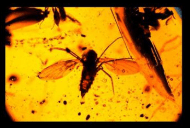
Examples:
- Freezing: woolly mammoths in the permafrost
- Mummification: a dead organism is preserved by either intentional or accidental exposure to chemicals, cool and dry conditions.
- Fossilization in amber: Amber is fossilized tree resin. Gemstones made of resin were appreciated for its color and natural beauty since Neolithic times.
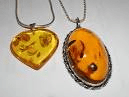
- Death traps of crude asphaltic oil.
2. Unaltered hard parts
- Shell and internal Skeleton: g. marine animals
- Land animals: living near water bodies are likely to be preserved. Eg. swamps, lakes and sea etc.
- e.g. Corals, Mollusca, protozoa.

6.2 Altered preservation
Altered remains form when the process of preservation causes some change in the composition or structure of the original biologic material.
1. Petrification
Petrifaction: It is the process by which organic material becomes a fossil, through the replacement of the original material and the filling of the original pore spaces with minerals.
Processes involved in petrifaction: Permineralization and Replacement.
- Permineralization
- Minerals carried by water (e.g. such as silica, calcite or pyrite) replace the organic material in the fossil.
- Original pore spaces with minerals.
- Removal of each individual molecule of hard parts, and precipitation of equivalent quantity.
- It can preserve even the most delicate organic structure or minute details including cell structure.
- Due to molecule by molecule replacement of one substance by another.
- Bones/shells (-- replaced by) à Calcite / Silica / pyrite.
- Examples:
- Dinosaur bones
- Petrified wood: the original wood material has been replaced by silica etc.
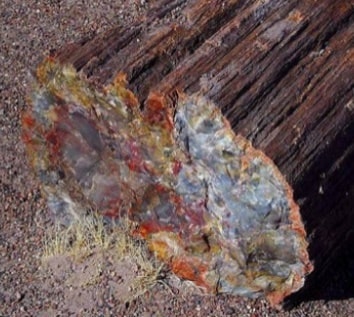
-
- many trilobite fossils
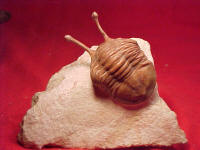
- Replacement
- Water dissolves the original solid material of an organism. It is then replaced by minerals.
- shell, bone or other tissue is replaced with another mineral.
- Slower the rate of the process, better is the microscopic structure.
- The minerals involved: calcite, silica, pyrite, and hematite.
- These fossils present significant importance to paleontologists because these fossils tend to be very detailed.
2. Recrystallization
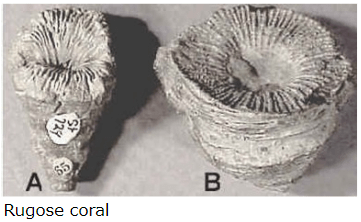
- Hard parts either revert to more stable minerals; or small crystals turn into larger crystals.
- A shell is said to be recrystallized when the original skeletal compounds are still present but in a different crystal form. from aragonite to calcite.
3. Carbonization and coalification
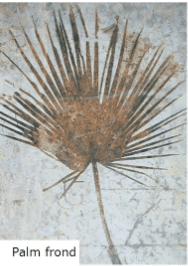
- volatile substances of the organism are removed. Eg. hydrogen, oxygen, nitrogen, etc.
- Only the carbon remains in the specimen. Other elements are removed.
- These fossils typically appear as a thin, dark film on the rock.
- This type of preservation is common among plant fossils. g. formation of Coal.
4. Molds and Casts
- Molds: Hollows remaining in the rock beds due to removal of hard preserved parts in rocks. e.g. Porous and permeable rock beds. The original remains of the organism completely dissolve or are otherwise destroyed.
- Casts: When molds are filled up by mineral matter.

5. Authigenic Mineralisation
- A special form of cast and mold formation.
- The organism acts as a nucleus for the precipitation of minerals. Such as siderite.
- A nodule is formed around the fossil by minerals.
- In cases of rapid fosssilization, very fine details can be preserved.
- Nodules from the Carboniferous Mazon Creek fossil beds of Illinois, USA, are among the best documented examples of such mineralization.
6. Adpression: compression-impression
- Compression: result of chemical reduction of organism to the organism's tissues.
- Phytoleim: a carbonaceous film often remains after compression.
- Impression: Often the phytoleim is lost; and all that remains is an impression of the organism.
7. Bioimmuration
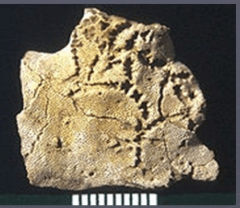
- It is fossilization by virtue of organic overgrowth.
- A skeletal organism overgrows or otherwise subsumes another organism.
- Preserves the latter, or an impression of it, within the skeleton.
- It allows preservation of soft-bodied organisms.
- Ex- Ordovician bryozoans
8. Traces fossils
Footprint / leaf print impression: only impression, and not the original part.
- Plants and animals without hard parts leave imprints within the rock bed.
- g. impression of leaves and feathers.
Tracks and trails
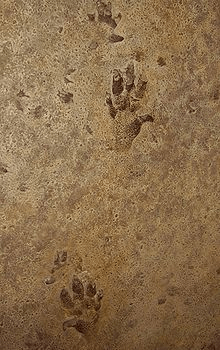
- Footprints of animals entombed in soft mud, later hardened are also considered fossils.
- These do not form any body part.
5. Different kinds of microfossils
Microfossil can be classification by their composition as:
- Siliceous microfossils: Siliceous microfossils include diatoms, radiolarians, silicoflagellates, ebridians, phytoliths, some scolecodonts (worm jaws), and sponge spicules.
- Calcareous microfossils: Calcareous (CaCO3) microfossils include coccoliths, foraminifera, calcareous dinoflagellate cysts, and ostracods (seed shrimp).
- Phosphatic microfossils: Phosphatic microfossils include some vertebrates, conodonts (tiny oral structures of an extinct chordate group), some scolecodonts (worm jaws), shark spines and teeth and other fish remains (collectively called ichthyoliths).
- Organic microfossils: The study of organic microfossils is called palynology. Organic microfossils include pollen, spores, chitinozoans (thought to be the egg cases of marine invertebrates), scolecodonts (worm jaws), acritarchs, dinoflagellate cysts, and fungal remains.
The entire micro-fossil world can be classified into three broad subdivisions :
- Microscopic organisms – Protista
- Microscopic parts of mega organisms
- Microfossils of unknown affinity e.g – Conodonts , Chitinozoans
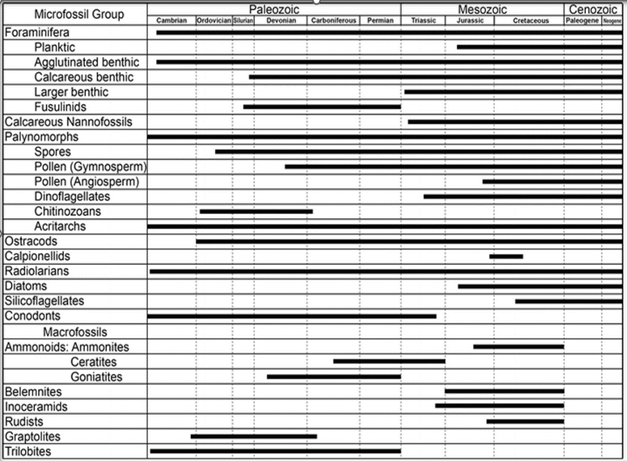
(a) Microfossils ( Protista)
- Pyrrhophyta- Dinoflagellates
- Chrysophyta – Silicoflagellates , diatoms, cocolithophores
- Ciliophora –Tintinids , Calpionelids
- Sarcodina- Radiolarias and foraminifera
Index fossils
- These are also known as guide fossils, indicator fossils or dating fossils.
- They may be micro and , are the fossilized remains or traces of particular plants or animals that are characteristic of a particular span of geologic time or environment, and can be used to identify and date the containing rocks.
- Species of microfossils such as acritarchs, chitinozoans, conodonts, dinoflagellate cysts, ostracods, pollen, spores and foraminiferans are amongst the many species have been identified as index fossils that are widely used in biostratigraphy.
- These are discussed more in the following topic: Index fossils and their significance
More about microfossils is discussed in the next topics:
- Different kinds of microfossils
- Application of microfossils in correlation, petroleum exploration, paleoclimatic and paleoceanographic studies
- You must write a comprehensive answer, including all the related topics, in the exam when asked about microfossils.
Forminifera
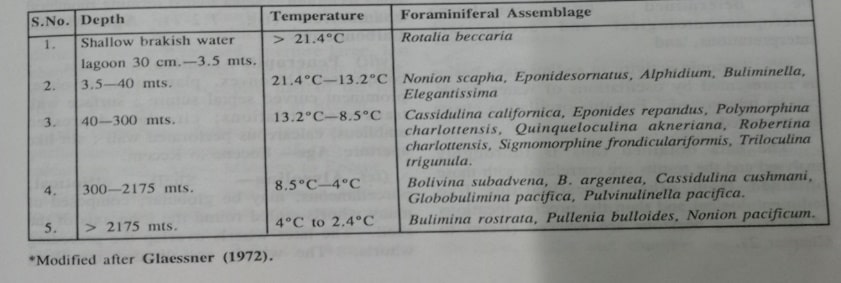
- These are the protists which have their test or shell made up of calcium carbonate or some have agglutinated shells.
- majority are marine or brackish water forms (excluding family Allogromiidae).
- They are divided into two groups such as-
- Benthic foraminifera- This group thrive at the sea bottom and known as bottom-dwellers.
- Planktonic foraminifera-This group are free floaters in the oceans and are more dispersed than benthic species. These are important in cretaceous and tertiary stratigraphy.
- Benthic forams are limited to particular environment, due to which they are enough to provide the information about the environment which the rock consist of these organisms.
- Some of the benthic varieties can prefer turbid environment while others prefer fresh water environment.
- Planktonic forams indicate less information about depositional environment as they are free living and floaters.
- Due to the characteristics of free floating, these foraminifers are able to swim across the oceans. Hence, they help in dating paleoceonographic temperature and their environment.
- These are protists, characterized by streaming granular or ectoplasm for catching food and other usage
- Dying planktonic foraminifera continuously rain down on sea flood – mineralized Tists (Shells) preserved as fossils.
- They are indicator of coral reef health (e.g. sensitive to ocean acidification).
- Foraminifera have many uses in petroleum exploration and used to interpret the ages and paleoenvironments of sedimentary strata.
- They are used in Biostratigraphy.
- In Paleoclimatology, these are used as climate priscy to reconstruct past climate by examining stable isotope ration.
- Foraminiferal Coloration Index (FDI) is used to quantity color changes and estimate burial temperature. This data is useful in early stages of petroleum generation.
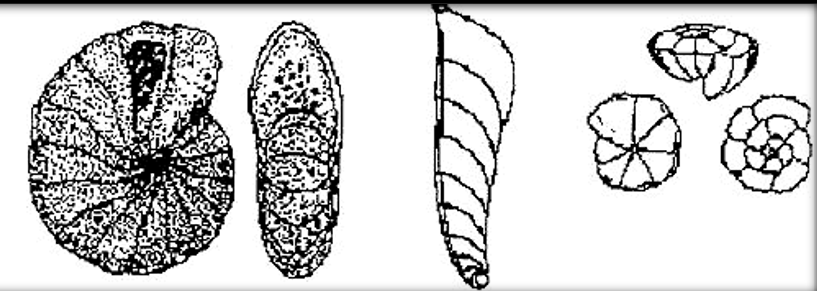
Fig. Benthic Forams
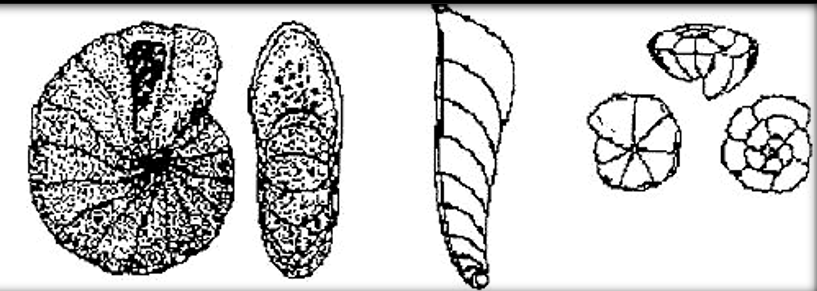
Fig. Planktonic Forams
Morphology of foraminifera
- They possess test of varying size: 0.01 to 190 mm in diameter.
- They may be arenaceous, gelatinous, agglutinated, siliceous, chitinous, or calcareous.
- They possess a network of thread like pseudopodia . Shells are unichambered or multichambered . Pores or perforations through which Pseudopodia come out.
- Texturally the shell may be granular fibrous or agglutinated. The shell may be unilocular or multilocular.
- The tubular test may be straight or spirally coiled . coiling may be planispiral or conical-trochospiral.
- The unicellular form develops the outer shell or test by secretion from cytoplasm or by collection of material by pseudopodia.
- Actually the protoplasm is always oozing out through the foramina or apertures of the shell and this flowed out mass of protoplasm is responsible for uniting another calcareous shell to the original one.
- Except the simplest forms only one Aperture is present in the distal end . It may be terminal, central or basal.
- A significant feature exhibited by foraminifera is dimorphism i.e the species exhibit two distinct morphological characters, one is megalospheric form and other one is microspheric form . E.g Nummulites.
Nannofossils
- Calcareous nannofossils are very small in size in the range less than 25 microns.
- They are produced by Planktonic unicellular algae in the ocean.
- The outer covering or test of these fossils is made up of calcium carbonates.
- The calcareous plates accumulate on the ocean floor, become buried beneath later layers, and are preserved as nannofossils.
- Their Planktonic modes of life and abundance quantity in the ocean make them important in the field of paleoceanography and biostartigraphy.
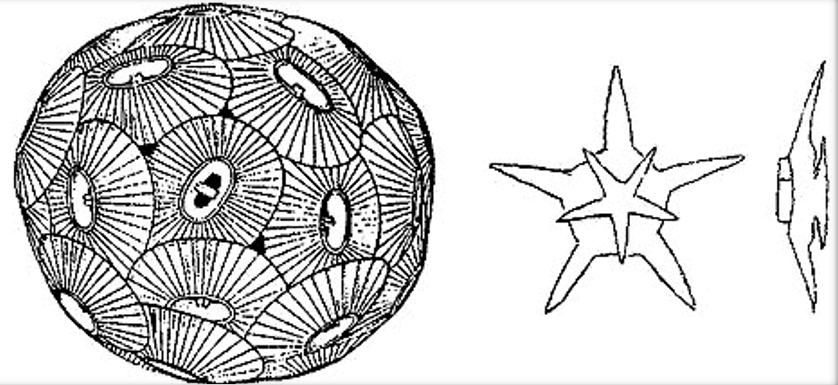
Fig. Calcareous Nannofossils
Palynomorphs
- This group is made up of organic walled test and commonly includes pollens and spores and dinoflagellates.
- The final deposition of the pollen and spores take place after they transported from one place to another by the means of agents such as wind and water currents.
- They are microscopic in nature and have tendency to transport along the vast area of oceans and land before deposition due to which they are very helpful in analyzing the environment of deposition and used as a tool of biostratigraphy.
- Fossils of pollen grains and spores are also used to tell us about paleoclimatic changes occur over the globe.
- In the petroleum exploration these polymorphs are responsible for color change due to heat which indicates the he temperature to which a rock sequence was heated during burial.
- This is useful in predicting whether oil or gas may have formed in the area under study, because it is h eat from burial in the Earth that makes oil and gas from original organic rich deposits.
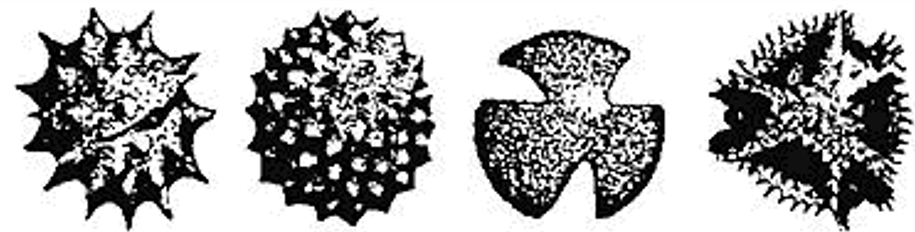
Fig. Pollens and spores
Diatoms
- Diatoms are microscopic siliceous algae under Diatomacea, which have opaline silica test or cell wall.
- These are microscopic and in the range of 2 μm to 500 μm and are free floaters in the oceans.
- They possess siliceous, discoidal, elliptical, rectangular, or rhombic shaped skeletons.
- They are found in all latitudes in oceans as well as in fresh water.
- Diatomaceous earth is used in industry as a filtering medium.
- They are the important source of hydrocarbons.
- Diatoms have their highest abundances in areas of upwelling and are the leading source of biogenic sediments in Polar Regions.
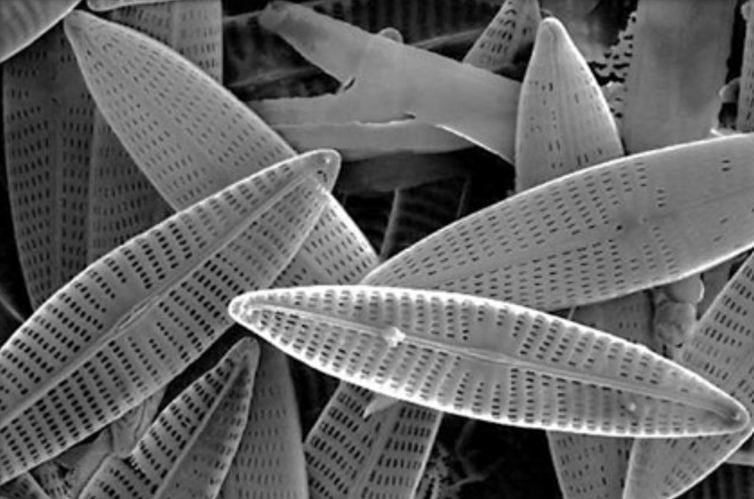
Fig. Diatoms
Ostrocods
- These are small crustaceans whose body has been protected by hinged valves made up of calcite.
- They have evolved from early Ordovician to recent.
- They are very commonly found in lacustrine, inner neritic and marine environment o they are very useful in local zonation schemes in these environments.
- They are also very much useful in biostratigraphy.
- Their benthic habit and low endemism are able to restrict them in their depositional environment and thus make them for biozonation.
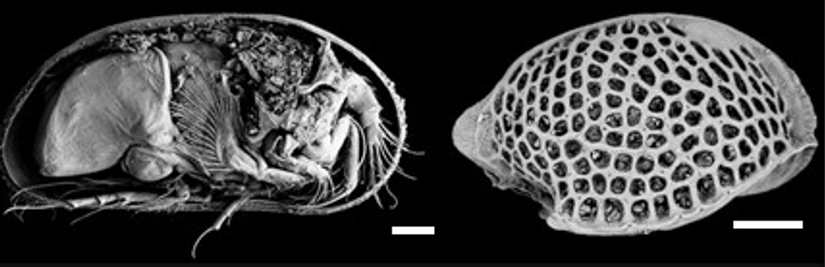
Fig. Ostracods
Radiolaria
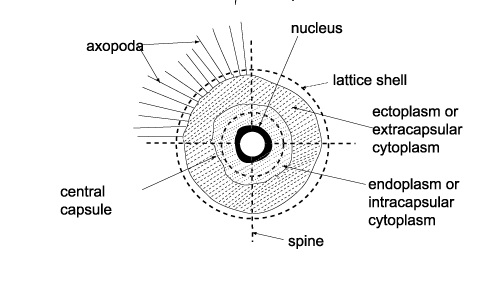
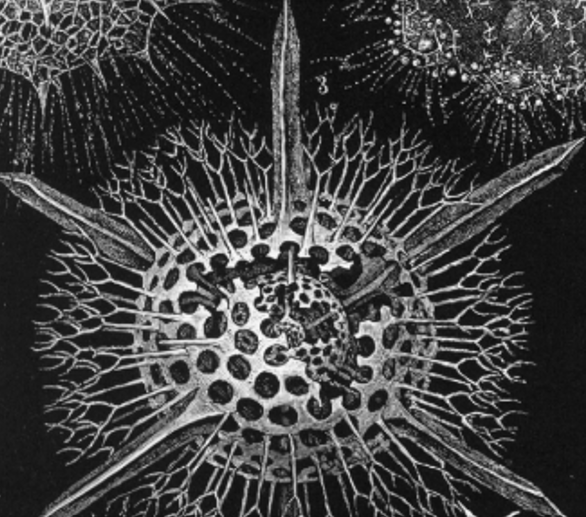
- These are marine Planktonic organisms which have opaline silica test, or Siliceous Skeleton.
- One group is composed of strontium sulphate.
- They are of Cambrian to Paleozoic era.
- 90% of radiolarian species are extinct.
- The radiolarian are pelagic, marine protozoans occurring abundantly in the present oceans and form Radiolarian oozes covering vast area of ocean floor.
- They are common micro-fossils of the rock radiolarian chert.
- The radiolarian are found in all seas and in all climatic zones. Majority of them live between the surface and a depth of 70m, and between the tropics.
- These are found as Zooplankton throughout the ocean – siliceous ooze. - e.g. Actinomma, Heliosphaera.
- Used in age dating and correlation of deep sea sedimentary rocks.
- They are used in oil exploration & paleoclimatic studies
- As they are planktonic, they are easily carried by currents. Because of long geological range, their stratigraphic value is very much limited.
- Recent age radiolarians are abundant in the regions of upwelling so their presence in high number suggests nutrient rich water.
- Their utilization in biostratigraphic zonations is typically limited to rocks with few calcareous microfossils.
Conodonts
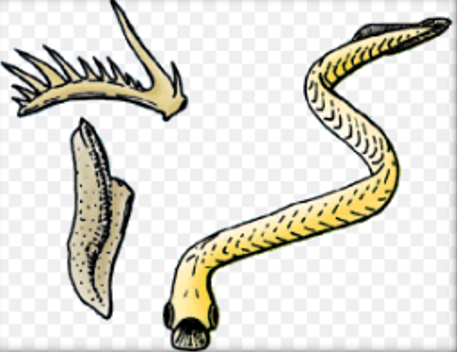
- These are extinct agnathan chordates resembling eels.
- Their test is made up of phosphate material.
- These are tooth like microfossils and considered as the index fossils.
- These elements range in size from 100 to 5000 μm.
- Conodonts lived in marine environments from the Late Cambrian to the Triassic and are one of the primary groups used in Paleozoic biostratigraphy.
- The colour change of their test are also be used to estimate the burial temperature in the hydrocarbon exploration and the method is known as Conodont alteration index.
Dinoflagellates
- These are minute , planktonic , organisms which are placed in flagellate algae .
- They possess thick , often spiny cell wall consisting of organic matter and divided by furrows by angular plates.
- Dinoflagellates live in upper 50 m of Photic zone , being most diverse in low latitudes .
- Some genera bloom in such vast number as to form a red tide in ocean and their toxic wastes (saxitoxin) can kill shell – fish and benthos.
- They range from Silurian to present .
Sponges
- These are calcareous skeleton (conical), double walled with space.
- They have central cavity and perforated skeleton.
- These are found in shallow marine regions, and they live in aggregates.
- Biostratigraphy – Lower to upper Cambrian.
Silicoflagellates
- The silicoflagellates are microscopic marine, planktonic , flagellate , algal organisms related to coccoliths but they have skeleton composed of hollow bars of siliceous materials e.g – Dictyocha , Corbisema , vallacerato.
- They range from Early Cretaceous to tertiary to present .
Cocolithophore
- The cocolithophore are minute dominantly pelagic marine, nano planktonic , unicellular and flagellate algal organisms living in photic zone .
- The spherical cell wall is covered with minute calcareous plates (aragonite) .
- They range from Jurassic to present.
- Their remains contribute to deposits of calcareous ooze on the ocean floors e.g – Discearter .
(b) Microscopic parts of mega animals
Microscopic parts of Annelids – Scoleocodont
- These are pharyngeal jaws or maxillae of annelid worms . these paired assemblages of maxillary compom=nents are definitely oriented and are chitinous and black colour . Important as Guide fossils of Ordovician .
Microscopic Arthropods – Ostracoda
- These were the most common animals of the benthos and include some variety of planktonic free swimming types.
- They were minute indistinctly segmented crustaceans with bivalve shells, possess two pairs of preoral antennae and three pairs of appendages adaptd as mouth parts.
- The Ostracods have a wide distribution right from late Cambrian to present day .
(c) Microfossils of Unknown Affinity
Conodonts
- The conodonts are minute teeth like fossils composed of calcium phosphate, usually translucent and amber brown in colour.
- Some conodonts occur together as dextral and sinistral pairs, while other are bilaterally symmetrical.
- Microscopic study reveals that their structure is either fibrous or lammellar.
- The taxonomy of Conodonts has largely been erected on the basis of the individual teeth like objects.
Affinites of Conodonts
- Probably no single group of microfossils has been the subject of greater controversy that these tooth like Conodants.
- Since they resemble the vertebrate and also, at least vaguely, the chitinous jaws of annelids, they have been variously assigned to the fishes, worms, gastropods and several other organism.
- The uncertainty about the origin of Conodonts arises from the fact that they have never been found in unquestioned in situ relationship with other indefinable fossil remains.