
Fossils, Megafossils and Microfossils
Fossils, Megafossils and Microfossils
5.1 Introduction to Fossils
- A fossil is any preserved remains, impression, or trace of any once-living thing from a past geological age.
- Examples: Bones, shells, exoskeletons, stone imprints, objects preserved in oil, coal, and DNA remnants.
- Paleontology is the study of fossils, their age, method of formation, and evolutionary significance.
- A fossil normally preserves only a portion of the deceased organism, usually that portion that was partially mineralized during life.
- These also consist of the marks left behind by the organism. Eg. animal tracks or feces (coprolites). These fossils are called trace fossils or ichnofossils, as opposed to body fossils.
- Some fossils are biochemical and are called chemofossils or biosignatures.

- There are a number of processes that lead to fossilization. Eg. permineralization, casts and molds, authigenic mineralization, replacement and recrystallization, adpression, carbonization, and bioimmuration.
- Fossils vary in size from 1 µm bacteria to dinosaurs and trees, meters long.
5.2 Types of Fossils
Body fossil
well-preserved entire organism (including soft parts), unaltered and altered hard part and naturally formed moulds and casts.
Examples:
- Bones
- Teeth and Claws
- Eggs, Embryos, and Nests.
- Muscles, Tendons, Organs, and Blood Vessels
- Skins: Eg. of dinosaurs and alligators.
- Amber, California tar pit fossils

Trace fossils/ ichno fossil
- It is a fossil record of biological activity, but not the preserved remains of the species itself.
- Ichnology is the study of trace fossils.
- like footprints, trails, burrows and tubes, coprolites & fossilized eggs.
- These record the movements and behaviors of the species.
Examples:
- Trackways/ footprints: Dinosaur tracks, usually made in mud or fine sand, have been found at over 1500 sites. Eg. at quarries, coal mines, riverbeds, deserts, and mountains.
- Unfortunately, linking a set of tracks with a particular species is often virtually impossible.
- Coprolites: fossilized feces.
- Toothmarks: Toothmarks generally appear in bones.
- Burrows and Nests
- Gizzard Rocks (stomach stones): Some dinosaurs swallowed stones to help grind their food. Modern birds do this also.
- Usually smooth, polished, and rounded.
- Hard to distinguish from river rocks.
Footprints have yielded information about:
- Speed and length of stride
- Whether they walked on two or four legs
- The bone structure of the foot
- Stalking behavior (a carnivore hunting a herd of herbivores)
- Tail track: how the tail is carried. Few tail tracks have been found, so tails were probably held above the ground.
Index fossils/ guide fossils / indicator fossils
- Fossils used to identify geologic periods.
- These are the basis for defining boundaries in the geologic time scale; and for the correlation of strata.
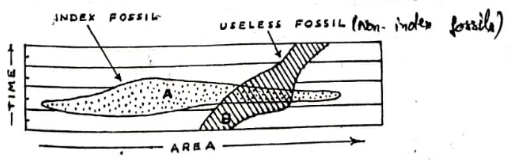
Characteristics
- Short vertical range: short span of geologic time or environment.
- Wide geographic distribution
- Rapid evolutionary trends: it defines shorter species' time range.
- Distinctive or easily recognizable.
- Ex- Ammonites were common during the Mesozoic Era (245 to 65 mya), They were not found after the Cretaceous period.
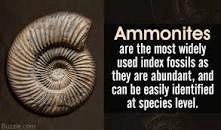
Zone fossil: These have all the characters of index fossil, except wide geographical distribution.
- They are limited to a zone and can't be used for correlations of strata.
Fossil wood
- The wood that is preserved in the fossil record.
- Fossil wood may or may not be petrified.
- The study of fossil wood is sometimes called palaeox
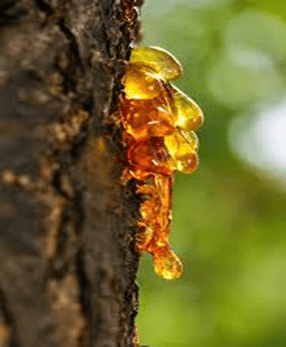
Resin/ Amber
- The excretion of the resin by certain plants. It is a natural polymer.
- Often contains inclusions: other fossils that were captured by the sticky resin.
- Animal inclusions, bacteria, fungi, other plants etc.
- A wasp trapped in a Dominican amber. It is known only from this specimen.
Chemical fossils or chemofossils or Biosignature or molecular fossil
- Well-preserved paleo-proteins & amino acids etc. from recrystallization & carbonization.
- These are chemicals found in rocks and fossil fuels (petroleum, coal, and natural gas) that provide an organic signature for ancient life.
Derived Fossils/ Reworked Fossil/ Remanié Fossil
- A fossil that is not native to the rock in which it is found.
- A fossil eroded from the rock in which they were originally deposited; and their redeposition in a younger sedimentary deposit.
- The new rock accumulated significantly later than when the fossilized organism died.
Living fossils
- An organism that has remained essentially unchanged from earlier geologic times and whose close relatives are usually extinct. Eg. a ginkgo trees.
Facie fossils
- A fossil that is restricted to defined stratigraphic facies.
- It is controlled and restricted by certain sedimentary environment.
- Note: Sedimentary facies: bodies of sediment that are recognizably distinct from adjacent sediments, that resulted from different depositional environments.
Pseudo fossils
- Certain structures of sedimentary and tectonic origin which resemble fossilized organic remain.
- These are inorganic objects, markings, or impressions that might be mistaken for fossils.
- Some types of mineral deposits can mimic life forms.
- Example: Manganese oxides crystallize with a dendritic pattern along a rock fracture.
Transitional fossil
- The fossilized remains exhibit traits common to both an ancestral group and its derived descendant
- Related with the ‘Origin of Species’, Charles Darwin, 1859.
Subfossil/ Partial fossil
- It is a part of a dead organism that is partially, rather than fully, fossilized.
- Reason:
- Not enough time has elapsed since the animal died for full fossilization, or
- The conditions were not optimal for fossilization.
5.3 Pre-condition for the creation of a fossil
The Conditions in which fossils occur, depends on the original composition and the material in which they are embedded.
- Rapid burial inside sediments to protect from biological decay.
- Oxygen deprivation to minimize decay and scavenging.
- Absence of excessive temperature or pressure.
- A quiet sea floor is most suitable for preservation/fossilization.
- Preservation of Hard parts: g. shells and bones
- Quick burial of the remains: to prevent destruction by scavengers and decay.
5.4 Uses of Fossil
- Evolution of organisms: Helps in study of organic evolution and migration of plants and animals.
- g. Glossopteris (Continental drift)
- To study species extinction
- Petrology:
- Establishment of geological age of the rock bed
- Time sequence of sedimentary rock.
- Reconstruction of Paleogeography
- g. fossil trees and stumps (terrestrial environment)
- g. Corals and echinoderms (marine environment)
- Study of the
- Correlating rock beds of one area with another.
- Ontogeny recapitulates phylogeny i.e. fossils are ancestors of modern form.
- Clue of deposits of Coal and petroleum.
Mega Fossils vs. Micro Fossils
Mega Fossils or Macro Fossils
- As per Erickson (1992), in “An introduction to fossils and minerals: seeking clues to the Earth's past”, Megafossils or Macrofossils are preserved organic remains, which are large enough to be visible without a microscope. Microfossils, by contrast, require substantial magnification for evaluation by professional paleontologists.
- Most fossils observed in the field and most "museum-quality" specimens are macrofossils.
- Microfossils are taxonomically diverse and heterogenous. Eg.. Monerans (Bacteria), Protistans (Eucarya), fungi.
- In India, three megafossils are described from the upper part of the Mesoproterozoic Rohtas Formation, Semri Group (Lower Vindhyan).
- Generally, they occur on the bedding surfaces of shale and limestone.
- The megafossils are grouped as carbonaceous discs, filamentous forms and dubiofossils.
- Chuaria circularis is assigned to the carbonaceous discs.
- Filamentous forms are represented by Grypania spiralis.
Plant macrofossils
- Plant macrofossils can be used to identify types of plants formerly growing in the area.
- They include leaf, needle, cone, and stem debris.
- Such botanical macrofossil data provide a valuable complement to pollen and faunal data that can be used to reconstruct the prehistoric terrestrial environment.
- Algal macrofossils (eg. brown kelp, sea lettuce and large stromatolites) can be used to analyze prehistoric marine and aquatic ecosystems.
Animal macrofossils
- These include teeth, skulls, and bones of
- These include such invertebrate remains as shells, tests, faunal armor, and exoskeletons.
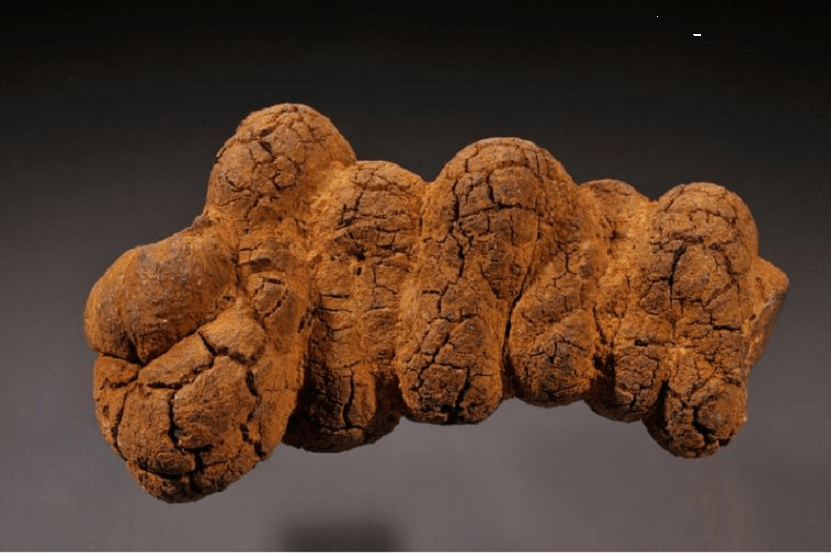
- Fossilized dung or coprolites are also macrofossils.
More about mega fossils is discussed in the previous topics like
- Fossils
- Modes of preservation of fossils.
- You must write a comprehensive answer, including all the related topics, in the exam when asked about mega fossils.
Microfossils ( Protista)
- Microfossils are those which can be studied and identified only by their study under microscope.
- A microfossil is a fossil that is generally between 0.001 mm and 1 mm in size. – Charlie Drewes, in “Discovering Devonian Microfossils”.
- Many microfossils (such as larger Foraminifera) are visible in naked eye, but their proper generic and specific identification requires their microscopic investigation.
- Microfossils include microscopic skeletons of the individual microorganisms like foraminifera, radiolarian, ostracoda, diatom. They may represent discrete microscopic elements of some larger organisms such as spicules of sponges, scolecodonts , echinoid ossicles etc.
- Fossils of spores and pollens, representing reproductive elements of non flowering and flowering plants respectively are in this sense also microfossils.
- Microfossils are a common feature of the geological record, from the Precambrian to the Holocene.
Every kingdom of life is represented in the microfossil record.They are most common in deposits of marine environments, but also occur in brackish water, fresh water and terrestrial sedimentary deposits.