
Convection Current Theory
Convection Current Theory
It was proposed by Arthur Holmes (1928). He expressed the possibility of convection current operating in mantle portion.
Objective
- To find scientific explanation of origin of the continents and oceans.
Basis
Convection current
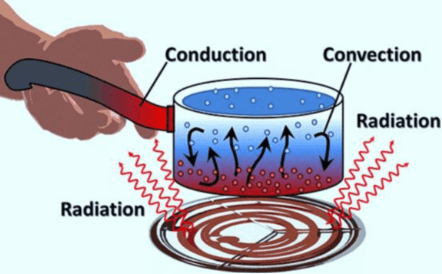
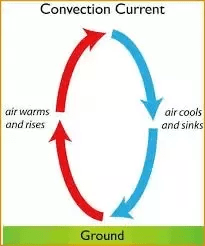
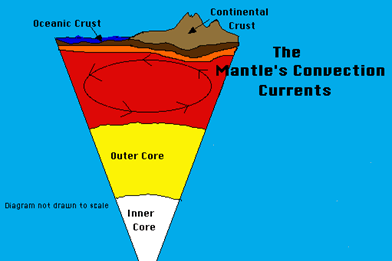
- Formed due to residual energy of earth: These currents are generated due to radioactive elements causing thermal differences in the mantle.
- Molten rocks move like cells.
The Theory
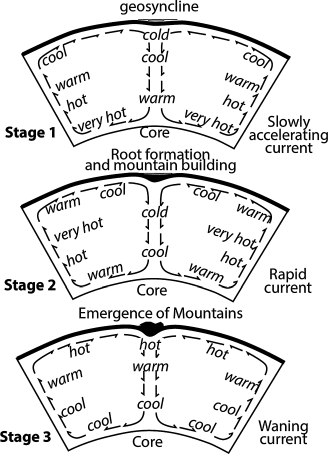
- The extreme heat generated by radioactive chemicals in the mantle seeks a way to escape. Hence, it causes convection currents to emerge in the mantle.
- When oceanic plates diverge, tensional stress causes fractures to occur in the lithosphere.
- Basaltic magma rises from the fractures and cools on the ocean floor to form new seafloor.
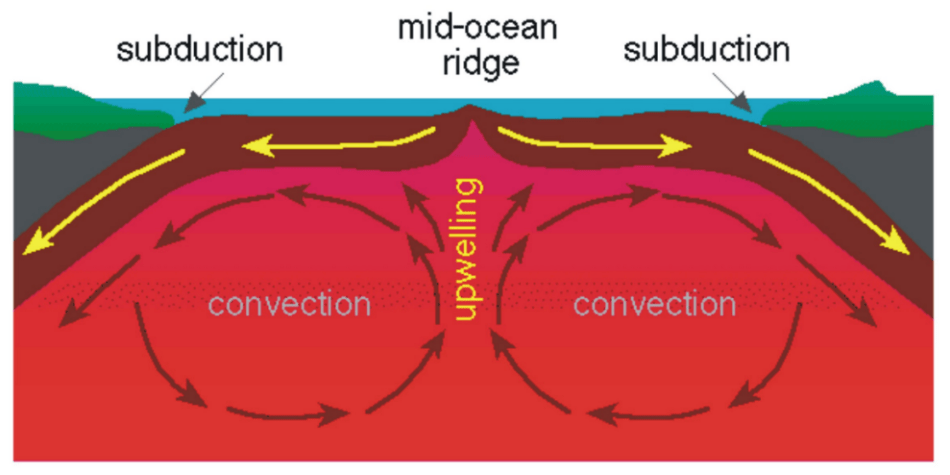
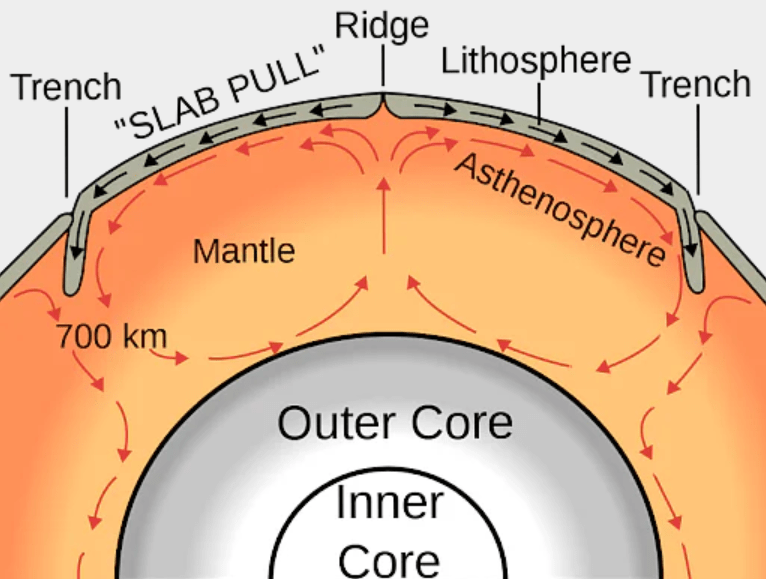
Divergent limbs (rising limbs):
- Pressurize the crust, formation of crust (eruption of Basaltic Magma).
- Wherever rising limbs of these currents meet, oceanic ridges are formed on the seafloor due to the divergence of the lithospheric plates.
Converging limbs (descending limbs):
- Destruction of crust at trenches.
- Wherever the failing limbs meet, trenches are formed due to the convergence of the lithospheric plates.
Evaluation
- Convection Current Theory explained the driving force for the Convection Current Theory, which led to its acceptance.
- It is the soul of the Seafloor Spreading Theory. Later, Sea floor and continental drift became the basis of Plate Tectonics.
Thinkers on Convection Current Theory
Alfred Wegener:
- Proposed the theory of continental drift in the early 20th century.
- Suggested that continents were once joined in a supercontinent called Pangaea and drifted apart over time.
- Believed that convection currents in the Earth's mantle could be a driving force for continental movement.
- Wegener's views on convection currents supported the idea of continents moving due to heat and movement within the Earth.
Arthur Holmes:
- Contributed to the understanding of convection currents in the Earth's mantle.
- Proposed the concept of mantle convection as a mechanism for plate tectonics.
- Holmes suggested that heat generated from radioactive decay in the mantle creates convection currents, causing the movement of tectonic plates.
- His work supported the idea that convection currents play a crucial role in the dynamic processes shaping Earth's surface.
Harry Hammond Hess:
- Developed the theory of seafloor spreading in the 1960s.
- Proposed that new oceanic crust is formed at mid-ocean ridges through volcanic activity and then spreads outward.
- Hess's model of seafloor spreading was based on convection currents in the mantle pushing plates apart at divergent boundaries.
- His views emphasized the role of convection currents in the formation and movement of Earth's crust.
- Tuzo Wilson:
- Introduced the concept of transform faults and plate boundaries in the 1960s.
- Described how plates slide past each other horizontally along transform faults.
- Wilson's model integrated the ideas of seafloor spreading and continental drift, emphasizing the role of convection currents in driving plate movements.
- His views highlighted the dynamic nature of Earth's lithosphere influenced by convection currents beneath it.