
Island Arcs
Introduction
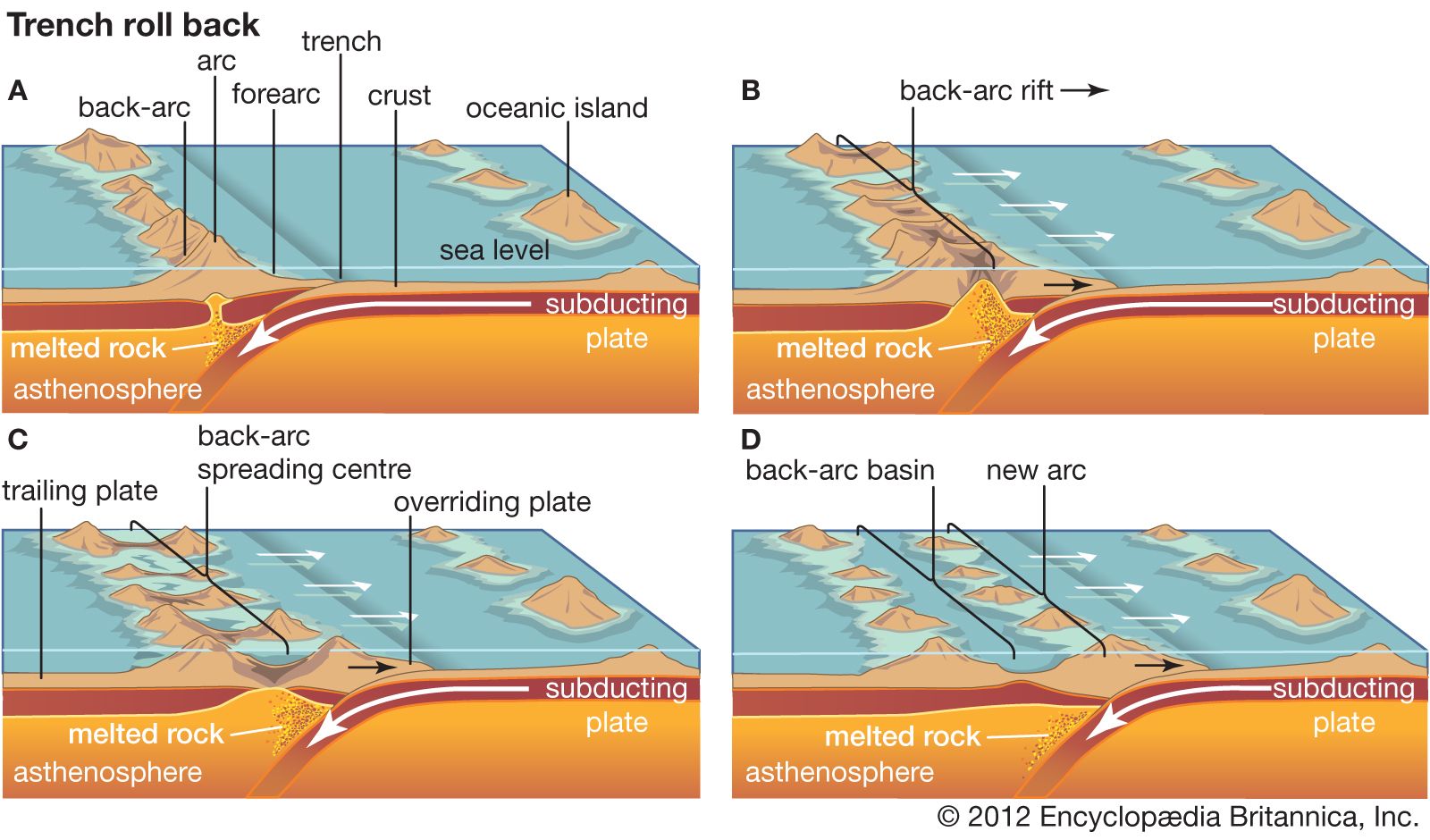
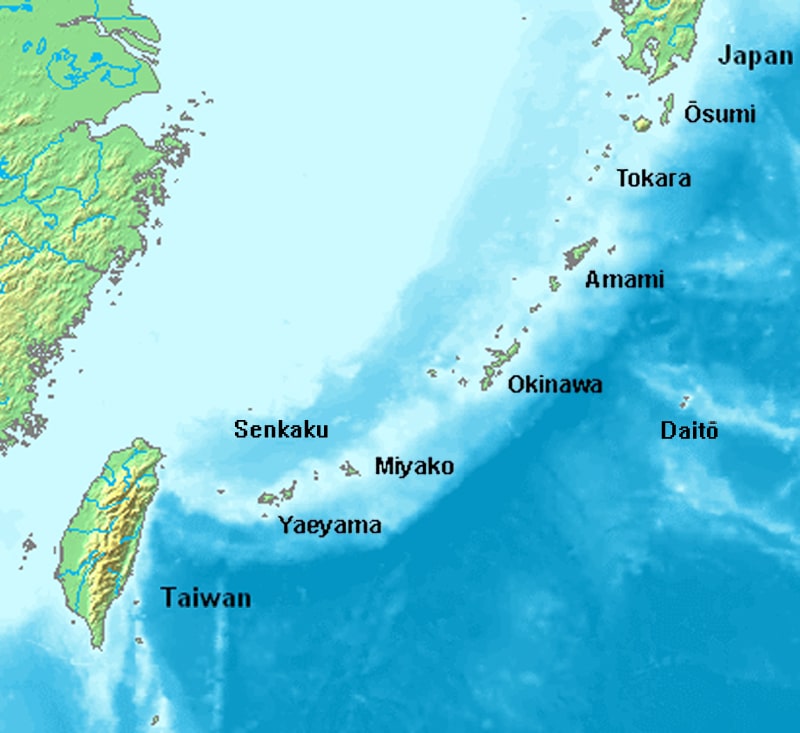
Island arcs are distinctive geological features found in the Earth's oceans, primarily in subduction zones, characterized by a curved chain or arc-like arrangement of volcanic islands and submerged seamounts. They are associated with intense tectonic activity and are a critical part of plate tectonics theory.

Characteristics of Island Arcs:
- Location: Island arcs are typically found in the ocean basins, often near the boundaries of tectonic plates.
- Arc-Shaped Configuration: Island arcs form a curved or arc-shaped chain of islands and submerged volcanic features.
- Volcanic Islands: They consist of numerous volcanic islands, which are primarily formed due to subduction-related volcanic activity.
- Subduction Zone: Island arcs are associated with subduction zones, where one tectonic plate is being forced beneath another.
- Deep Ocean Trench: A deep ocean trench is commonly located parallel to the island arc, marking the subduction zone.
- Volcanic Activity: Intense volcanic activity characterizes island arcs, resulting in the formation of new islands and the growth of existing ones.
- Island Chain Alignment: The islands in an island arc are aligned in a specific pattern, often indicating the direction of plate subduction.
Geological Features Associated with Island Arcs:
- Volcanic Mountains: Island arcs are composed of volcanic mountains, some of which can reach significant heights above sea level.
- Stratovolcanoes: Stratovolcanoes, also known as composite volcanoes, are common in island arcs, built up by alternating layers of lava and volcanic ash.
- Volcanic Calderas: Some island arcs feature large volcanic calderas, formed by the collapse of a volcano's summit after a massive eruption.
- Island Formation: Islands in an island arc are formed through the accumulation of volcanic material, including lava flows and ash deposits.
- Coral Reefs: In tropical island arcs, coral reefs often grow around the volcanic islands, contributing to the overall geology and ecology of the region.
- Sedimentary Basins: Sedimentary basins may develop between island arcs and continental landmasses, accumulating sediments eroded from both.
Earthquakes and Tectonic Activity:
- Subduction-Related Earthquakes: Island arcs are prone to powerful earthquakes associated with the subduction of one tectonic plate beneath another.
- Megathrust Earthquakes: Megathrust earthquakes, caused by the sudden release of stress along subduction zones, can generate massive tsunamis and pose significant hazards to coastal communities.
- Volcanic Earthquakes: Seismic activity related to volcanic eruptions is common in island arcs, as magma movement and pressure changes can trigger earthquakes.
- Tectonic Plate Interaction: Island arcs are a result of the complex interaction between oceanic and continental tectonic plates, leading to ongoing tectonic activity.
- Volcanic Explosivity: The explosive nature of some island arc volcanoes can lead to not only earthquakes but also volcanic eruptions, which can impact the surrounding areas.
Theories of Formation of Island Arcs:
- Plate Tectonics Theory:
- Subduction Zone Formation: Island arcs are primarily formed at convergent plate boundaries where an oceanic plate is subducting beneath another plate.
- Melting and Magma: As the subducting plate sinks into the mantle, it experiences increased pressure and temperature. This causes the subducting plate to release water and other volatile substances, which lowers the melting point of the mantle above it.
- Magma Generation: Magma forms due to the partial melting of the mantle above the subducting plate. This magma rises through the overriding plate, leading to the formation of volcanic islands and a volcanic arc parallel to the trench.
- Island Arc-Back Arc System:
- Two Zones: Some island arcs are associated with a back-arc basin, which is a region of extensional tectonics behind the volcanic arc.
- Basaltic Plateaus: The back-arc basin can produce basaltic plateaus, which are large areas of volcanic rock that form due to upwelling of mantle material. These plateaus can be separated from the island arc by a narrow trough.
- Examples: The Philippine Sea Plate and the Mariana Trench-Back Arc System in the western Pacific are examples of this type of island arc-back arc system.
- Rifting and Arc Formation:
- Complex Interactions: In some cases, island arcs may form through more complex interactions, including the breakup of continents or the reorganization of tectonic plate boundaries.
- Continental Fragments: Fragments of continental crust that become isolated in the ocean can lead to the formation of island arcs as they interact with surrounding tectonic plates.
- Evolution Over Time: These processes can involve stages of rifting, subduction initiation, and eventual island arc formation.
- Hotspot Island Arcs:
- Hotspot Influence: In rare cases, island arcs can form over hotspots, which are stationary plumes of magma rising from the mantle. The volcanic activity is not related to plate boundaries.
- Examples: The Hawaiian Islands are an example of a hotspot island arc, where the Pacific Plate has moved over a hotspot, creating a chain of volcanic islands.
Primary and Secondary Island Arcs
Primary Island Arcs
Primary island arcs are geological features formed at convergent plate boundaries, where an oceanic plate subducts beneath another oceanic plate or a continental plate. They typically consist of a chain of volcanic islands and associated features.
Global Distribution of Primary Island Arcs:
- Pacific Ring of Fire: The most extensive and well-known primary island arc system, encircling the Pacific Ocean basin. It includes arcs like the Aleutian Islands, Japan, the Philippines, and Indonesia.
- Lesser Antilles: Located in the Caribbean Sea, this is another prominent primary island arc.
- Mariana Islands: Found in the western Pacific Ocean.
- Tonga-Kermadec Arc: Stretching from Tonga to New Zealand.
- Sunda Arc: Comprising Indonesia and the surrounding region.
- Andes: Although primarily a continental volcanic arc, it also features island arcs such as the Galápagos Islands.
Secondary Island Arcs:
Secondary island arcs are geological features that form behind primary island arcs, typically on the overriding plate. They often result from the continued subduction process and extensional tectonic forces.
Global Distribution of Secondary Island Arcs:
- Eastern Mediterranean: The Hellenic Arc is an example of a secondary island arc.
- South Sandwich Islands: Located in the South Atlantic Ocean, these islands form a secondary arc.
- South Shetland Islands: Found in the Southern Ocean, near Antarctica.
- Aegean Arc: Located in the Aegean Sea, formed due to the complex interactions between the Eurasian and African plates.
- West Philippine Sea: Features secondary arcs due to the subduction of older oceanic crust beneath the Philippine Sea Plate.
Difference Between Primary Island Arcs and Secondary Island Arcs
|
Aspect |
Primary Island Arcs |
Secondary Island Arcs |
|
Tectonic Setting |
Formed at convergent plate boundaries |
Typically occur behind primary island arcs |
|
Subduction Zone |
Associated with an active subduction zone |
May or may not have an active subduction zone |
|
Volcanism |
High volcanic activity |
Lower volcanic activity |
|
Crust Thickness |
Thicker crust due to active subduction |
Thinner crust compared to primary arcs |
|
Age |
Usually older |
Typically younger |
|
Island Size |
Larger islands |
Smaller islands |
|
Geological Activity |
Often characterized by intense seismicity |
May have less intense seismic activity |
|
Example |
Japan, Indonesia |
Mariana Trench, Tonga Islands |
Identifying Island Arc Products in Ancient Rock Records
- Study Rock Composition: Examine the composition of ancient rocks for volcanic and igneous minerals that are characteristic of island arcs, such as andesite, dacite, and rhyolite.
- Identify Arc-Related Structures: Look for geological features like arcuate (curved) volcanic chains or stratigraphic sequences that suggest the presence of volcanic islands in the past.
- Geochemical Analysis: Perform geochemical analyses to determine if the rock samples have chemical signatures consistent with island arc magmatism, such as high levels of certain elements like strontium (Sr) and lead (Pb).
- Dating Techniques: Use radiometric dating methods, such as radiocarbon dating or radiometric isotopic dating, to determine the age of the rocks and establish their volcanic history.
- Fossil Evidence: Examine the presence of marine fossils or sedimentary layers that may indicate a former island setting within the ancient rock record.
- Tectonic Context: Consider the tectonic context of the region where the rocks are found. Ancient convergent plate boundaries or areas with evidence of past subduction can provide clues to the presence of ancient island arcs.
Various Aspects of Island Arc Type Subduction Boundary
a. Morphotectonic Elements:
- Volcanic Arc: Island-arc subduction boundaries are characterized by a volcanic arc, which is a chain of volcanic islands or mountains formed as a result of the subduction of an oceanic plate beneath another plate.
- Forearc and Backarc: These regions are associated with island-arc subduction boundaries. The forearc is located between the trench (the subduction zone) and the volcanic arc. The backarc is situated on the side opposite to the volcanic arc and often contains features like back-arc basins.
- Trench: The trench is a deep underwater trench formed at the subduction boundary where the denser oceanic plate is sinking beneath the less dense continental or oceanic plate.
b. Seismicity:
- Megathrust Earthquakes: Island-arc subduction zones are known for their high seismic activity. Megathrust earthquakes, which are among the most powerful earthquakes on Earth, occur at the interface between the subducting and overriding plates.
- Intermediate and Deep Earthquakes: Seismicity also occurs within the subducting plate, generating intermediate and deep-focus earthquakes at varying depths beneath the Earth's surface.
c. Heat Flow:
- High Heat Flow: Island-arc subduction zones typically exhibit high heat flow due to the subduction process. As the oceanic plate descends into the mantle, it heats up and can generate magma. This can lead to volcanic activity in the volcanic arc.
- Volcanism: The high heat flow contributes to the formation of volcanoes in the volcanic arc. The melting of subducted oceanic crust and the mantle wedge above it results in the generation of magma, which eventually erupts as volcanoes.
d. Gravity Anomaly Patterns:
- Negative Gravity Anomaly: Island-arc subduction boundaries often exhibit a negative gravity anomaly along the trench. This is because the subducting oceanic plate is denser than the surrounding mantle, causing a deficiency in mass that results in a gravitational depression.
- Positive Gravity Anomaly: In contrast, the volcanic arc and the associated mountainous regions may exhibit positive gravity anomalies due to the presence of denser rock types, such as volcanic and intrusive rocks, which contribute to higher gravitational attraction.
Reasons of Modern Island Arcs Restricted to Specific Parts of the Globe
- Plate Tectonics: Modern island arcs are primarily found at convergent plate boundaries where an oceanic plate subducts beneath another plate. This subduction zone process is essential for the formation of island arcs.
- Specific Plate Boundaries: Island arcs are typically associated with specific plate boundaries, including ocean-ocean and ocean-continent convergent boundaries. Common locations for island arcs include the Pacific Ring of Fire, where several tectonic plates converge, and the eastern Mediterranean region.
- Subduction Zones: Island arcs require a subduction zone, where one tectonic plate descends beneath another. This subduction creates conditions for volcanic activity and the formation of islands.
- Geochemical Conditions: The composition of the subducting oceanic plate and the overlying plate influences the type of volcanic rocks and islands that form in an island arc.
Difference Between Island Arcs and Volcanic Arcs
|
Characteristic |
Island Arc |
Volcanic Arc |
|
Location |
Typically found in oceanic-oceanic plate |
Typically found in continental-oceanic plate |
|
Plate Boundary |
Convergent boundary |
Convergent boundary |
|
Subduction Zone |
Oceanic plate subducts beneath another oceanic plate |
Oceanic plate subducts beneath continental plate |
|
Volcanic Activity |
Associated with explosive and effusive volcanic activity |
Associated with explosive volcanic activity |
|
Earthquakes |
Frequent and often intense seismic activity |
Seismic activity is common but less intense |
|
Formation Process |
Result from subduction of oceanic plates beneath another oceanic plate |
Form due to subduction of oceanic under continental plates |
|
Example |
Japan, Philippines |
Andes Mountains, Cascades Range |