
Trenches
Introduction
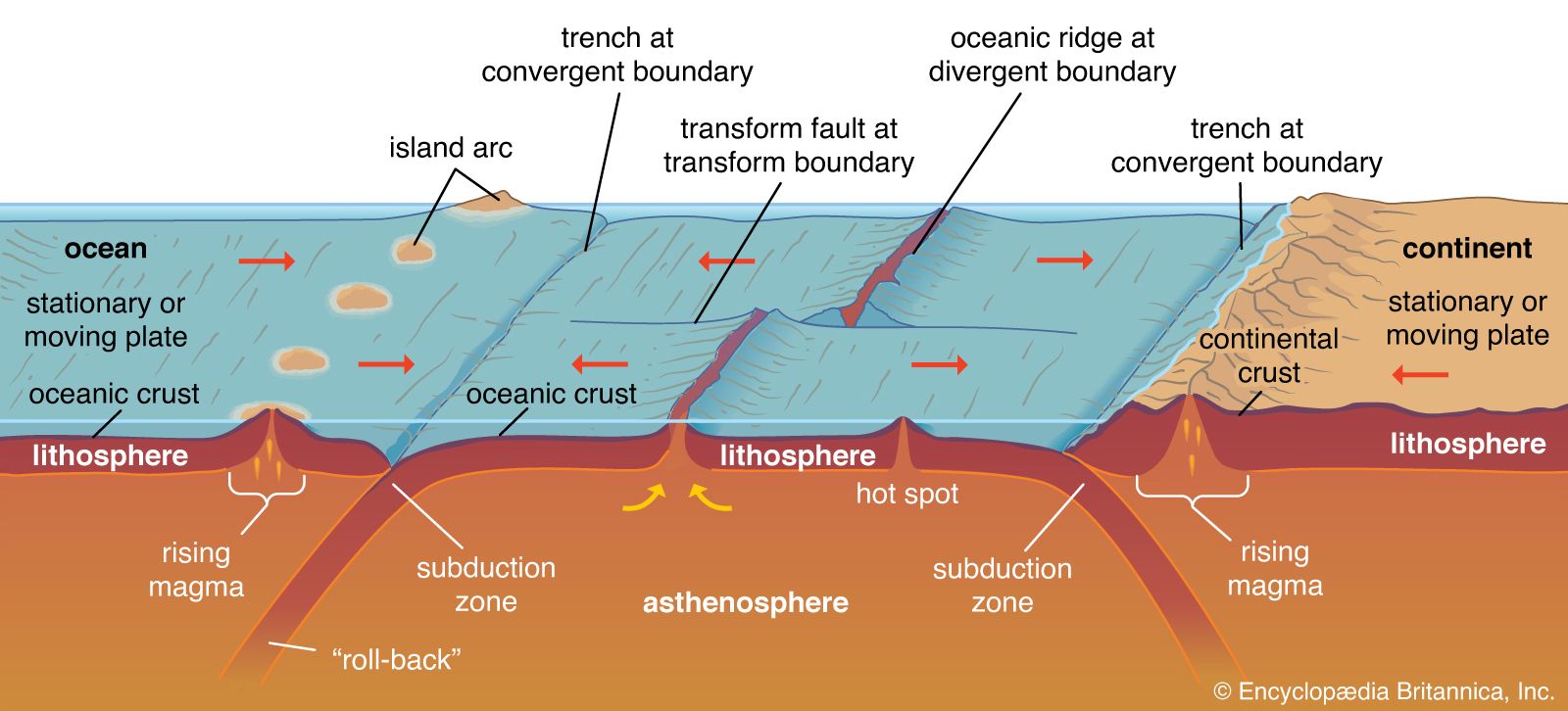
Deep-sea trenches are intriguing geological features found at the bottom of the world's oceans. They are among the most enigmatic and least explored parts of our planet's surface. From a geological perspective, deep-sea trenches offer valuable insights into the dynamic processes shaping the Earth's crust and provide a unique opportunity to study plate tectonics, subduction zones, and the formation of oceanic trenches.

Thinkers’ views
- Alfred Wegener: According to his theory, trenches were formed by the subduction of one tectonic plate beneath another.
- Harry Hess: He proposed the idea of seafloor spreading, which explained the formation of deep-sea trenches in the context of plate tectonics. According to Hess, deep-sea trenches are formed at subduction zones where one tectonic plate is being pushed beneath another.
- Deep-Sea Trenches from a Geological Perspective: Deep-sea trenches are fascinating geological features found in the Earth's oceans. They are the result of complex geological processes that shape the planet's crust and provide valuable insights into Earth's dynamic nature.
Characteristics of Deep-Sea Trenches:
- Steep and V-Shaped: Deep-sea trenches are typically narrow, elongated depressions in the ocean floor, often resembling a V-shape. These trenches can be several kilometers deep and have steep sidewalls.
- Extreme Depths: They are among the deepest parts of the ocean, with the Challenger Deep in the Mariana Trench being the deepest known point on Earth, plunging to a depth of about 10,929 meters (35,856 feet).
- Subduction Zones: Trenches are often associated with subduction zones, where one tectonic plate is being forced beneath another. This process results in the formation of the trench as the descending plate creates a deep trench-like feature.
- Trench Sediments: Trenches accumulate sediments, including fine-grained clay and organic material, transported by ocean currents and deposited in these low-energy environments.
Theories of Formation:
- Plate Tectonics:
- The prevailing theory for the formation of deep-sea trenches is plate tectonics.
- Trenches are primarily located at convergent plate boundaries, where oceanic plates are subducted beneath continental or other oceanic plates.
- The intense pressure and friction at these convergent boundaries cause the Earth's crust to bend and form trench-like depressions.
- Subduction Erosion:
- Subduction erosion is a process where the subducting plate scrapes material off the overriding plate as it descends into the mantle.
- This material accumulates in the trench, contributing to its depth and sediment accumulation.
- Mantle Flow:
- Some geologists suggest that mantle flow patterns may play a role in trench formation.
- The movement of the Earth's mantle can influence the shape and location of trenches over geological time scales.
- Back-Arc Basins:
- In certain cases, deep-sea trenches are associated with back-arc basins, which form behind volcanic island arcs.
- Back-arc basins can also contribute to trench formation as the crust stretches and subsides.
Geological Features Associated with Trenches:
- Subduction Zones: Trenches are closely linked to subduction zones, where one tectonic plate is sinking beneath another. This subduction process is responsible for the formation of trenches as the denser plate is pulled into the Earth's mantle.
- Volcanic Activity: Trenches often exhibit volcanic activity in the form of deep-sea volcanic arcs and island chains. As the subducting plate sinks into the mantle, it melts and generates magma, leading to the eruption of volcanoes along the trench.
- Earthquakes: Trenches are seismically active regions due to the intense tectonic forces associated with subduction. Earthquakes in these areas can be extremely powerful and are a consequence of the plates' interactions.
- Trench Sedimentation: Deep-sea trenches accumulate sediments, which include fine particles of clay, silt, and organic material. These sediments are transported by ocean currents and can provide valuable information about past climate and ocean conditions when analyzed.
- Unique Fauna: Trenches host unique and often extremophile organisms adapted to the extreme pressure, cold temperatures, and lack of sunlight in these deep-sea environments. Examples include deep-sea amphipods and giant tube worms.
- Hydrothermal Vents: Some trenches, like the Mariana Trench, are known for their hydrothermal vent systems. These vents release superheated water rich in minerals, supporting unique ecosystems of chemosynthetic organisms.
Geographical Distribution:
- Pacific Ring of Fire: The majority of deep-sea trenches are located in the Pacific Ocean, forming the famous "Ring of Fire." Prominent trenches in this region include the Mariana Trench, Tonga Trench, and Peru-Chile Trench.
- Atlantic Ocean: The Puerto Rico Trench and the South Sandwich Trench are examples of deep-sea trenches found in the Atlantic Ocean.
- Indian Ocean: The Java Trench and Sunda Trench are notable trenches in the Indian Ocean.
- Other Oceans: While most deep-sea trenches are concentrated in the Pacific, there are trenches in other ocean basins as well, such as the Philippine Trench in the Philippine Sea.
Role in Plate Tectonics:
- Subduction Zones: Deep-sea trenches are critical components of subduction zones, where two tectonic plates converge. One plate is forced beneath the other into the Earth's mantle, creating a trench. This process is a fundamental driver of plate tectonics.
- Plate Recycling: Trenches are where oceanic plates are recycled into the mantle, ultimately leading to the formation of new oceanic crust through volcanic activity at mid-ocean ridges.
- Earthquake and Volcanic Activity: Trenches are often associated with intense seismic activity, including earthquakes and volcanic eruptions, as the subducting plate undergoes complex interactions with the overriding plate.
- Magma Generation: The descending plate in a trench can melt and generate magma, which can rise to the surface, forming volcanic arcs and island chains. Examples include the Andes Mountains and the Japanese archipelago.
Associated Hazards
- Volcanic Activity:
- Subduction Zones: Trenches are often associated with subduction zones, where one tectonic plate is forced beneath another. This process generates intense heat and pressure, leading to volcanic activity.
- Volcanic Islands: Volcanic islands, such as Japan and the Aleutian Islands, often form along the edges of trenches due to the upwelling of molten rock from the subducting plate.
- Arc Volcanism: Arcs of volcanoes, known as volcanic arcs, parallel the trenches and are indicative of magma generation and eruption.
- Earthquakes:
- Subduction-Related Earthquakes: Trenches are prone to powerful earthquakes due to the immense stress and pressure buildup along subduction boundaries.
- Megathrust Earthquakes: Megathrust earthquakes, some of the most powerful ever recorded, occur when the subducting plate suddenly releases stored energy, causing the overriding plate to uplift and generate massive tsunamis.
- Seismic Monitoring: Trenches are closely monitored for seismic activity, helping scientists understand earthquake mechanisms and improve early warning systems.
Trench Exploration
- Remote Sensing: Deep-sea trenches are challenging to explore due to their extreme depth and pressure. Remote sensing technologies like sonar and ROVs (Remotely Operated Vehicles) are used to map and study trench morphology.
- Submersibles: Manned and unmanned submersibles like the Alvin and Deepsea Challenger allow scientists to reach the bottom of trenches, collect samples, and observe unique organisms adapted to extreme conditions.
- Sample Collection: Sediment and rock samples retrieved from trenches provide valuable insights into Earth's geological history, including the composition of subducted materials and the age of the oceanic crust.
Conclusion
Deep-sea trenches are captivating geological features that provide a window into the Earth's interior and its dynamic processes. These enigmatic formations offer essential insights into plate tectonics, subduction zones, seismic activity, and the evolution of our planet's surface. As technology advances, further exploration of deep-sea trenches promises to unveil more of their geological secrets, benefiting both scientific understanding and disaster preparedness.