
Stratigraphy in Geology
Stratigraphy in Geology
Introduction to Stratigraphy/ Short note on Stratigraphy
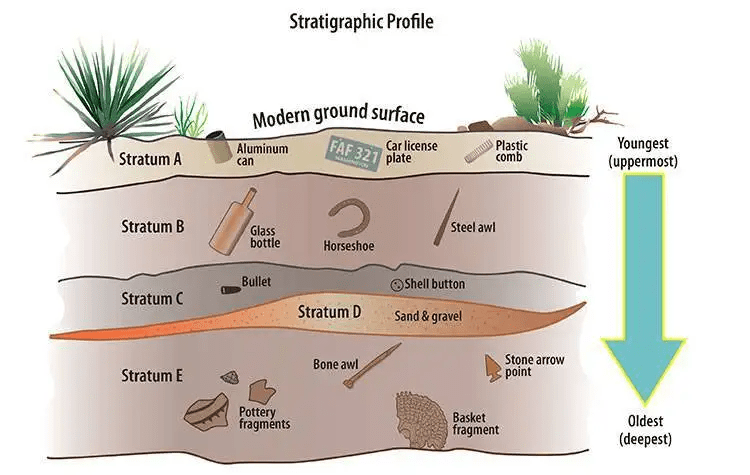
Stratigraphy is a branch of geology that deals with the study of rock layers (strata) and their arrangement in the Earth's crust.
It provides insights into the history of the Earth and helps to understand the geological events that have shaped our planet over time.
Types of Stratigraphy
- Lithostratigraphy: The branch of stratigraphy that focuses on correlating rock layers based on their lithological characteristics, such as composition, texture, and sedimentary structures.
- Biostratigraphy: The branch of stratigraphy that uses fossil assemblages to correlate rock layers, assuming that similar fossils imply similar ages. Certain fossils, known as index fossils, are especially useful for dating rocks.
- Chronostratigraphy: Involves the subdivision of Earth's history into time intervals or periods, such as epochs and eras, based on major geological and biological events. The International Commission on Stratigraphy (ICS) is responsible for establishing the global time scale.
- Magnetostratigraphy: The element of stratigraphy that deals with the magnetic characteristics of rock bodies.
Principles of Stratigraphy
Stratigraphic Units
Geological Dating Techniques
- Radiometric Dating: Using the decay of radioactive isotopes to determine the absolute age of rocks. For example, carbon14 dating is useful for relatively young materials, while uraniumlead dating is used for older rocks.
- Paleomagnetism: The study of changes in Earth's magnetic field recorded in rocks, which helps establish the ages of the rocks based on known shifts in the magnetic polarity over time.
- Example: The Grand Canyon's stratigraphy provides a remarkable geological record. Observing the layers in the canyon walls allows geologists to interpret millions of years of Earth's history, from the Precambrian basement rocks at the bottom to the more recent sedimentary layers on top.
Applications of Stratigraphy
- Earth History Reconstruction: Stratigraphy allows geologists to understand the sequence of events and environmental changes that occurred throughout Earth's history.
- Natural Resource Exploration: Studying the arrangement and properties of rock layers aids in locating valuable resources like oil, gas, coal, and minerals.
- Geological Engineering: Stratigraphic information is crucial for constructing safe and stable foundations for infrastructure projects like dams, bridges, and buildings.
- Environmental Studies: Stratigraphy helps in understanding the impact of human activities on the environment and in assessing potential hazards like groundwater contamination or landslides.
- Example: Stratigraphic data are used by petroleum geologists to identify potential oil reservoirs and plan drilling locations. They analyze the layers' porosity, permeability, and other properties to estimate the reservoir's size and productivity.